 HOME
HOME





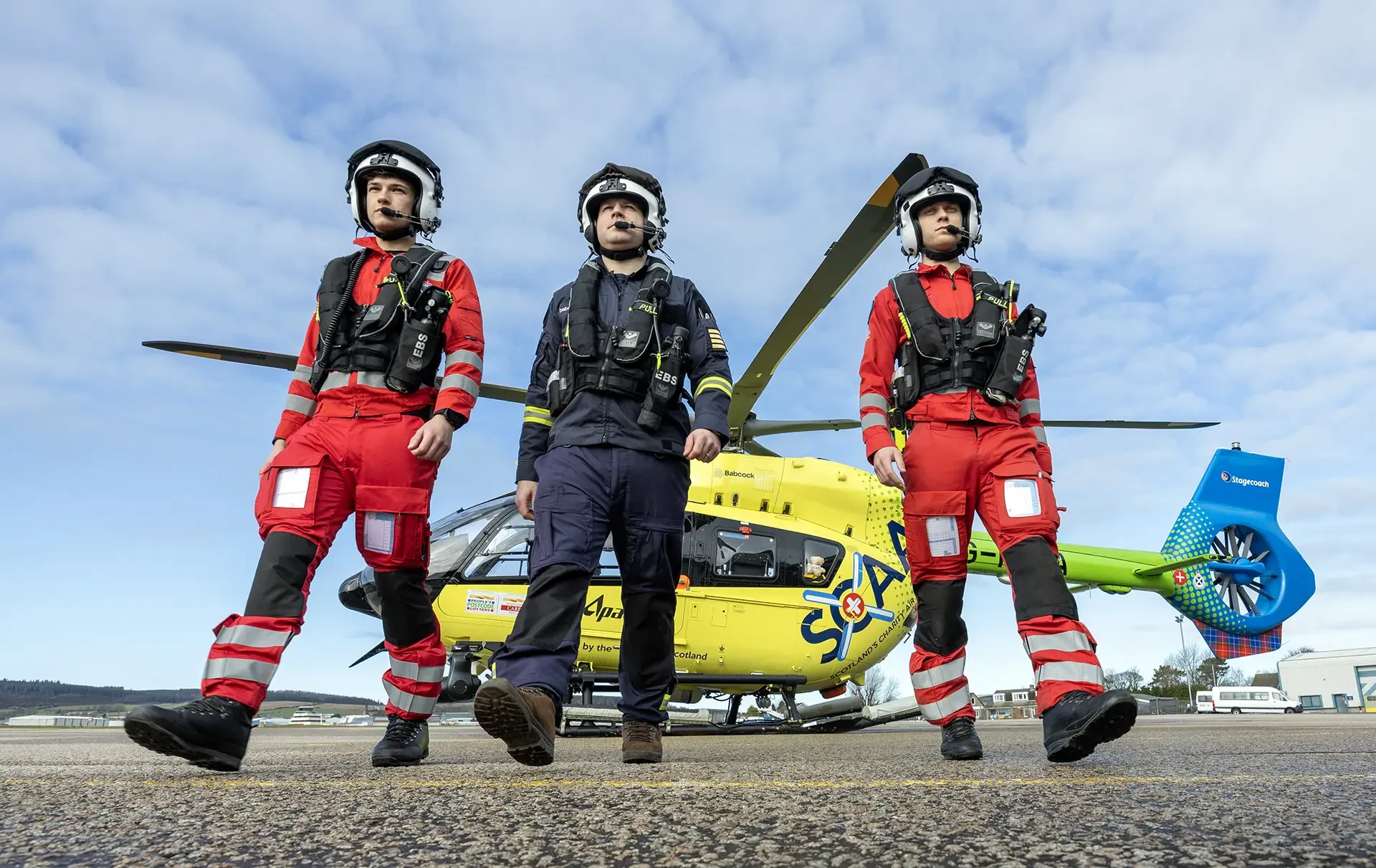
Exactly a year after introducing the country’s newest generation of emergency response aircraft, Scotland’s Charity Air Ambulance (SCAA) is reflecting on a major advance in emergency pre-hospital care.
In October 2025, SCAA’s Aberdeen-based state-of-the-art Airbus H145 D3 became the most advanced aircraft of its type flying Helicopter Emergency Medical Service (HEMS) missions in the UK.
The charity’s first ever newly manufactured aircraft since SCAA launched in 2013 allowed them to design a customised medical fit-out, unique in Scotland, and created to reflect the specific needs of crew and patients over long distances and in challenging weather conditions.
Now, charity chiefs, crew and critical care teams are hailing the helicopter a “game changer” after a year proving itself in some of the country’s most testing situations.
Dr Donna Paterson, North of Scotland Trauma Network Clinical Lead, has flown many times as part of the critical care team SCAA is able to airlift from it’s Aberdeen base to the scene of the most serious injuries and illnesses.
Additional room on the larger aircraft sees a doctor-led team accompany two SCAA paramedics on board - flying one of the most advanced 999 responses available in Scotland wherever and whenever required.
“Through my work with EMRS North, I have seen first-hand the difference this remarkable aircraft can make for patients and their families,” said Dr Paterson. “Its increased range, greater space, night-flying capability and capacity to carry the specialist retrieval team alongside both SCAA paramedics, have strengthened our ability to bring timely, specialist care to people across Scotland, including our most remote communities.”
While praising the customised medical fit on board and the extra space to treat patients in flight, Dr Paterson said the new aircraft allowed a vital additional “human touch” to SCAA’s emergency responses.
“What matters most,” she said, “is what SCAA’s increased capability means for people.
“When serious illness or injury strikes, rapid access to expert care and transfer to the right hospital can make a profound difference. The additional capacity of the H145 allows a loved one to fly with the patient - helping to keep people together during what is often an incredibly frightening and uncertain time — something that can mean so much to both patients and families.”
In it’s first year, the new upgraded Helimed 79 airlifted a critical care team on nearly half or its 271 responses, ensuring patients received often life-saving support in the fastest possible time.
While the internal space and kit in SCAA’s new aircraft have proved a boon for medics and patients alike, the avionics of the H145 D3 have been praised by its pilots.
Captain Pete Winn said the helicopter was “a joy to fly”.
“I think SCAA has pretty much hit the sweet spot for air ambulances and HEMS in Scotland with this aircraft,” he said.
“The additional payload gives us greater flexibility and longer range when attending call outs, but the most impressive thing from a pilot’s point of view are the hi-tech modern avionics.
“The weather radar and terrain awareness systems are tremendous assets,” he added. “Cameras allowing us to see beneath and behind the aircraft have proved invaluable, while our Night Vision Imaging System and external lighting have allowed us to extend our operations into the hours of darkness during the winter months.”
High acuity HEMS call outs accounted for 87% of all flights and SCAA CEO David Craig highlighted its Scotland-wide reach, with an increase in taskings to areas outwith Grampian - including Orkney, Shetland and the Western Isles as well as south to Ayrshire, Arran and Edinburgh.
“During its first year of service, our new air ambulance has strengthened access to urgent specialist care,” he said, “flying 271 missions and bringing specialist expertise to patients when timely intervention is critical.
“Although based at Aberdeen, our first year statistics show that Helimed 79 is truly a proven asset for the whole of Scotland and, together with our Perth-based Helimed 76, provides the charity with a fleet for the future.”
The new helicopter airlifted 134 patients to definitive hospital care - at speed and in comfort, tended by doctor and paramedic crews.
Its greater range saw Helimed 79 fly further than before without refuelling, taking vital and critical care outwith Grampian for 36% of their missions, compared to 28% the previous year with the former smaller aircraft. The first year has brought a 23% increase in flights to Orkney, providing a vital lifeline to communities there, and an 11%increase in responses to emergencies in the Highlands and Islands.
The number of receiving hospitals flown to with patients has also increased for the crew. These include definitive care locations such as Kirkwall and Inverness, and Major Trauma Centres at Glasgow, Dundee, Edinburgh and Aberdeen.
“Our 145’s impact extends beyond the nearly 39,000 miles flown in its first year,” said Mr Craig, “helping to support faster treatment, improve access to critical care, and give more patients the best possible chance of recovery.
And SCAA’s CEO acknowledged the continuing generosity of the Scottish public which supported the upgrade and the new aircraft’s ongoing impact on pre-hospital care.
“We are extremely grateful to our donors who have contributed towards this capability enhancement, and continue to do so, as SCAA seeks to ensure that no-one in Scotland dies because help can’t get there in time,” he said.