 HOME
HOME




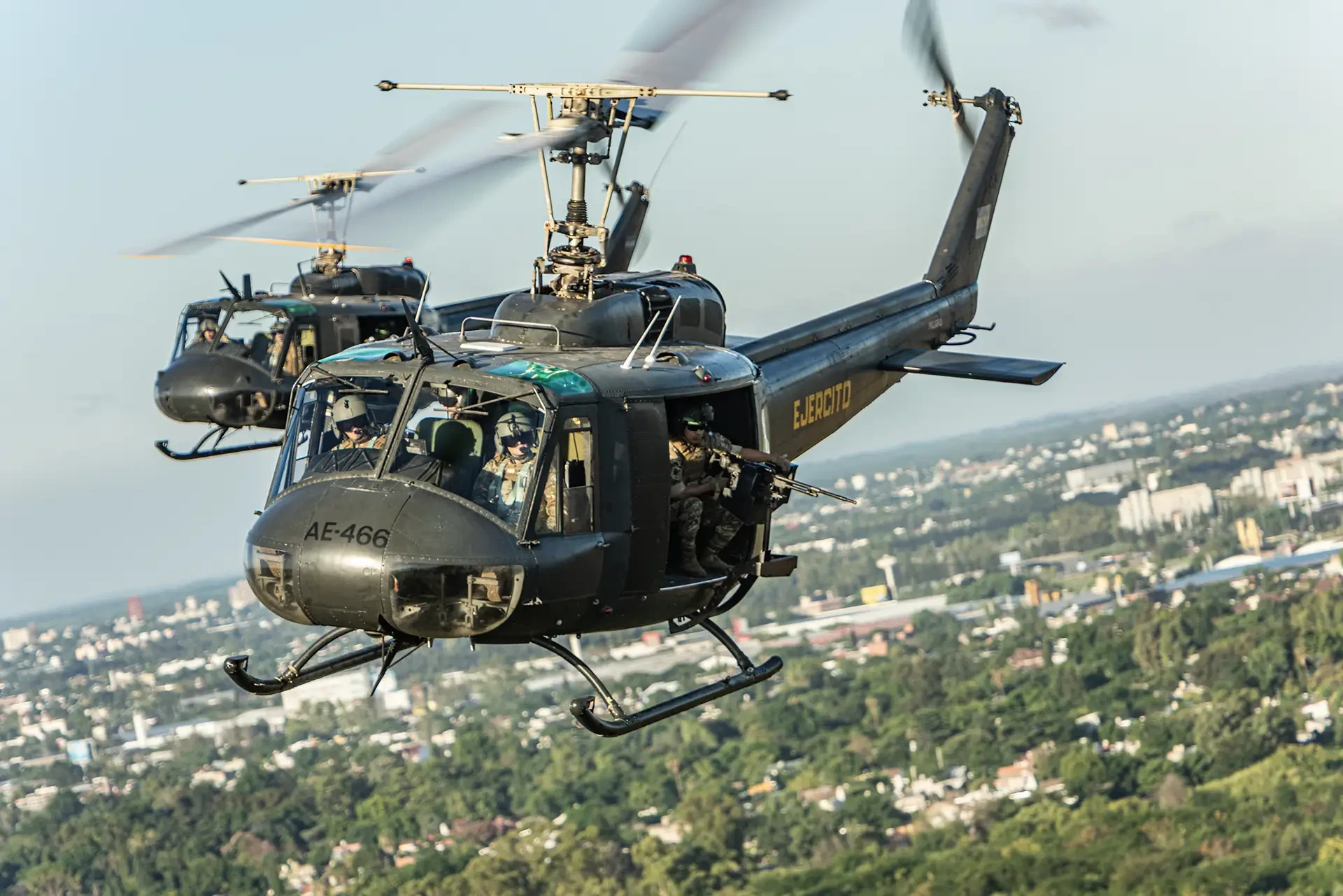
We visited the 601st Assault Helicopter Battalion of the Argentine Army to learn about one of the most important Army aviation units and the largest helicopter element in Argentina. It plays a fundamental role in both times of war and peace. In addition, it has extensive experience in combat and difficult operations throughout the Argentine territory.
The Vietnam War demonstrated the helicopter's value for air assault missions, providing a clear military advantage by enabling rapid troop movement. This surprised the enemy with attacks and flanking maneuvers they were not expecting. The helicopter also proved vital for supplying front-line units and for evacuating the wounded. Over the years, the helicopter added capabilities and began operating at any time of day, thanks to the adoption of Night Vision Goggles (NVGs) and other technologies. These concepts were understood by the Argentine Army during the Vietnam War, which introduced the first assault helicopter unit in Latin America, with origins dating back to 1970. Originally company-sized, over the years, the unit has grown into the current battalion. In addition, the 601st Assault Helicopter Battalion, named Lieutenant Colonel VGM Jorge Roberto Svendsen, is the largest unit of the 601st Army Aviation Group, based at the Campo de Mayo Military Aerodrome. Its creation responded to the need for a unit capable of providing air mobility, speed, and flexibility to ground forces, systematically incorporating the use of helicopters in military operations.
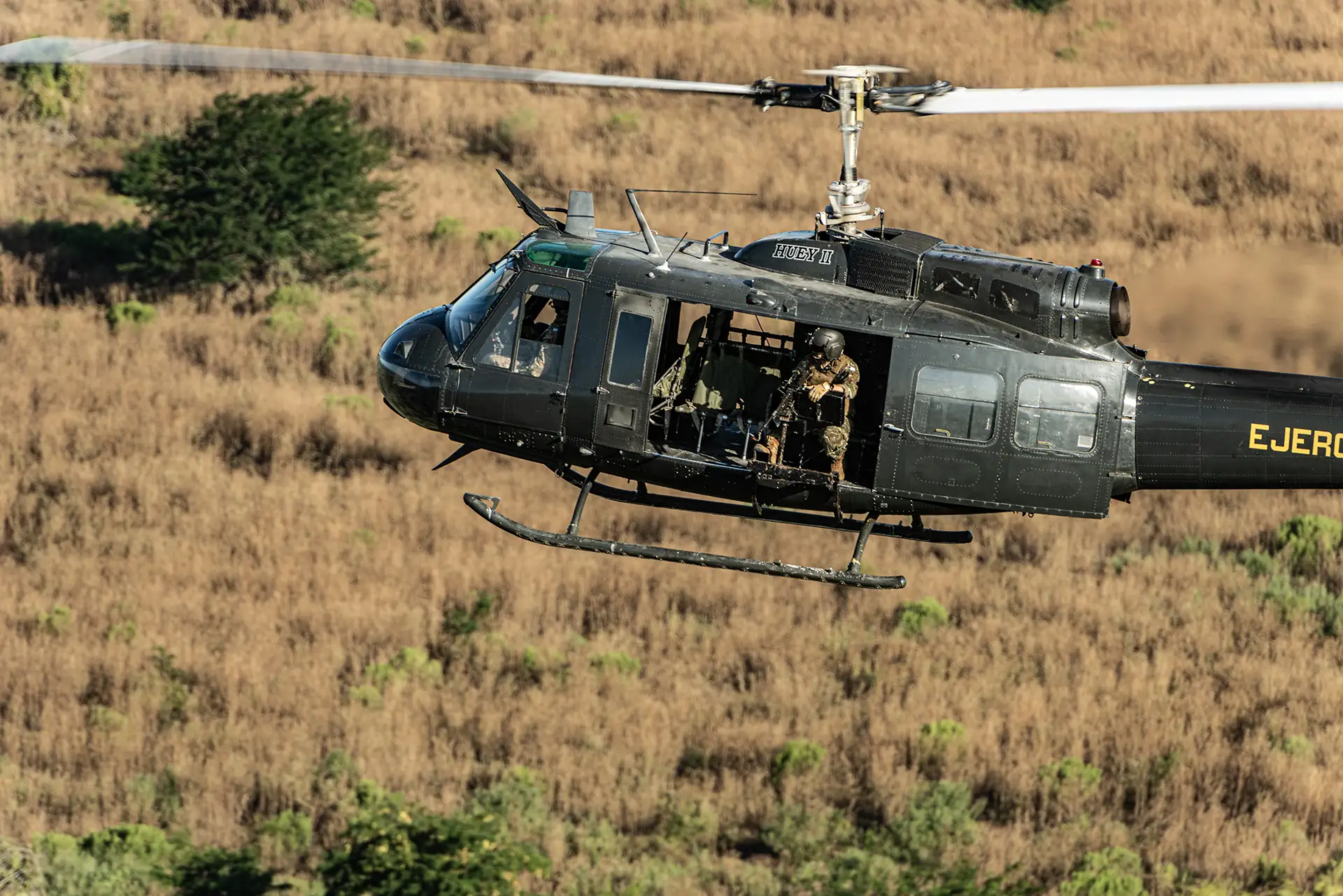
From its origins, the unit specialized in air support for assault troops, infantry, and special forces, developing capabilities for transporting personnel, equipment, and supplies, as well as for the insertion and extraction of troops in areas of difficult access. Throughout its history, the 601st Assault Helicopter Battalion has not only fulfilled strictly military functions. but has also had an outstanding participation in subsidiary operations, providing support to the community in emergencies, natural disasters, and humanitarian aid situations, both nationally and regionally. The unit continues to evolve, maintaining a high level of training and pursuing the modernization of its equipment and procedures, with the aim of remaining a key element of Army Aviation and the broader Argentine Army.
A long road
The unit’s origins date back to the Assault Helicopter Company created in 1970 after the arrival of the first Bell UH-1H in December 1969, which was part of the 601st Combat Aviation Battalion. In 1975, the unit entered combat for the first time, participating in 'Operation Independence' ordered by the government to combat the communist guerrillas in the province of Tucumán. On February 7 of that year, the "Condor" Combat Team was organized, comprising the Assault Helicopter Section (with four UH-1Hs) and the Aviation Group (with two Piper L-21Bs), both from the 601st Airmobile Battalion, and a Maintenance Group from the 601st Aircraft Supply and Maintenance Company.
A week later, two aircraft participated in the battle of Río Pueblo Viejo, providing fire support to the ground troops and medical
evacuation. Later they participated in the battles of Los Sosas on June 23, that of Potrero Negro, on September 4, and that of Acheral,
where the Bell UH-1H registered AE-412 was hit by enemy fire, killing the door gunner, Corporal 1º Mec. Av. Anselmo Ramírez. Shortly after,
three other UH-1Hs arrived in the area, which provided fire support with machine guns and rockets. The last combat action was on November 8,
at Los Higuerones, although on May 5, 1976, during a guerrilla search flight, the UH-1H registered AE-411 was lost along with four of its
six crew members.
Subsequently, on December 23, 1975, five aircraft participated in an attempt to prevent the takeover of the 601 Domingo Viejobueno Arsenal
Depot Battalion in the town of Monte Chingolo, province of Buenos Aires, carrying out an air assault to support the ground troops. In 1978,
with the purchase of nine Aerospatiale SA-330L Pumas helicopters, a second company was created, called Assault Helicopter Company A, while
the UH-1H remained in Assault Helicopter Company B.
Both the UH-1H and the SA-330L Puma actively participated in the Malvinas (Falklands) War, with the first action carried out by a Puma during the recovery of South Georgia on April 3, 1982. During the month of April, nine UH-1Hs and five SA-330L Pumas were sent to the Islands along with three Agusta A-109As from the Exploration and Attack Helicopter Company and two Boeing Vertol CH-47C Chinook from the Support Helicopter Company.
During the conflict, the first loss occurred on May 9, when the Puma AE-509 was shot down by a Sea Dart missile, causing the death of its
three crew members. The unit’s aircraft subsequently performed a variety of missions, including transport, rescue, and reconnaissance, most
notably mid-combat air assault operations for Darwin and Goose Green on 29 May, in which they operated in conjunction with an Air Force
Chinook.
In addition, a Puma helicopter was used in medical tasks aboard the hospital ship ARA Bahía Paraíso, while the rest of the helicopters were
used for transport, reconnaissance, and search and rescue missions. The unit suffered the loss of the UH-1H AE-419 on April 30 and the
deaths of its fourteen crew members.
The 1982 war generated, on the one hand, enormous experience and learning, but it also left a greatly diminished fleet. It had just three Pumas, in addition to 13 Bell UH-1Hs, four Bell 205A-1s received in 1978 and a Bell 212. However, in 1986, three AS-332B Super Pumas were received for operations in Antarctica. More units were expected to be acquired, but unfortunately, this did not occur.
That year also marked a fundamental step, as the experience gained in the war and the unit's maturation over the years led to the decision
to create the 601st Assault Helicopter Battalion from the two assault companies, which became part of the new unit. The fleet
was then reinforced in 1994 with six additional UH-1Hs, followed by another ten in 1998, five in 2000, five in 2001, four in 2007 and three
from the Navy in 2010 (along with two more decommissioned and five from the Air Force, also decommissioned), although some of these
aircraft were assigned to the 602nd Exploration and Attack Aviation Squadron and various aviation sections in 2010.
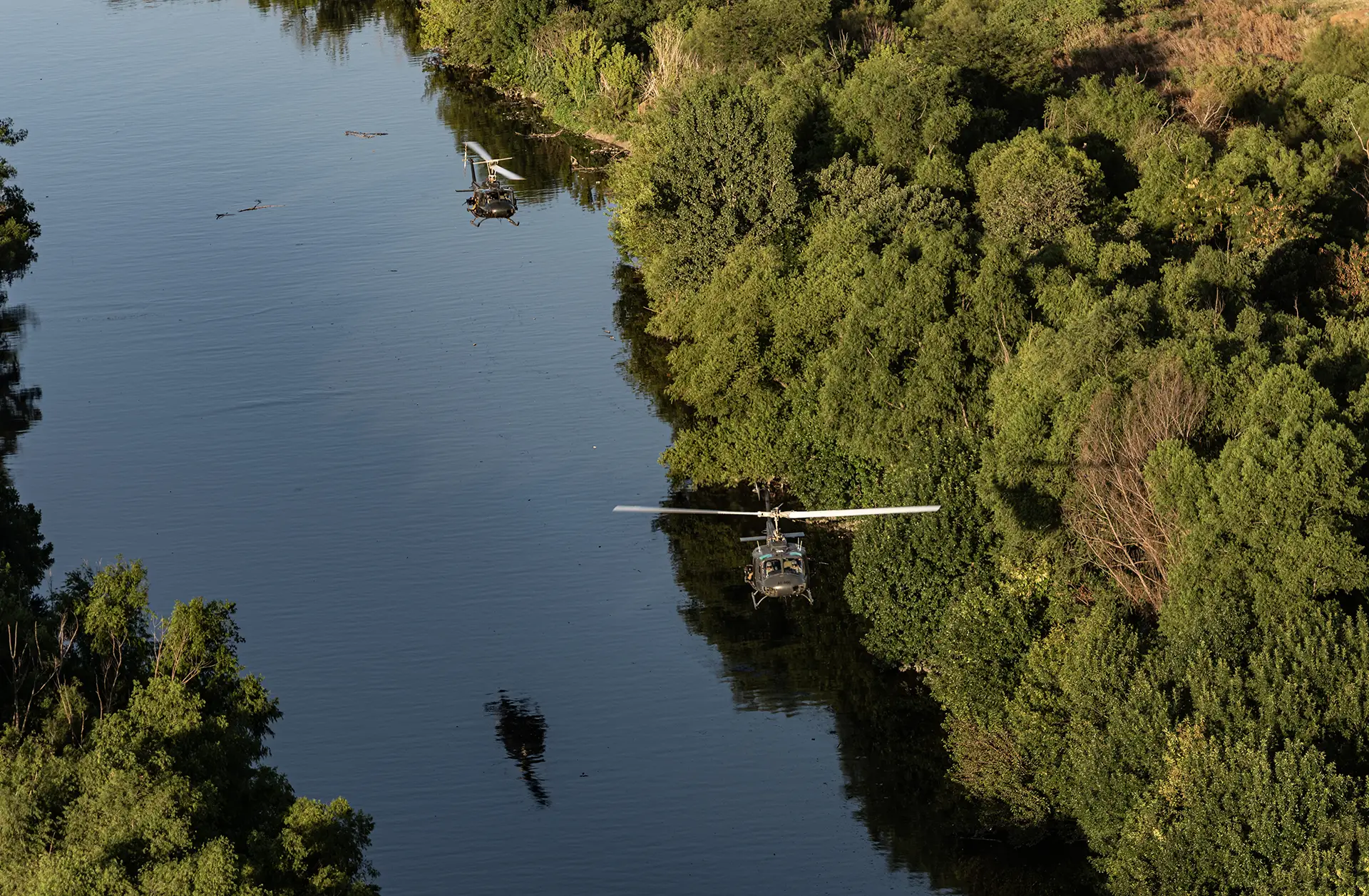
To modernize the helicopter fleet despite budget cuts, in the early 2000s, the modernization of the UH-1H fleet to the Huey 2 standard was
confirmed and would be carried out locally by the 601st Aircraft Supply and Maintenance Battalion (Aircraft Maintenance and
Support Battalion), with the first example being completed on August 5, 2005. Tail number AE-447, now registered as AE-460, carried
out the first tests. In 2006, as payment for differences in the contract, the company delivered Bell's Huey 2 demonstrator to the Argentine
Army. This aircraft was the first to receive an avionics modernization, completed at the end of 2013, as part of a plan to modernize eight
machines. Meanwhile, in 2019, two Huey 2s were received from the National Gendarmerie.
Finally, sixteen UH-1Hs were converted to Huey 2 (one of them was subsequently lost), which were added to the two delivered by the Gendarmerie and the demonstrator.
Organization and operations
The Battalion today has three squadrons: the Support and Assault Squadron equipped with the Bell 212 and the latest AS-332 Super Puma, the Assault Squadron with the Bell UH-1H Huey II fleet, and the Command and Service Squadron for ground support and front-line maintenance. All major depot-level maintenance, as well as modernizations and conversion to Huey 2, is carried out by the 601st Aircraft Supply and Maintenance Battalion.
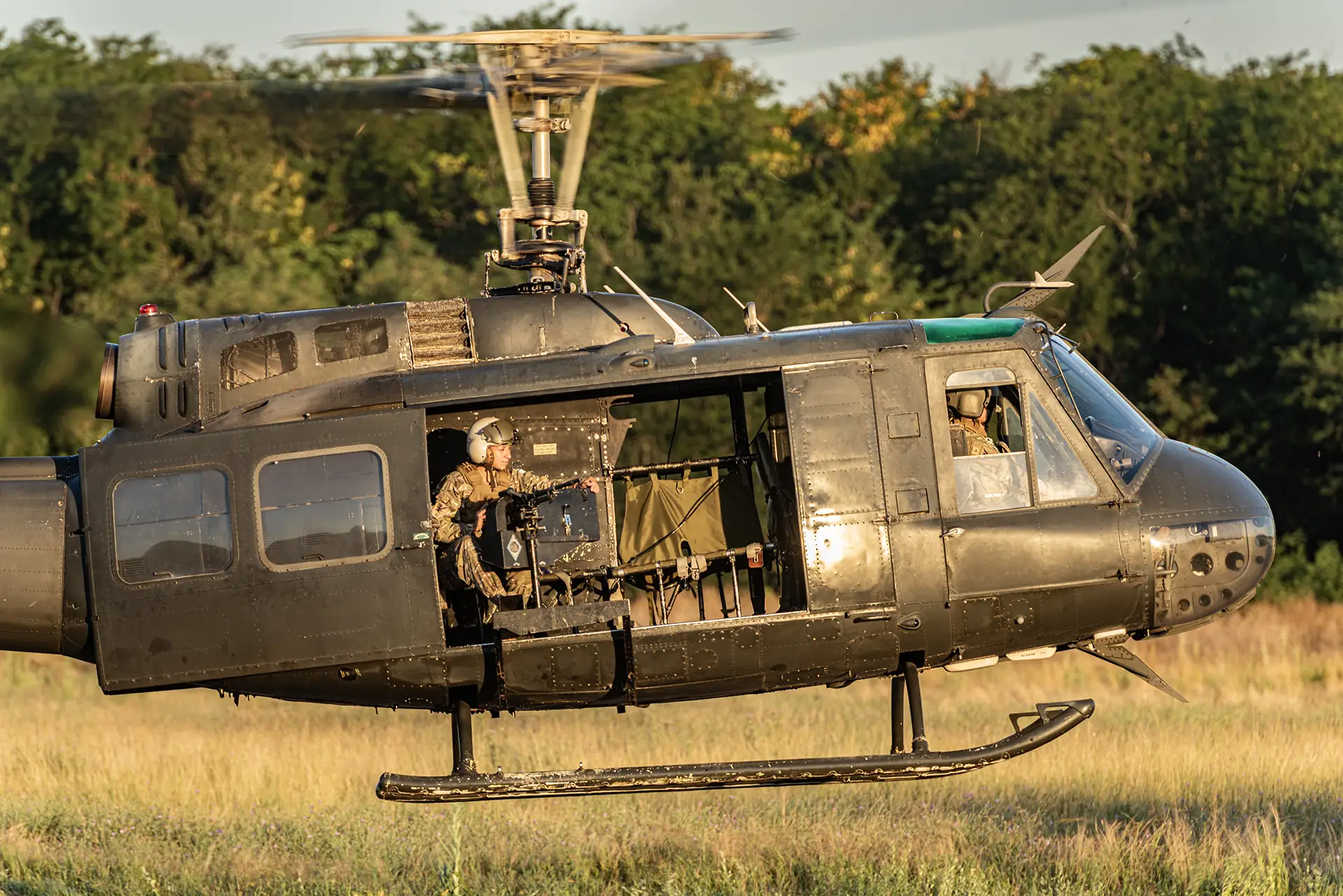
The unit’s main missions endure: to carry out airmobile operations, providing mobility and speed to the supported elements by executing combat functions, combat support, and logistical tasks. The diversity of environments in Argentina creates a challenge for the unit, which must have the capacity to carry out operations in any a broad sway of environmental conditions, from the Patagonian steppe, the Andes Mountains, the jungles of the northeast, the Pampas plain, deserts, to the swampy areas and island areas, exposing both men and machine to the challenges of high altitude, high temperature and high humidity operations, as well as several Degraded Visual Environment (DVE) scenarios, including dust, sand and extreme low light levels.
Normally, the battalion operates together with the 601st Air Assault Regiment of the Argentine Army, founded in 2000, which is based in Campo de Mayo, near the airfield, as well as with other units of the Rapid Deployment Force, which includes the 2nd and 14th Parachute Infantry Regiments and the three commando companies, among other units. They also regularly operate with infantry regiments from across the country and special operations forces from the other Armed Forces.
In addition to traditional air assault missions, where the troops disembark from the helicopter on the ground, the Battalion carries out
personnel deployment operations through the techniques of rappelling, fast rope, and helo cast (rapid insertion of troops into a body of
water, at low altitude and speed), as well as parachute drops.
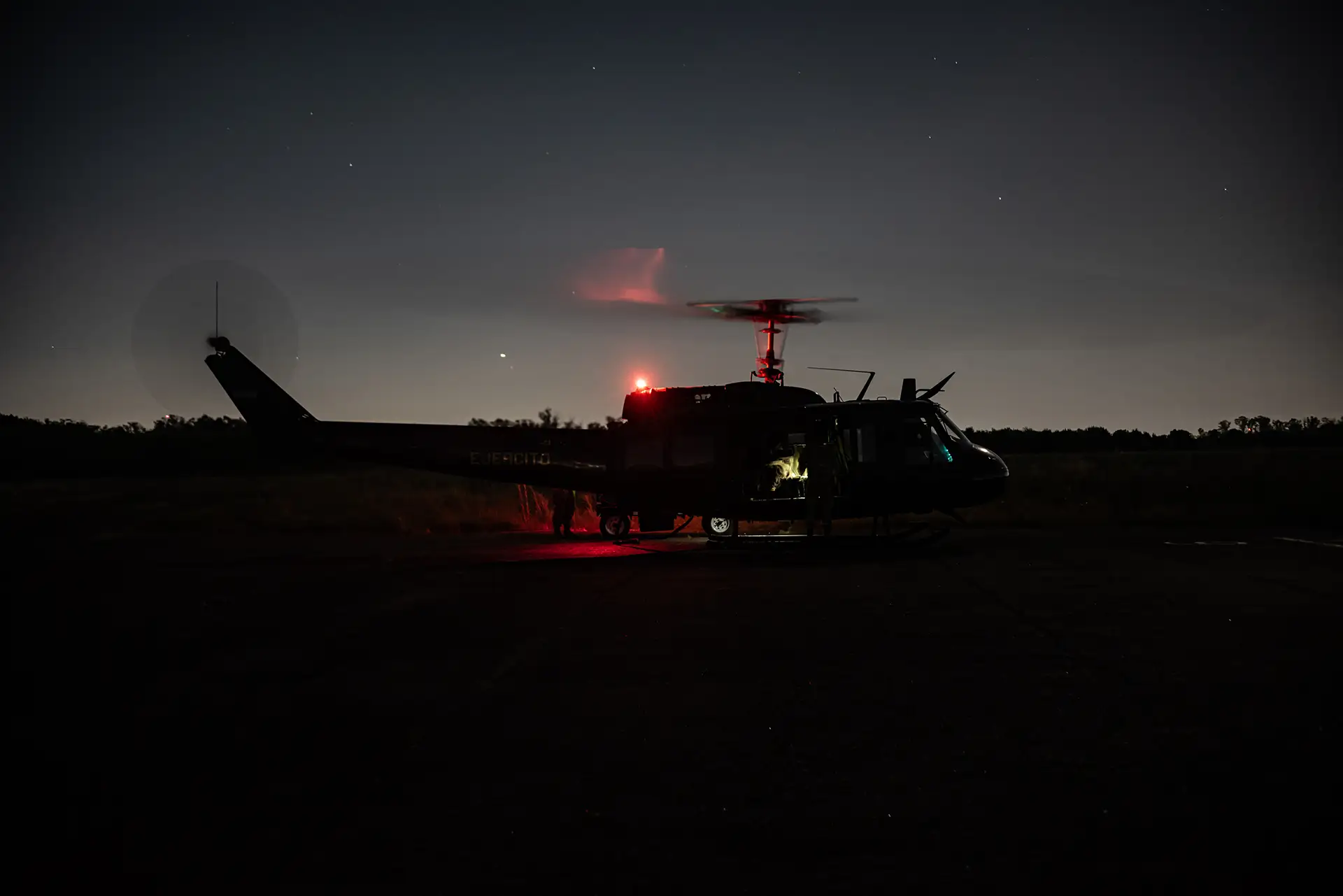
The unit’s helicopters also carry out cargo transport missions, both internal and external sling, while the unit received Goodrich rescue
hoists, baskets, and stretchers in 2015, which add to the existing capacity for the evacuation of injured people, with a capacity for up to
six stretchers. The Spectrolab SX-16 Nightsun searchlight has also been acquired to help with night missions.
Beyond its core military functions, the Battalion plays a key role in so-called subsidiary operations, especially in support of the community and civil protection, including transport, medical evacuation, firefighting (using the Bambi Bucket), humanitarian aid missions, flood and natural disaster support, and logistical assistance in health emergencies. Every summer, they also participate in the fight against forest fires in Patagonia, for which in the summer of 2026 they deployed one of their helicopters, while they also had a prominent participation in emergencies such as the COVID-19 pandemic or the floods in the city of Bahía Blanca in 2024. It has also intervened in internal security operations ordered by the National State within the current legal framework.
Training
The pilots who join the unit come directly from the Army Aviation School, an institution in which they have already acquired the basic skills of helicopter operation and have carried out initial training in the Huey II simulator, later continuing with the aircraft rating. Army aviators and pilots, once they have completed the Joint Basic Helicopter Pilot Course (CBCPHEL) and are assigned to this unit, receive a thorough ground school course in the aircraft's systems, along with emergency handling theory. Once this stage has been consolidated, they begin their qualification process through the flying phase on the aircraft.
Although they have flown aircraft such as the AB-206 or the Bell 206 at the Army Aviation School, when they join the unit they begin operating the helicopter under real operational conditions, loaded with troops or cargo, across diverse geographic environments and mission scenarios.
This constitutes the first stage of training as co-pilots of the Bell UH-1H / Huey II weapon system. Over the years, with accumulated
experience, they will progressively evolve into the category of command pilots and, finally, flight instructors.
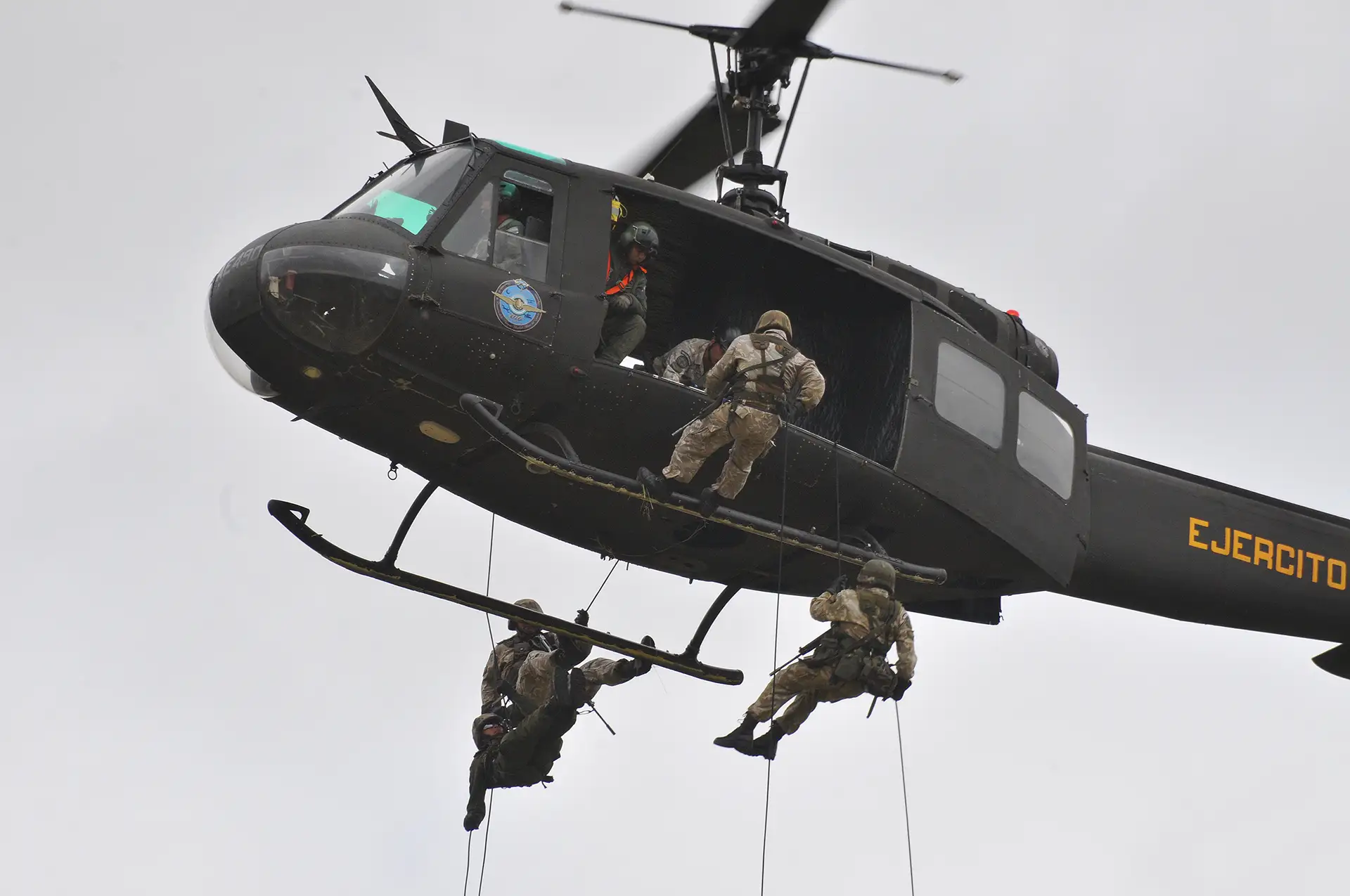
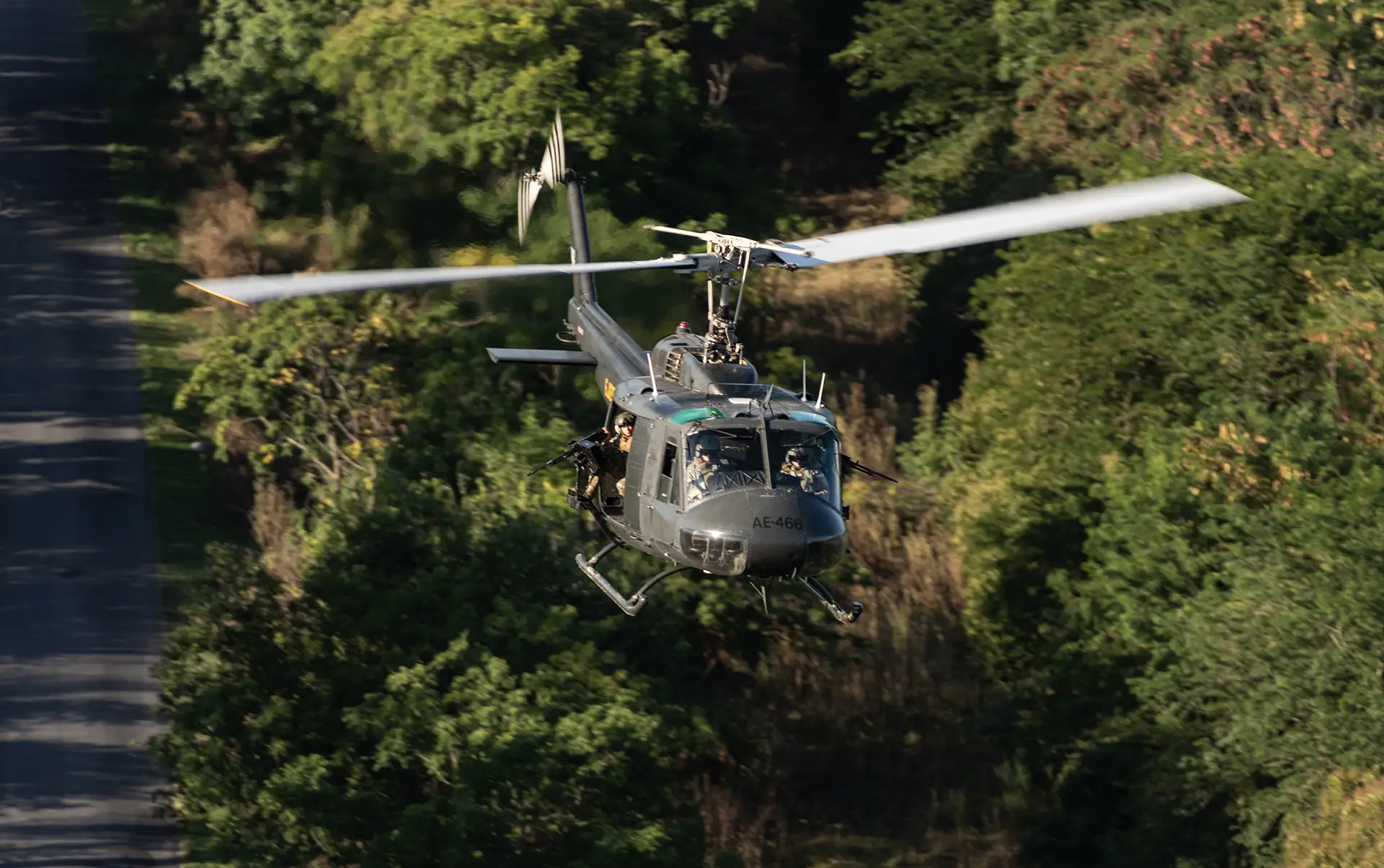
For their part, aircraft mechanics also serve as door gunners, with one on each side operating the 7.62 mm MAG machine guns mounted on locally developed CITEDEF mounts. They provide fire support to the troops on the ground and suppress enemy fire both in the flight phase and during the air assault itself.
After the pilots have completed their basic training, flights in different geographical environments are introduced to increase familiarity with varied terrains and the aircraft's behavior in each. Aerial insertion and extraction procedures are also carried out in all environments, including urban areas, both day and night. In the latter case, the unit is trained in operating with NVGs, which prepares crews to act in complex situations and under demanding conditions, both day and night.
Future
Although there was a plan to recover the Super Pumas, it was ultimately deemed too expensive due to their age and limited similarity to more modern examples of the model. For several years nowz, its replacement has been analyzed, culminating in the signing of a Letter of Intent (LoI) for 12 Airbus H225M in 2023, but without any real progress towards getting on contract. At the same time, it was decided not to proceed with the conversion of the remaining UH-1H fleet to Huey 2, given the machines' age, and a replacement for the model is also being sought in the near future.
On the other hand, there is the intention to create a specialized element, with a more intense and permanent level of training, oriented to complex, high-precision, and especially night operations, for which it will be necessary to modernize the structure of the unit, incorporate more advanced equipment, and make a technological leap.
For several years now, three options have been considered to replace the UH-1H and Huey 2 fleet. The Sikorsky Black Hawk, of which batches of refurbished second-hand UH-60A+ and UH-60L have been analyzed, although the possibility of buying new S-70i has also been studied. On the other hand, the newly built Leonardo AW-139 has also been considered, as has the venerable Bell 412. While there is a preference for the Black Hawk given its excellent performance, it also has the highest operating costs, which can be a limitation if the force's budget is not increased. The Bell 412, on the other hand, does not pose a significant leap compared to the current fleet, maintaining the same load capacity and many of the limitations of the model it replaces, while the AW139 is presented as an intermediate solution in terms of low costs and good performance - but in an airframe that is not purpose-built for military operations.
The current plan is to purchase an initial batch of at least 12 examples of the selected aircraft in the short term, as one of the force's priority programs, although the number will depend on budget availability.
One thing is for certain, however. To maintain a credible air assault and SOF support capability, the Army will need to look to move on from its faithful UH-1s. As good as the 'Huey' is, it is aging, and more modern alternatives are urgently needed. Perhaps the Army will follow the lead of the Air Force, which has recently concluded the purchase of refurbished ex-Dutch F-16s. The US is in the process of divesting several hundred UH-60Ls - the timing has, perhaps, never been better?