 HOME
HOME




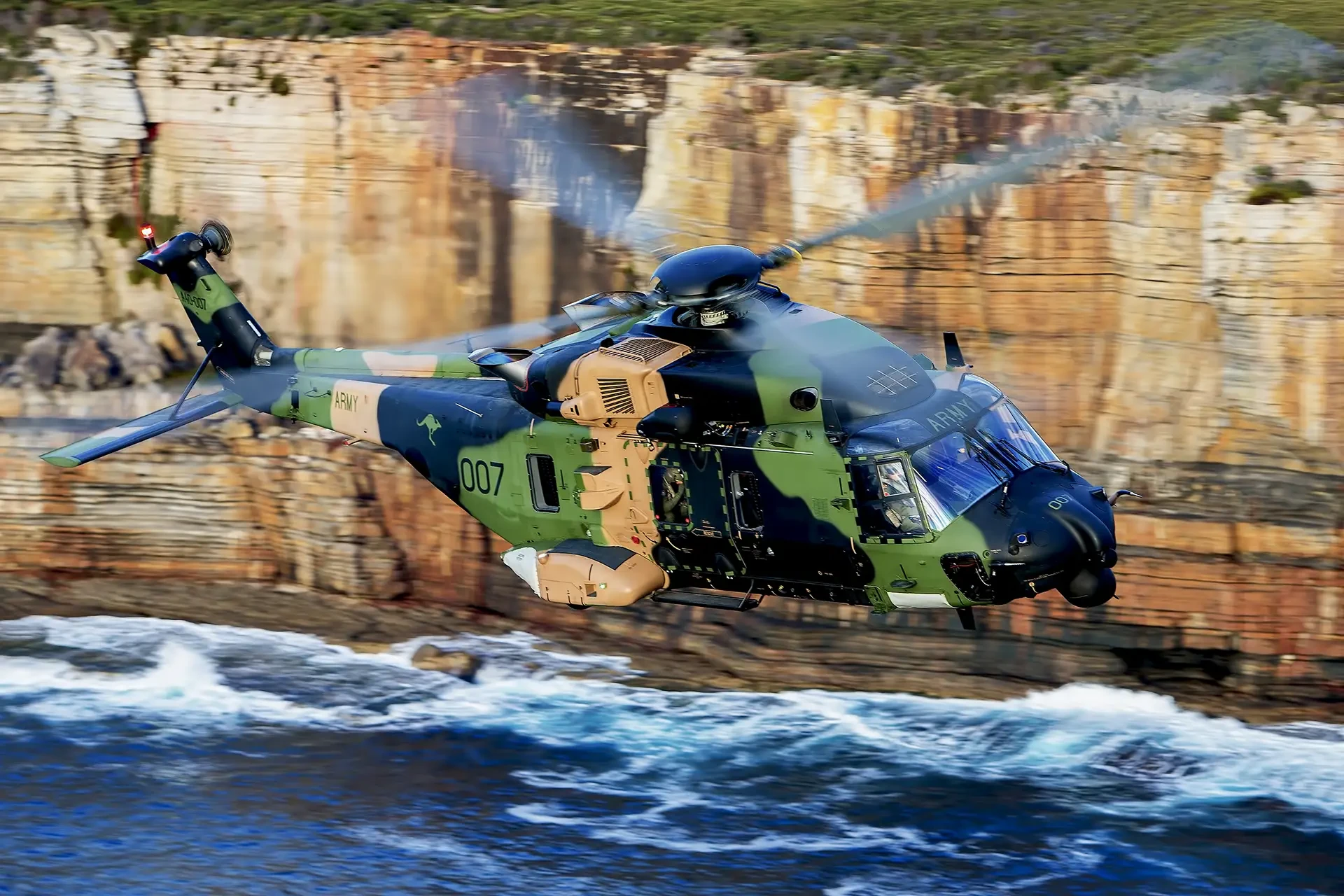
In July 2023, the Australian Army suffered the loss of an MRH90 helicopter near Lindeman Island in the Whitsundays, Queensland, Australia. Mark Ogden, Antares’ editor and an experienced aviation accident investigator and military helicopter flight instructor, reviewed the accident report produced by the Australian Defence Flight Safety Bureau (DFSB) in Antares issues 22&23. The Australian Senate Legal and Constitutional Affairs References Committee recently reviewed the accident and investigation and released its report in September 2026. In this review, our editor examines what this committee report found and any relationship to his original assessment of the accident report.
In my two-part series that examined the Australian DFSB report into the July 2023 MRH-90 accident, I concluded, “Based on the publicly available report, the investigation appeared to limit itself from properly and sufficiently exploring all aspects, including the adequacy of crew experience. This report, in conjunction with previous accident and occurrence reports, appears to hint at serious cultural problems within Australian Army Aviation.” In my opinion, the DFSB had an opportunity, and indeed a responsibility, to highlight the problems apparent in the Australian Army’s Aviation culture that contributed to the accident. Unfortunately, the DFSB report did not do a deep dive into culture, and that failure raised concerns for many people.
How the Senate got involved
This Senate committee had not previously reviewed an Australian Defense Force accident. That committee’s usual portfolio examination was
the Attorney-General and Home Affairs. Its work focused on law, migration, FOI (Freedom of Information), crime, and similar matters.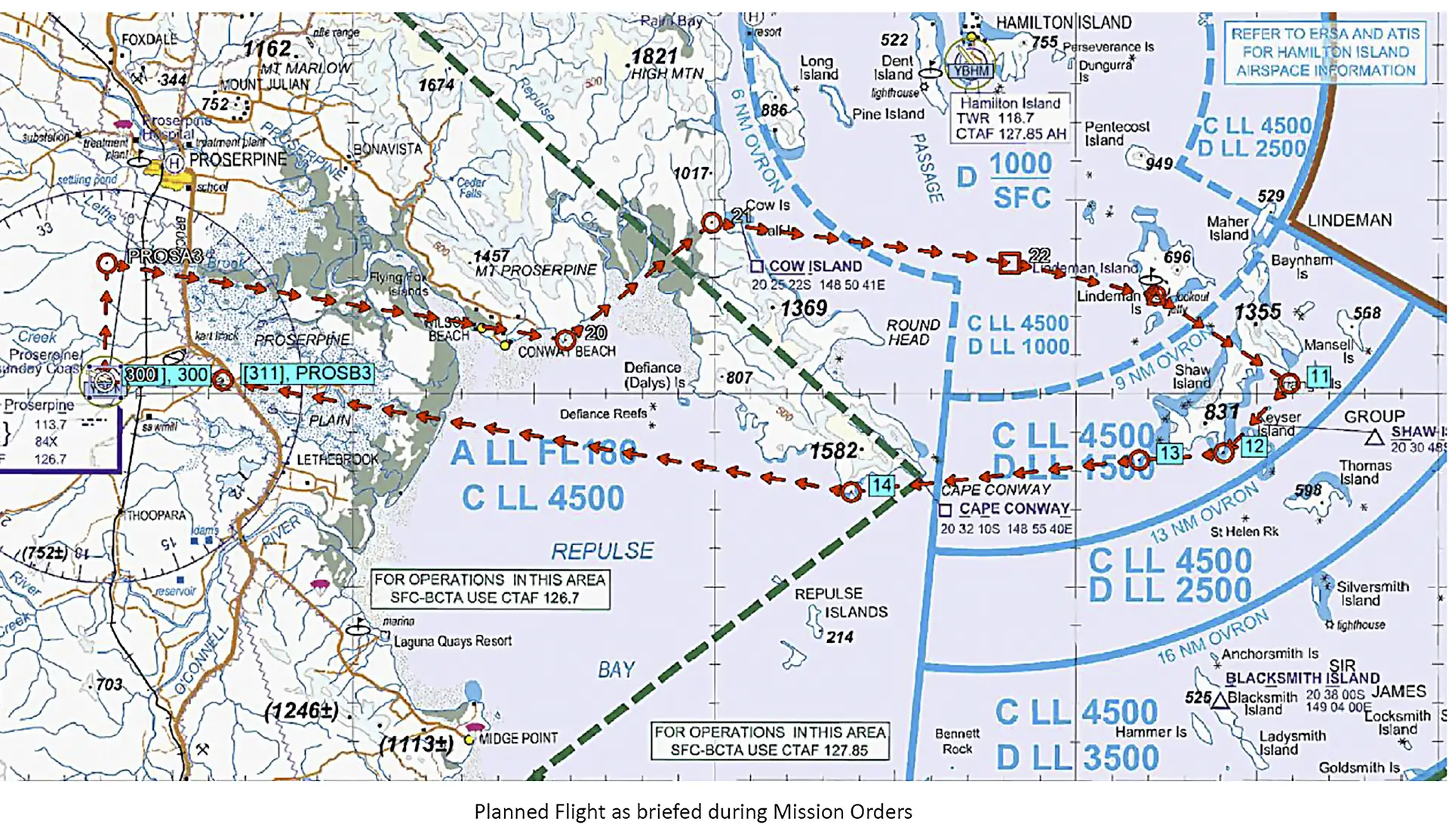
The Taipan inquiry sat on its completed list as an outlier: it was referred on 4 February 2026 after Senator Malcolm Roberts moved a motion
that included the Comcare (the Commonwealth’s Work Health and Safety regulator) briefs and the CDPP’s (Commonwealth Director of Public
Prosecutions; the independent federal prosecutor for Commonwealth offenses) decision not to prosecute. Those were legal questions, which is
why the reference went to Legal and Constitutional Affairs rather than a defense committee.
In this case, it was the CDPP that received Comcare’s two briefs (fatigue management and the TopOwl helmet display) and decided, in July 2025 and again on review in February 2026, that there were no reasonable prospects of conviction under the Work Health and Safety Act. That is why no criminal charges were laid against Australia’s Department of Defence.
The Senate Legal and Constitutional Affairs References Committee report on the MRH-90 Taipan incident was not a crash reconstruction; rather, it was a ‘systems’ inquiry. The committee’s terms of reference asked how Army Aviation assessed the platform and its equipment, whether it complied with the Defence Aviation Safety Regulation (DASR), what Comcare found, how other investigations sat alongside that work, and whether the decision not to prosecute any matters arising from the accident was appropriate.
The committee’s apparent view was that the deaths of Captain Danniel Lyon, Lieutenant Maxwell Nugent, Warrant Officer Class Two Joseph
Laycock and Corporal Alexander Naggs occurred inside a long-running pattern of known risk, strained capability and a safety culture that
struggled to convert warnings into action.
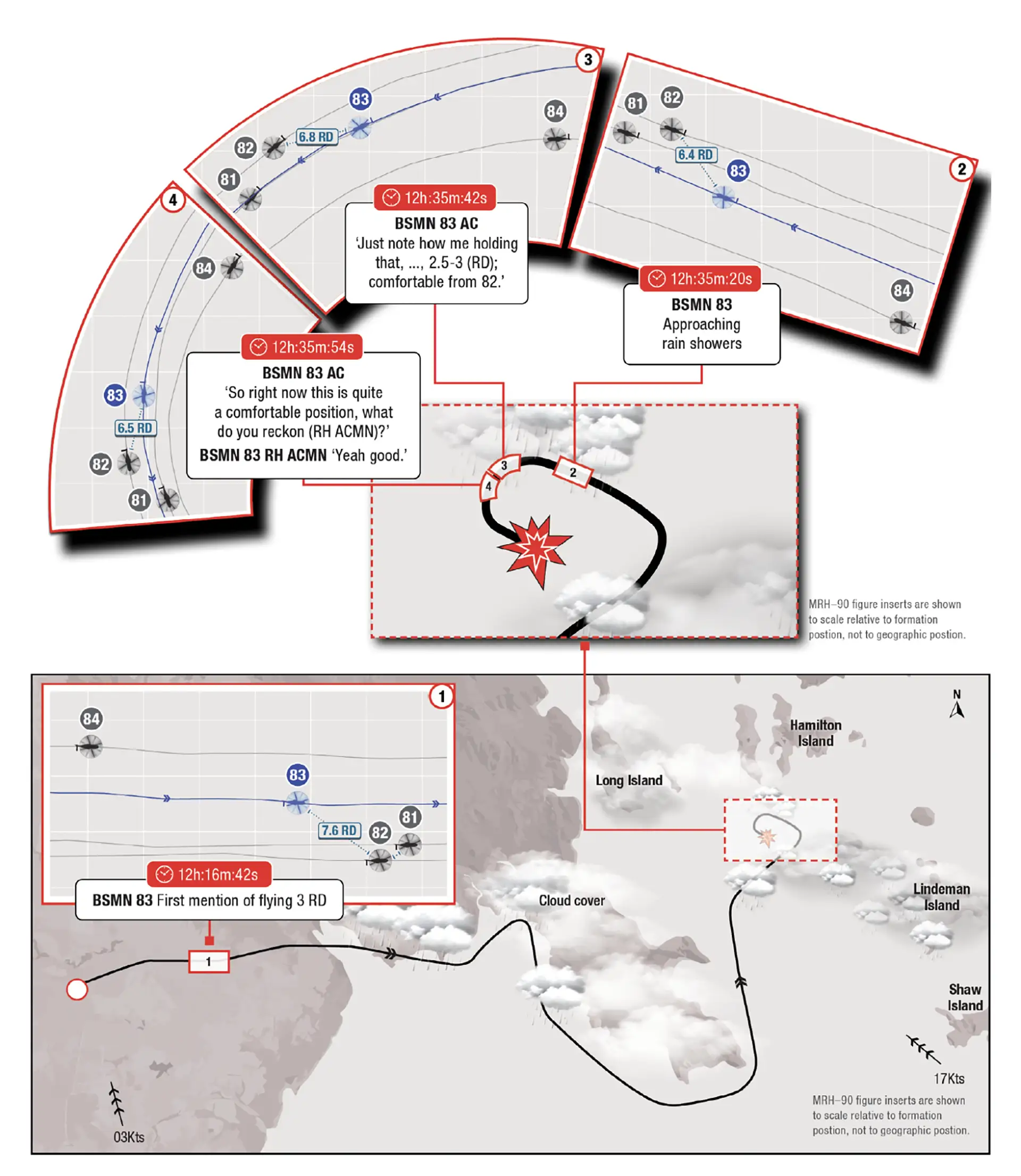
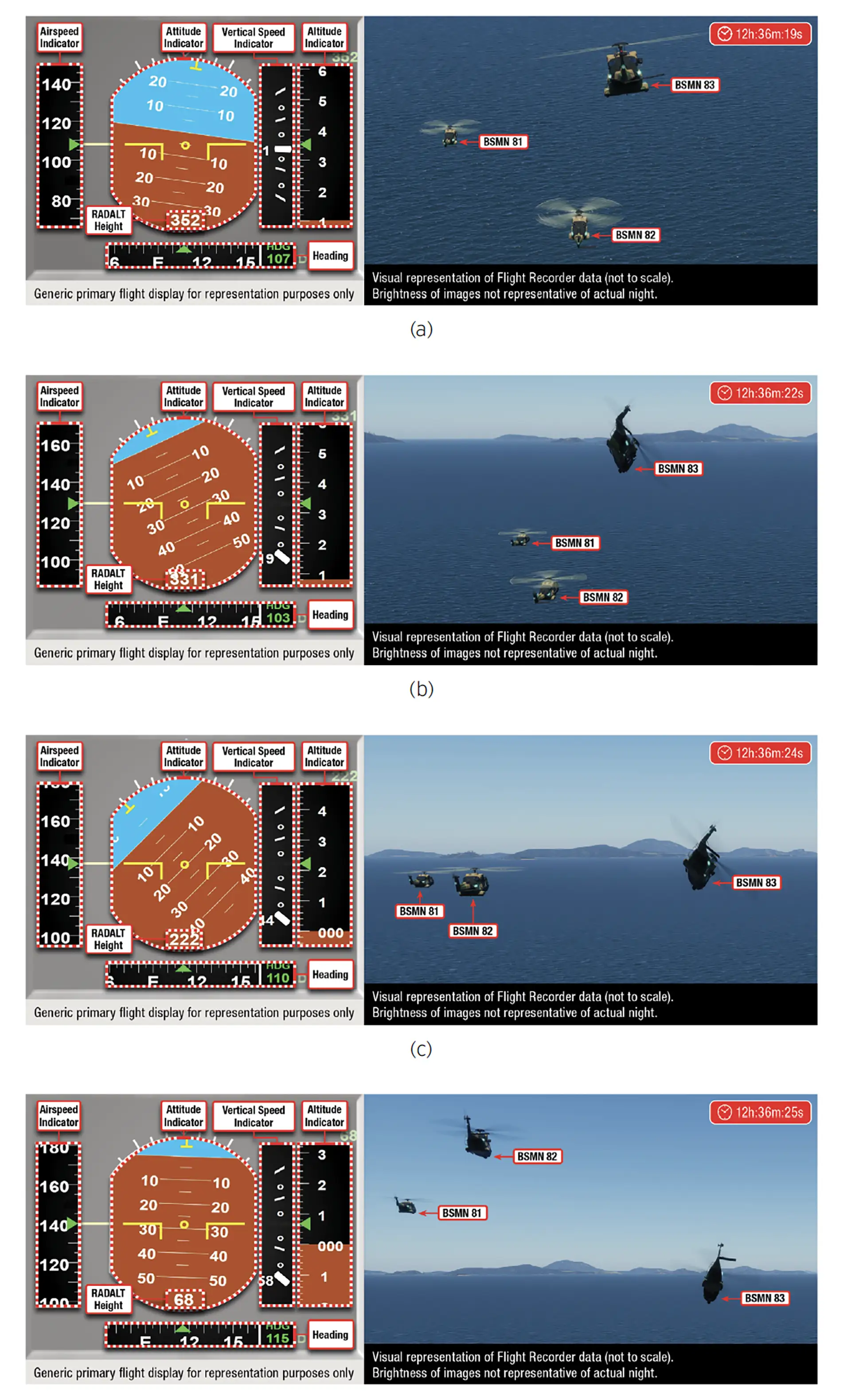
On the night of 28 July 2023, four MRH-90s left Proserpine for a night extraction to Lindeman Island during Exercise Talisman Sabre. They
flew in formation, at low level, over water, on night vision devices. The third aircraft, Bushman 83, struck the water. All four aircrew
were killed. The DFSB later said the primary cause was an unrecognized loss of spatial orientation.
The Senate report did not dispute that finding (although it recommended a review of the DFSB investigation); instead, it asked a different question: why the conditions that allowed that disorientation to occur were allowed to exist, which, to me, should have been the focus of the DFSB report.
A platform that never matured
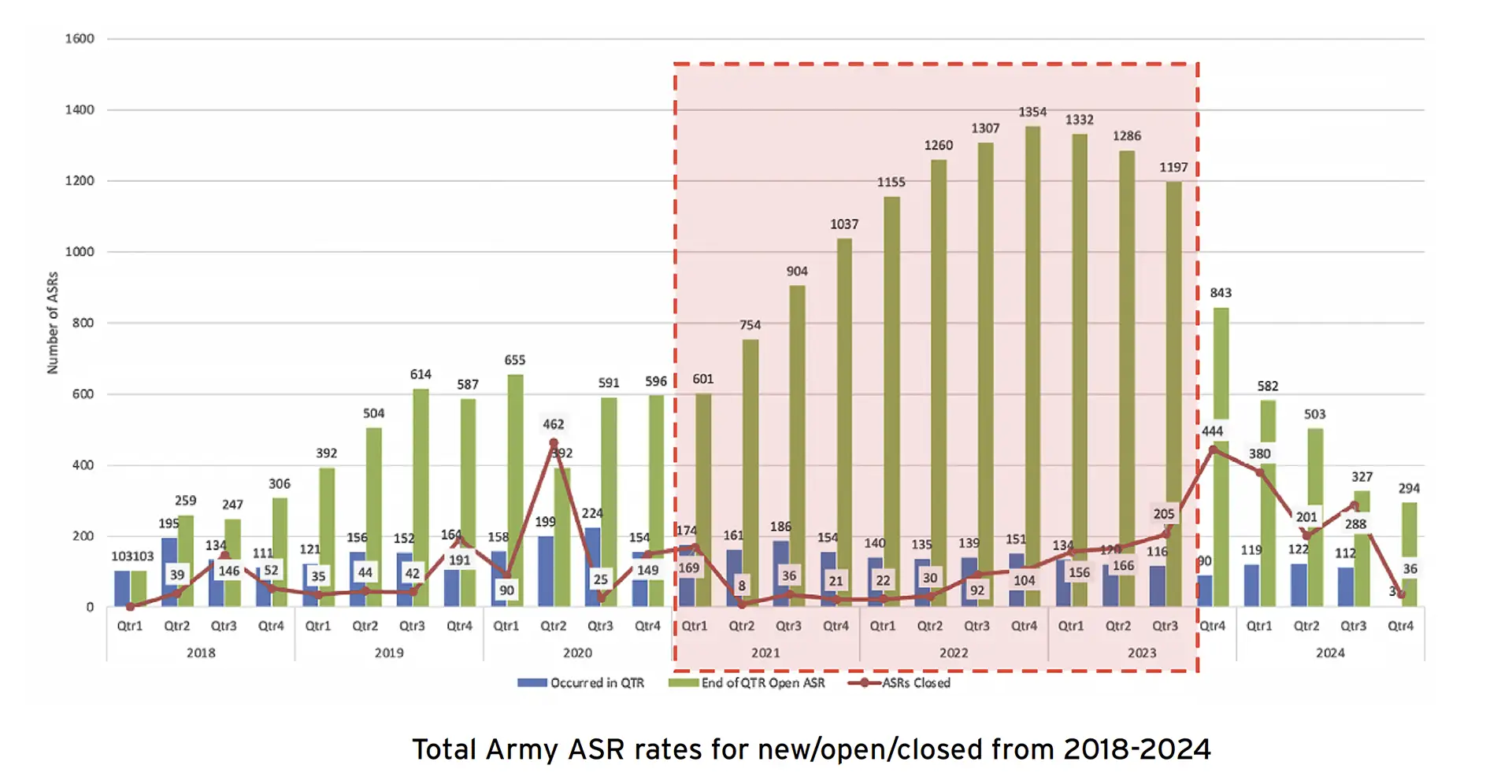
The committee assessed the accident against the MRH-90's acquisition history. The project was listed as a Project of Concern in 2011 and audited by the Australian National Audit Office in 2014. The report recorded that the aircraft never reached full operational capability. It was described, including in Army evidence, as immature and underperforming: reliability below expectation, parts scarce, flying hours short of plan, and the workforce “saturated” keeping an incomplete system safe.
Major General Jeremy King, giving evidence in the related IGADF (Inspector General Australian Defence Force) investigation process that the committee drew on, called it a developmental platform whose systems were not as mature as anticipated.
\The committee was careful not to treat the procurement history as the potential cause of the crash but rather as an institutional setting. Once a large, troubled capability is defended through schedule, cost and industrial commitments, later airworthiness decisions were made under pressure to keep the fleet useful rather than to cease it. That was the frame for the most technical part of the report: the TopOwl helmet-mounted sight and display.
The HMSD (Helmet-Mounted Sight Display) warning that was worked around
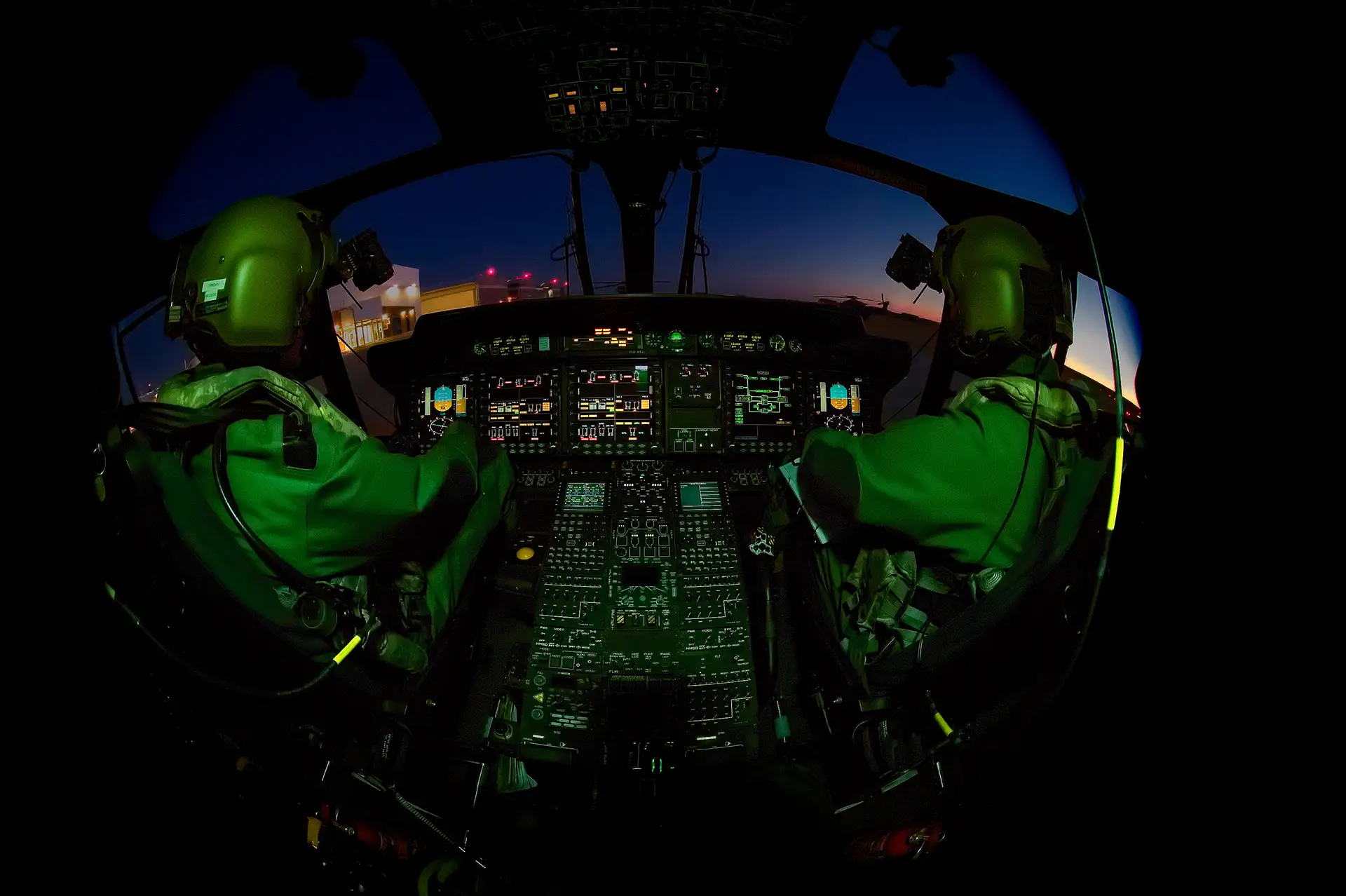
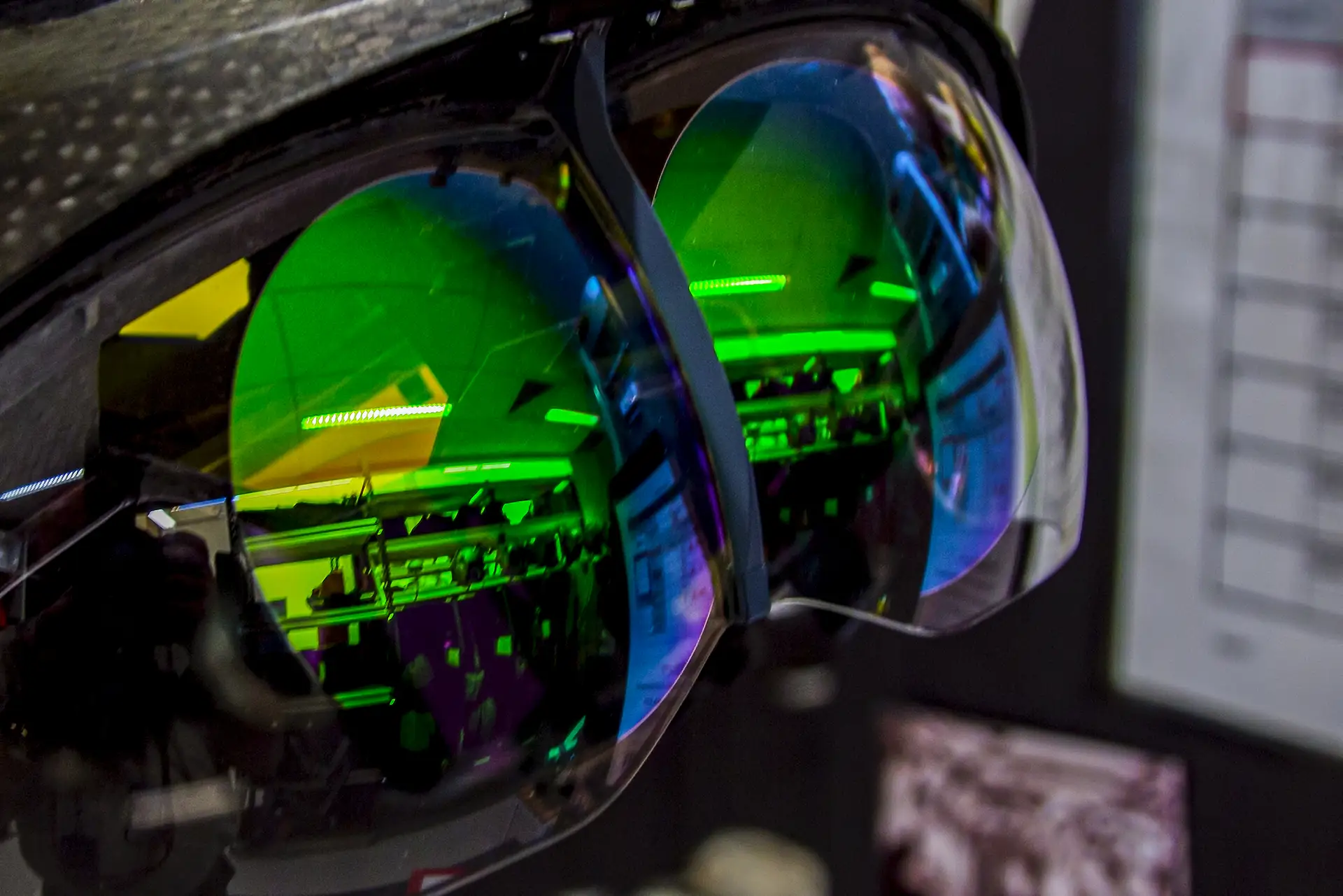
TopOwl projects flight information onto the visor so a pilot need not look down into the cockpit. Version 5.10 software provided the symbology in use on Bushman 83. In June 2019, the Army Aviation Test and Evaluation Section (AATES), the Army’s DASR-authorized flight test organization, tested that software version. Retired Major Ian Wilson, the test pilot, told the committee that the attitude information was disorienting. Looking ahead, it matched the cockpit. Looking to the side, pitch and roll reversed. In good visual conditions, a pilot could look past the false cue. In poor conditions, with no real horizon, the pilot became reliant on the symbology.
AATES recorded this as an “Unacceptable” risk to flight safety: a very high risk of disorientation in poor conditions, with multiple
fatalities the likely result of disorientation at low level. The report notes that those were the conditions of 28 July 2023: night, over
water, no visual horizon.
No one criticized the military airworthiness regulations as weak. Retired Major David Lamb, former AATES executive officer, said DASR was
rigorous when followed. The problem, on the evidence the committee accepted, was Army’s compliance. Army Aviation authorized v5.10 by
relying on German Military Airworthiness Authority certification recognized by the Defense Aviation Safety Authority (DASA), and by an
internal operational evaluation that downgraded the risk two steps from “unacceptable” to “undesirable.” That lower classification allows
service use with mitigations such as procedures and training.
Defence could not, at the first public hearing, clearly state the authorized DASR pathway used to release the software. The explanation arrived later, on notice. The committee found that unsatisfactory. It also recorded Wilson’s evidence that the German report was widely treated as authoritative even though, in the IGADF hearings, it emerged that people citing it had not seen it because it was NATO-classified.
Defence said procedures and training were developed to manage the hazard. The committee received contrary evidence that the gravity of the defect was not adequately communicated to aircrew, and that the formal risk-mitigation documentation required under WHS law was not provided to the committee. It was reported that instructors who provided one of the process mitigations may not have properly understood the symbology issue.
This was the report’s sharpest institutional finding. An Australian authorized flight-test organization warned of controlled flight into
terrain in the exact class of conditions later flown. The warning was not treated as binding. Instead, it relied on foreign certification
and an internal evaluation.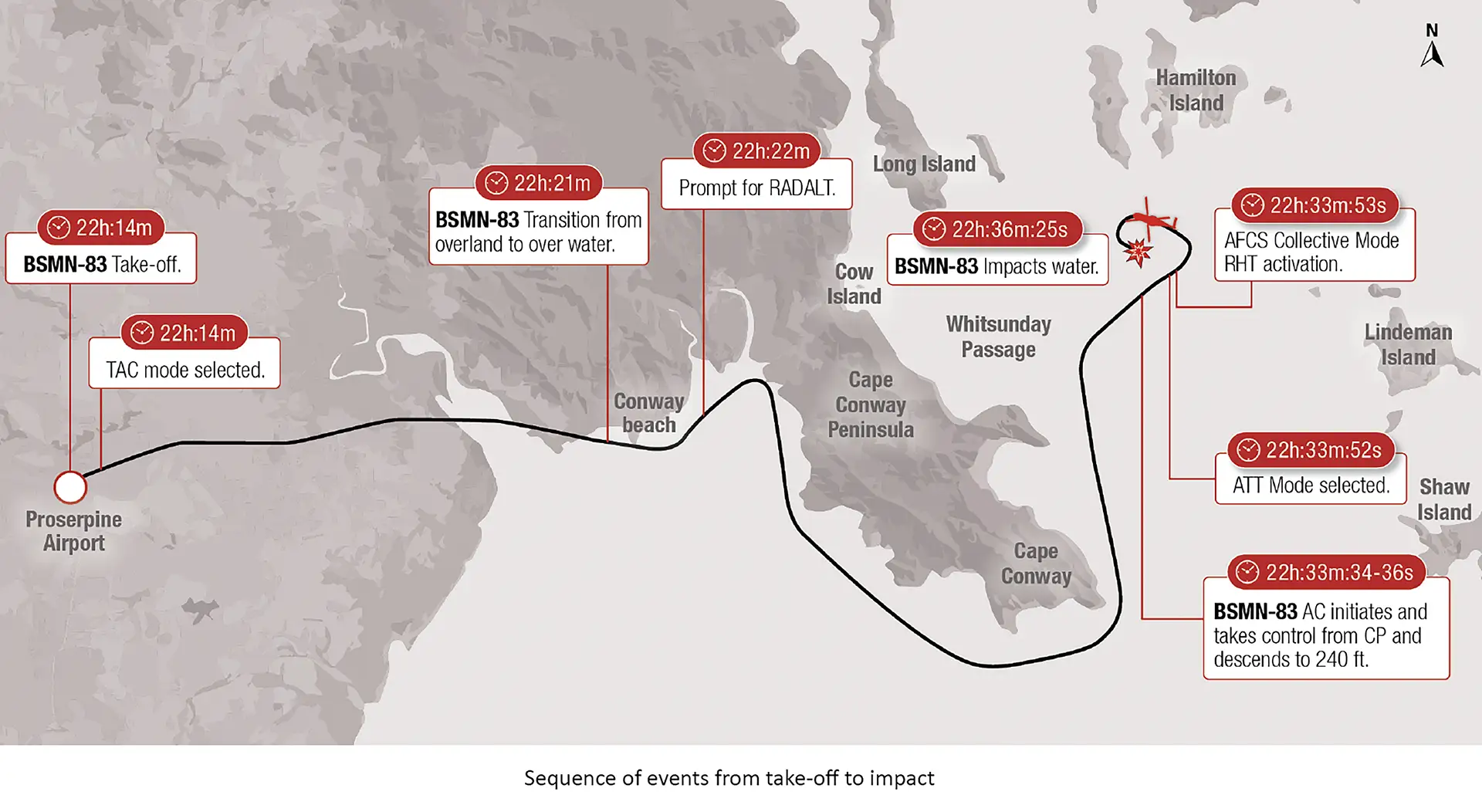 Fatigue
as a known, unmanaged hazard
Fatigue
as a known, unmanaged hazard
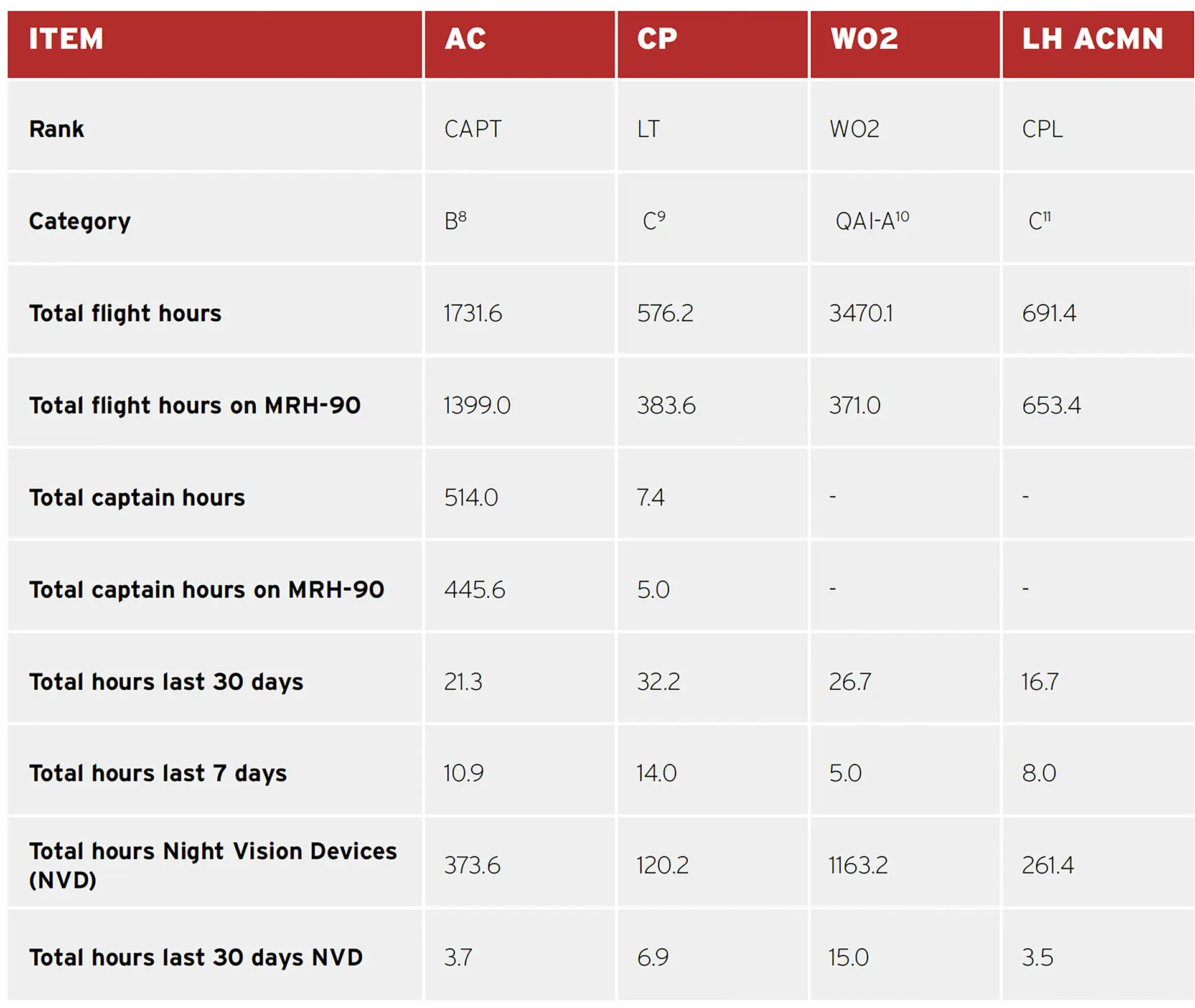
Both the DFSB and Comcare found the Bushman 83 crew were fatigued in a way that impeded performance and increased susceptibility to spatial disorientation. Hot tents beside an active airfield and fire station, disrupted sleep, and a body-clock shift onto night flying during a major exercise. Comcare’s position, as recorded by the committee, was that Defence had tools available and did not use reasonably practicable measures to control the hazard.
The committee did not invent a new fatigue theory. It invited the Auditor-General to consider a broader audit of Army’s compliance with DASR and WHS requirements, including its fatigue and safety culture compared with Navy and Air Force.
The report noted, for example, that while the Navy moved quickly on manufacturer bulletins about defective turbine blades, the Army chose the slowest remediation path, still flying unmodified engines years later until an engine failure caused a ditching in 2023. The report listed other AATES warnings Wilson said were not actioned in accordance with DASR and WHS requirements, including night-vision tube defects, FLIR not meeting airworthiness code as a primary pilotage aid, loss of control margin at high density altitude, helmet attachments that could prevent underwater egress after a Dutch MRH-90 drowning, and a hoist-release defect that later dragged personnel through the water at Jervis Bay. The committee presented these as a pattern, not as a single software story.
Culture: “can-do” without a stop rule
The report examined why warnings in the Army failed to bite. Witnesses described a command environment in which rank, loyalty, posting
prospects, and operational tempo shape what people said and did. It made the point that a safety system on paper is not a safety system if
raising a concern marks a person as difficult. In-camera evidence referred to hesitation to report, “telling the boss what they want to
hear,” and impatience with the time that proper testing takes.
Families tied that culture to delayed implementation of DFSB recommendations after a November 2020 night near-miss between two MRH-90s at
Townsville. Restrictions on night-vision formation flying were not in place in time to affect Talisman Sabre operations. The report examined
evidence that training gaps identified years earlier remained open in July 2023: aircrew were asked to manage degraded cues and hard
conditions without the updated training designed to protect them.
The committee contrasted this with Air Force practice. Lamb’s evidence was that once AATES sat under Army command, Army Aviation began routinely challenging its own flight-test organization. That did not happen when the Army flight-test function sat independently in the Air Force and apparently did not happen in Navy or Air Force test organizations. One of the recommendations asked Defence to consider placing AATES under Air Force command or at least strengthening its authority inside Army. In my opinion, the fundamental differences among aircraft types, operating environments, and requirements still need recognition and individual expertise. I don’t believe the Air Force is the correct place; rather, the three services’ testing agencies should be brought under a single testing ‘command’ that can bring the resources of the three agencies together, setting required training and test operating standards while providing a high level of oversight, expertise, and advice to the three services.
The DFSB itself, the committee noted, described defense aviation’s “can-do” culture and called for a generative safety culture: vigilance,
willingness to learn, and a collective commitment to safety. In the committee’s account, Army Aviation pursued “can-do” to the detriment of
generative safety. It is interesting that an accident report into a fatal hoist accident in 1995 said the same thing about naval aviation
and Army identified the same issue in the
Investigations that do not close the file
The report noted the DFSB investigation began the day after the crash, and it published its report in May 2025, nearly two years later. The DFSB found that the primary cause was unrecognized spatial disorientation and that it was “very unlikely” that known HMSD pitch-scale and attitude hazards contributed directly to the flying pilot’s loss of orientation. The DFSB investigation had involved, as a subject matter expert, the person who had been involved in the original decision, prior to the accident, to downgraded the HMSD v5.10 risk classification from unacceptable to undesirable.
Comcare referred briefs on fatigue and TopOwl to the CDPP. The CDPP, with private-bar counsel, found no reasonable prospects of conviction
in July 2025 and affirmed that following a family-requested review in February 2026. The Director said that if prospects had existed,
prosecution would have been in the public interest. Comcare’s investigation remains open; later IGADF or coronial findings could, in
theory, support another brief outside the ordinary limitation period.
The committee report did not challenge the CDPP decision or recommend overturning it. It recorded, though, the families’ view that the decision lacked courage, and it recorded Comcare’s allegation that Defence failed to minimize known risks. The integrity of the DFSB investigation was, however, challenged. Wilson alleged an obvious conflict of interest in the investigation team and said findings were unsupported, contradicted or based on fabricated evidence.
The committee recommended an independent review of the DFSB investigation, reconsidering housing the Bureau inside the department it investigates, and a formal conflict-of-interest exclusion process. Those recommendations were about confidence in the safety system, not a finding that the spatial-disorientation conclusion was incorrect.
The IGADF inquiry had been finalized and the report, more than 900 pages, had been given to the Chief of the Defence Force by the time the Senate reported its findings. The IGADF report had not been made public at the time (and the law does not require it to be).
The Queensland Coroner’s inquiry was still running. The Senate report was therefore an interim public account of a file that was not closed.
What the committee thinks should change
The fifteen recommendations fell into four groups. First, compliance and structure: DASA to review Army Aviation’s DASR adherence, including test, evaluation, approval and risk records; consider blocking foreign certification without Australian Category 2 flight-test concurrence; review whether AATES should sit under Air Force.
Second, fatigue and culture: review fatigue procedures; ANAO audit; DASA education toward a generative safety culture; stronger reporting pathways inside and outside the chain of command.
Third, investigative independence: external review of the DFSB accident investigation, and conflict-of-interest rules.
Fourth, the families: timely death notification, Special Operations Families Council conduits, more flexible Acute Support Package arrangements, and continued consideration of Roll of Honour eligibility or a dedicated memorial for training deaths.
Read as a whole, the report’s argument was consistent.
The regulations as written were adequate. The organization (Army) treated expert flight-test advice as negotiable, accepted elevated risk as normal, delayed known controls for the sake of an exercise, and then produced a safety investigation whose independence some experienced witnesses would not accept.
Criminal law, on the briefs then available, did not supply a remedy. The committee’s position was not a verdict on the last seconds of the flight. It demanded that Army Aviation stop being able to set aside its own test organization, that fatigue and night-equipment hazards be treated as WHS duties rather than operational inconveniences, and that the next safety investigation be structured so the public can believe it.
Opinion
A reading of the committee’s report suggests that the committee believed the crew of Bushman 83 was flying a mission the system already
knew how to make less dangerous, in an aircraft whose defects were well recorded, under a culture that prized getting the job done
regardless of true risk. The committee’s report does not prove that any one of the waived controls caused the impact with the water. It
does show, however, why the committee thinks the accident was foreseeable in an organizational sense, and why it wanted the existing rules
to become binding in practice.
I just don’t believe the DFSB report dug as deeply as it should have.
As I highlighted in my past review of the DFSB report, “... The Taipan report highlighted that multiple aviation safety reports directly related to spatial disorientation were contained within the Australian Defence reporting system. Although Class A and B occurrences were listed, there was no overall analysis of what these reports may have indicated. The report noted ‘common themes’ but no analysis or rates were provided within this report. Were there precursor markers to the risks involved? The report even noted, “…with the majority specific to rotary wing operations. Many of those were related to NVIS [Night Vision Imaging Systems] operations, and many also were during formation operations.” - but then there appeared no further analysis of what those reports may have indicated, such as any trends.”
As a former civilian aircraft accident investigator, I still don’t think the DFSB report achieves the objective of preventing similar accidents from happening again. As far as I can tell, it is an excellent report that tells ‘what happened’ but does not deeply explore ‘why it happened,’ where that ‘why’ goes to fundamental culture. The DFSB should be similar to civilian investigative agencies that comply with ICAO standards: resulting in an independent agency free from potential ‘command’ influence.