 HOME
HOME




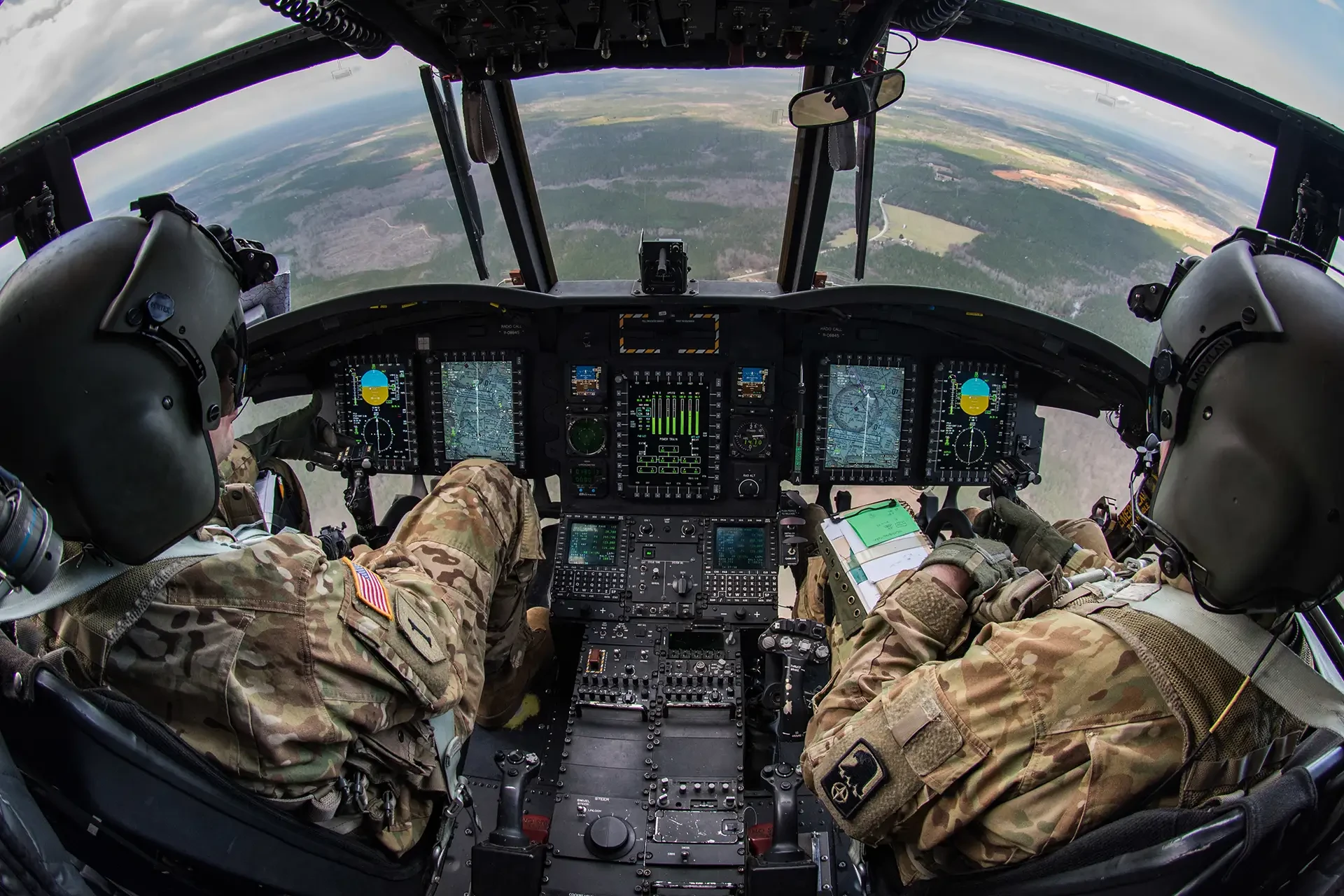
‘Our role is to protect those guys on the ground.’
Apache pilot 1, 6-6 Cav, US Army
On the night of March 23rd, 2003, thirteen AH-64 Apaches of 6-6 Cav launched an attack into Iraq with the intention of targeting the Medina Division of the Republican Guard, thereby protecting the passage of the 3rd Infantry Division on their way towards Baghdad. As the crews approached the city of Karbala from over the desert, a finger in the town hit a switch, turning off all the cultural lighting. When the lights came back on, the sky lit up with tracer fire from the dispersed Iraqi forces. All the Apaches took damage, some crew members sustained injuries, and the mission had to be aborted with some of the aircraft lucky to make it back to an underprepared Forward Arming and Refueling Point (FARP). In mission planning, there had been no less than five ‘no go’ criteria that were ignored.
The unit had previously been preparing and rehearsing for a deep strike mission in support of ground forces on March 19th. This flight did not go ahead due to weather grounding one of the supporting assets, and the ground forces took fire.
‘There was a real sense that we had let our soldiers on the ground down.’
Apache Pilot 2, 6-6 Cav, US Army
‘I don’t care what happens, we will not allow that to happen again.’
Apache Pilot 2, 6-6 Cav, US Army
‘It affected the decisions we made a couple of days later.’
Apache Pilot 3, 6-6 Cav, US Army
Deep Strike as a mission requires accurate intelligence, potentially Suppression of Enemy Air Defenses (SEAD), and substantial logistic support. These were not present on the night of the 23rd March, and the consequences were severe. Comparing the quotes above with the one at the start of the article, where the role that Apache crews understood for themselves is professed, we can begin to consider the decision to ‘go’ in this event as a culturally driven decision.
Early on the morning of Jan 29th 2019, a Survival Flight Bell 407 took off in the dark on an air ambulance tasking that had
been turned down by other operators. The pilot flying had just turned up on shift and proceeded straight to the aircraft, which had already
been started by the previous shift's pilot. Neither pilot completed a preflight risk assessment, and there was no evidence that a proper
weather assessment had been carried out. The crew encountered snow en route, and at 0650 the aircraft crashed into the forest near Zaleski,
Ohio, and the pilot, flight nurse, and flight paramedic were killed. The NTSB determined that the probable cause of this accident was
Survival Flight’s inadequate management of safety, which normalized pilots’ and operations control specialists’ noncompliance with risk
analysis procedures. The decision to ‘go’ in this accident has aspects of unfortunate organizational culture influence too.
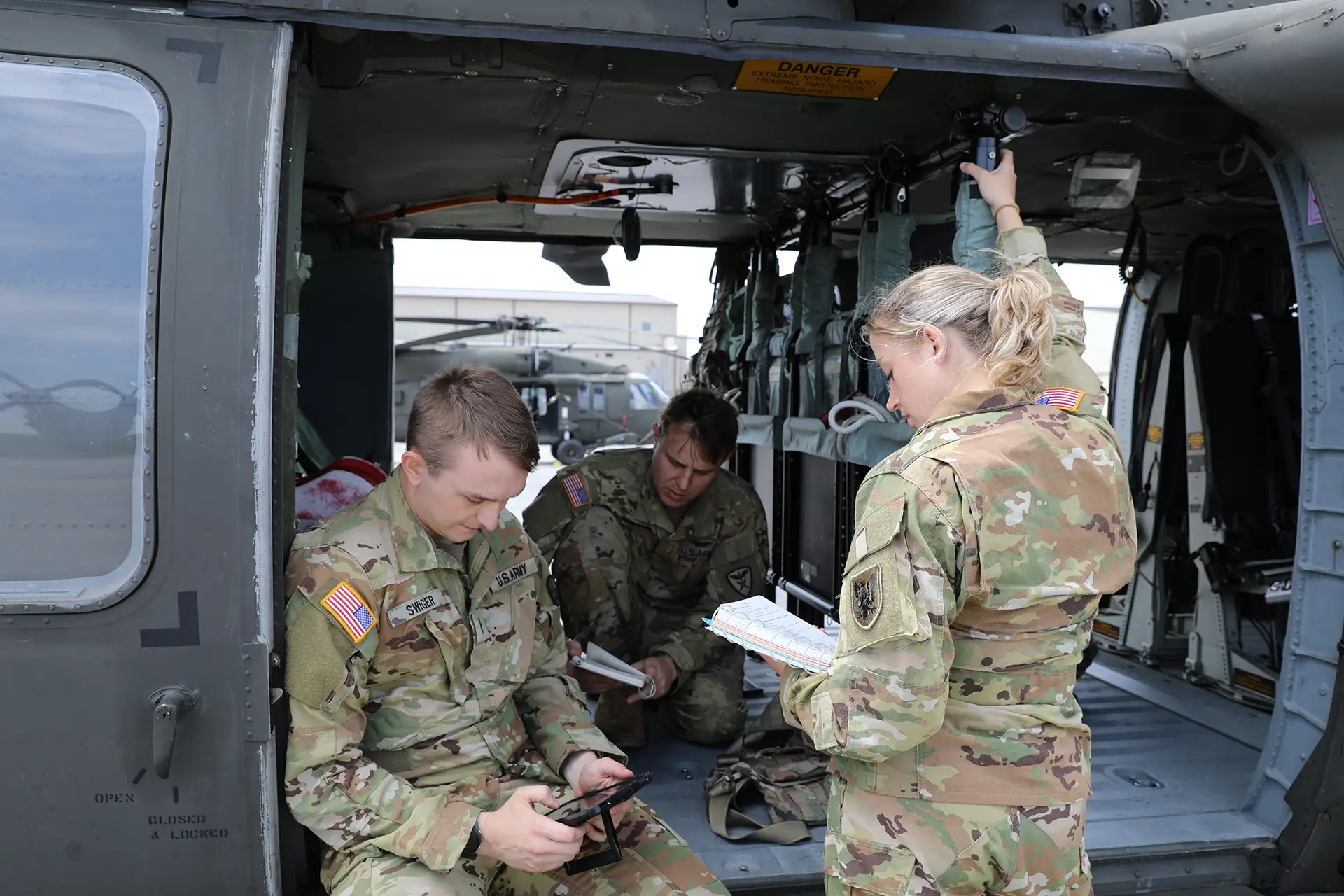
If we look back to our stereotypes of military and civil pilots from part one, we can see them clearly in the examples here – the military
pilot that must carry out the mission and what may be interpreted as a profit-driven civil operation developing a culture of encouraging
crews to go on a flight where competitors have already turned it down.
What we can also see in both cases is how the crews were set up to fail when we look at these cases from a perspective of assessing the internal coherency of their SHELL Models and cultural outlooks. In the case of our Apache crews, the task they set out on was, in reality, outside of their normal mental model for deep strike and lacked the protections built into deep strike doctrine – they were trained to expect certain tactical criteria to exist in such missions, such as prior softening of the target by artillery and long range rockets, such as ATACMS, and in their absence they were found to be much more exposed than the success of previous deep strike missions would have lead them to believe.
In our HEMS case, and quoting the NTSB report:
‘The lack of a positive safety culture endorsed by Survival Flight management and the lack of a comprehensive safety management system (SMS). The investigation revealed multiple safety-related deficiencies at Survival Flight, including the failure to record accurate duty times, noncompliance with regulations and procedures, the pressure to complete flights, punitive repercussions for safety decisions, and the lack of operational oversight. Additionally, the casual behavior of Survival Flight management regarding risk assessment and safety programs was not indicative of a company with an established SMS program.‘
In other words, the SHELL model of Survival Flight was not consistent with the work being done in reality.
Both examples show that stereotypical civil and military cultures can bite if actual, real-life operations are not consistent with the role people within the organization declare to be important, or when the guidance laid down in regulations, ops manuals or the working environment is not in lockstep with the work done. Deliberate targeting of these problems in advance of an accident is important to avoid one, and a realistic, open and humble approach is required by all participants to ensure that organizational culture matches up with the paperwork and the ‘real ‘ work. To achieve this in terms of our ex-military and civil pilots flying together as a coherent crew, we need to look at training out both the CRM, SHELL and cultural differences.
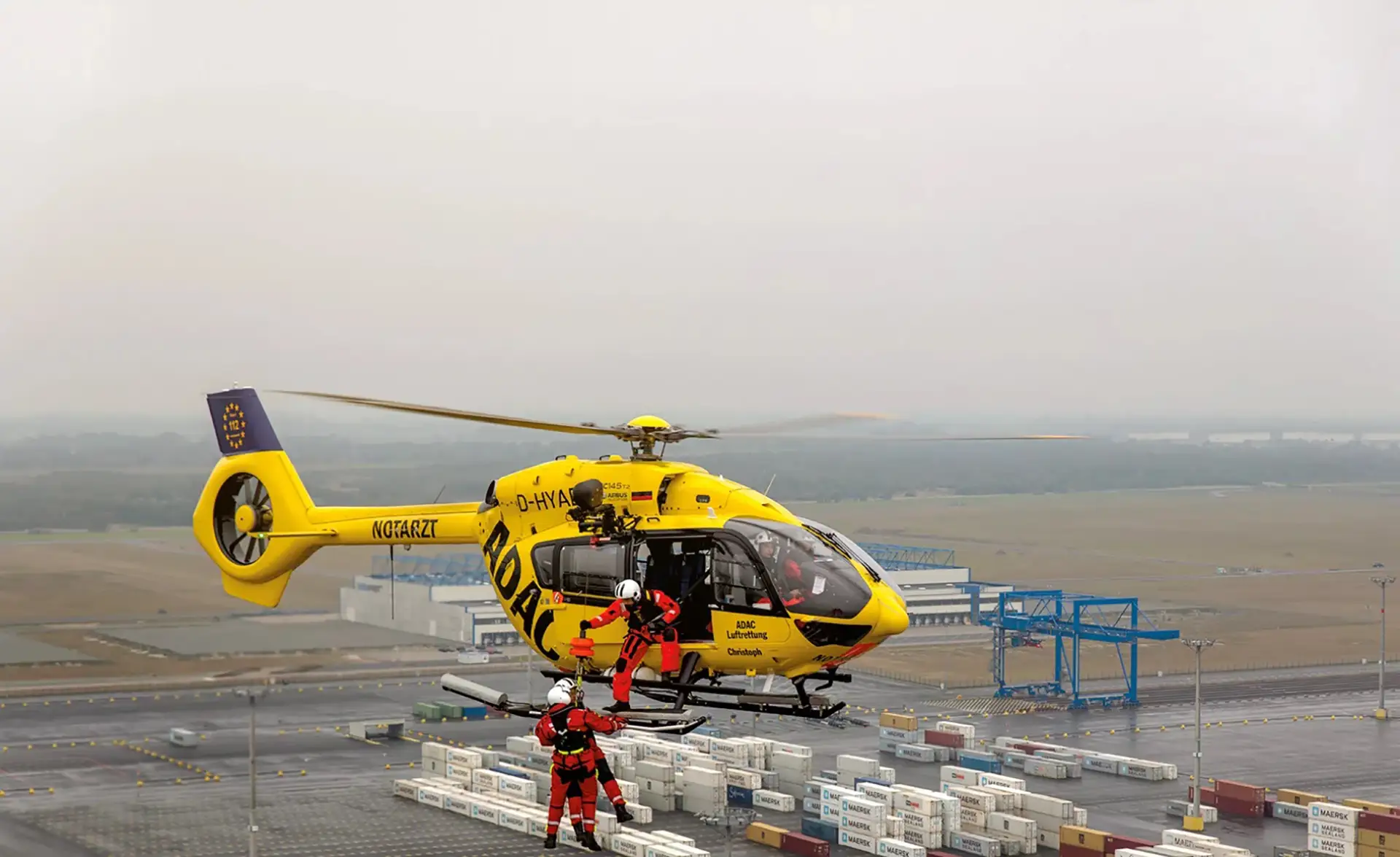
Trapping the CRM Threat – Evidence Based Training for Helicopters
In 2022, EASA published a concept paper on ‘Making the Case for Helicopters in Evidence Based Training. In this paper, it is recognized that:
‘The existing international standards and regulations for helicopter pilot training were originally derived in response to accidents involving early generation jet aircraft. Whilst some elements of helicopter operations are included, they have in essence been ‘bolt–on’ additions to the core programme, usually in the form of manoeuvre-based practices. Standards have remained virtually unchanged since inception.’
Although an EBT manual specific to helicopters has not yet been published (and there is a phenomenal and creditable amount of data being
sorted through to prepare it), it is worth noting that in the fixed wing world and in the guidance in the EASA Baseline EBT checklist to
prepare a EBT system, there is a renewed focus on CRM in training. To have your EBT system signed off by an NAA, you must show that there
is
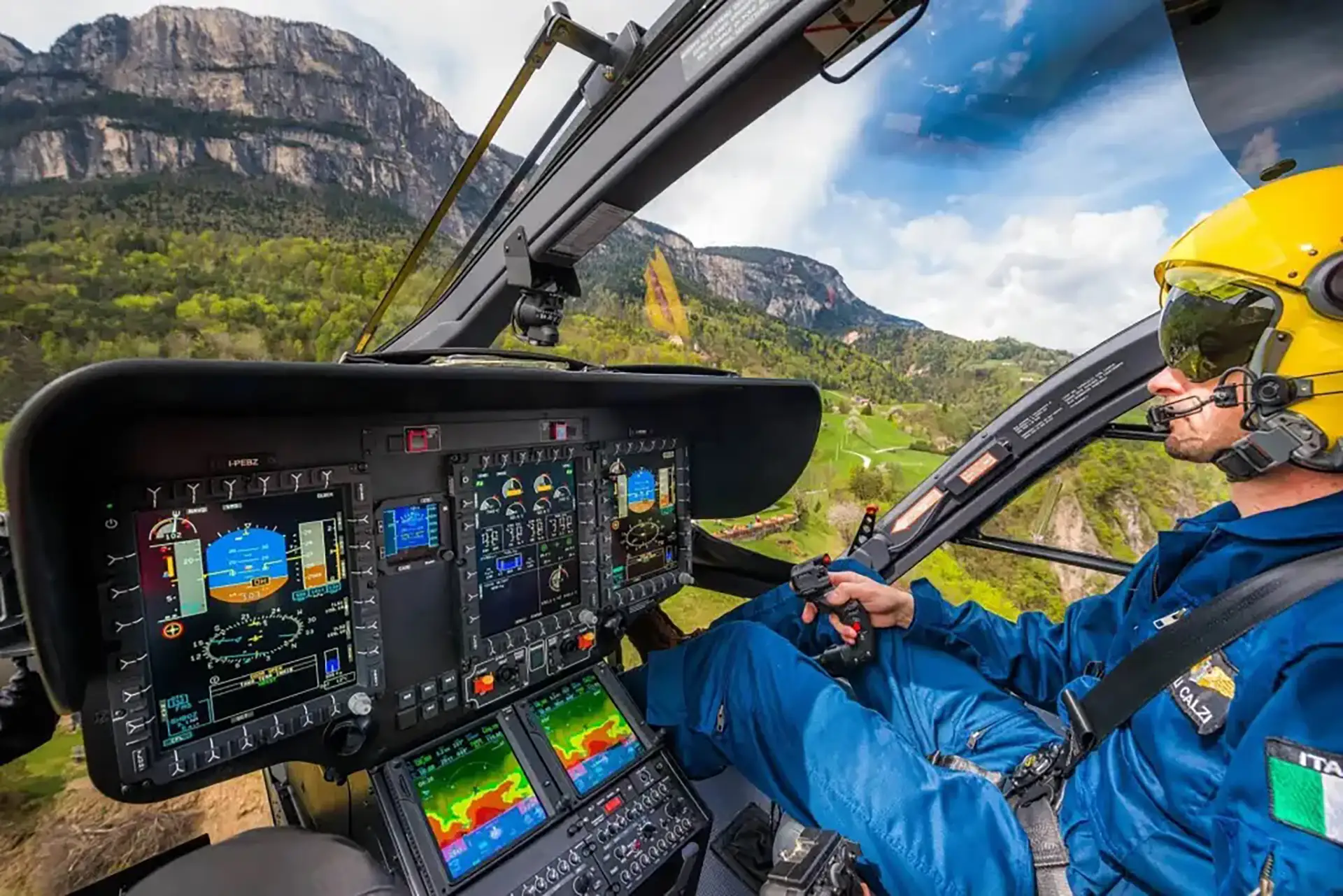
‘Availability of information to pilots regarding EBT principles, methodology, set of competencies to demonstrate including observable
behaviours and grading system (EBT pilot handbook).’
By necessity, this will start to move CRM to the fore in sim debriefs and the training required beforehand will have to show clearly what the grading system and observable behaviours are. In short, by making it a testable subject, CRM training moves from being a performative compliance tick box in the worst cases to a structural pillar of flight operations. Plainly stating the required behaviours in a relaxed environment away from the stressors of normal ops, emergencies or a line check means that the likelihood of risks eventuating due to differences between ex mil and civilian trained pilots will reduce as the threat will be trapped in discussion before ever reaching the cockpit. Adoption of Helicopter EBT (when available) will stand to operators in terms of training to the reality of ‘work done’ vs ‘work imagined’ in CRM terms.
Cultures Combined – Picking the right spot

If the CRM threat is trapped, then we have successfully eliminated one part of the problem. Fully trapping the cultural differences threat
is more difficult and perhaps less open to being formally trained out – we are, after all, trying to change how people think and react in
novel and stressful situations. Looking again at the Toolbox/Taylorism circle, I recommend that the starting point is to identify a spot in
the circle that most suits the outputs required of your operation and then deliberately mold all the elements of your SHELL model around
it. This will be applicable to a specific operator in a specific place on a specific type. EBT can assist again here as it does
conveniently separate helicopters into generations:

It also identifies that EBT development should be prioritized for :
Offshore Operations
SAR Operations
Onshore IFR CAT Operations
HEMS Operations
Firefighting Operations
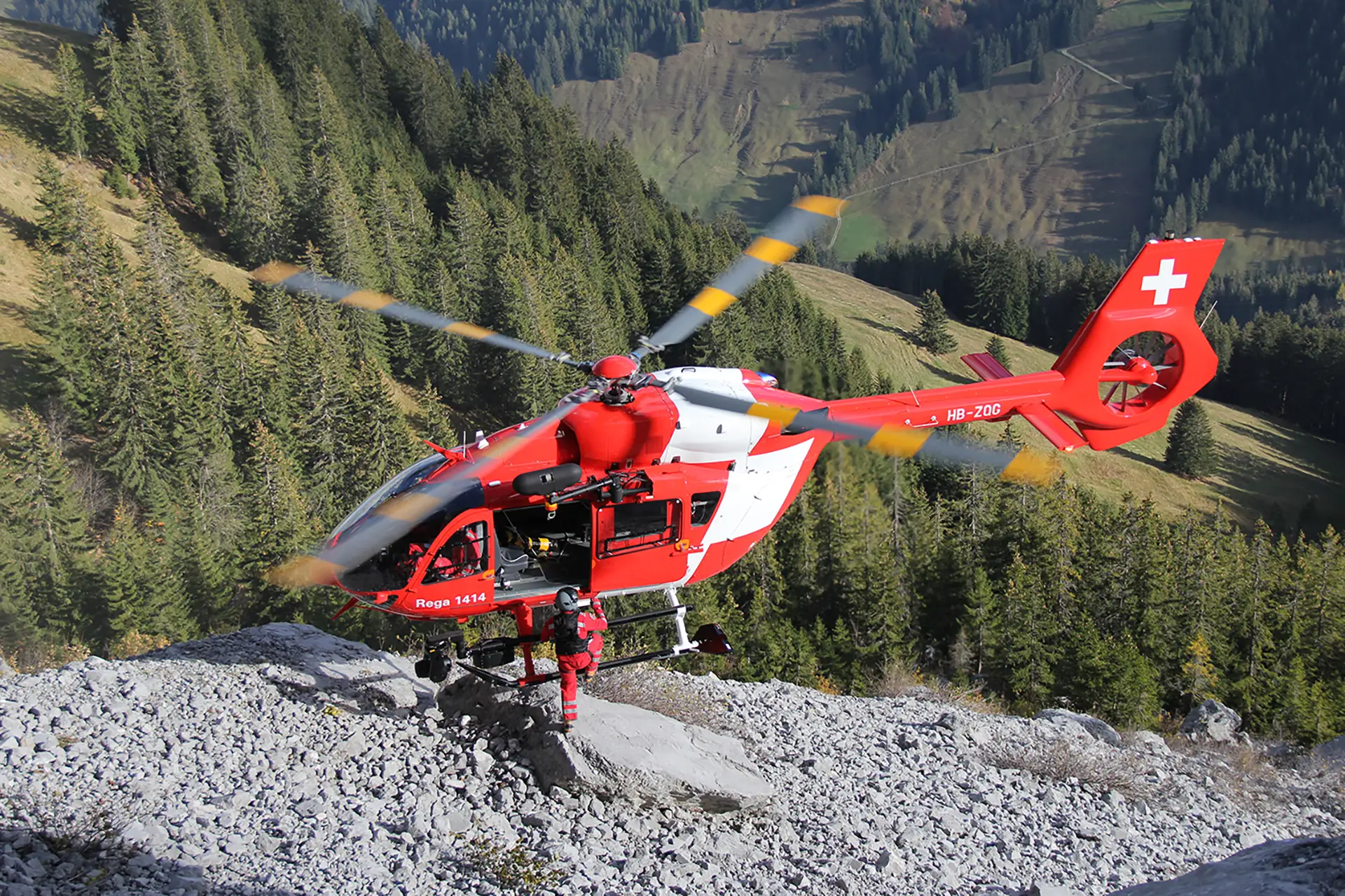
I would argue that these categories give a good pointer as to where on the circle an operator should aim to position itself. Offshore
operators and Onshore IFR CAT Operators may prefer to choose a spot further over on the Taylorism side of the circle. While remaining
complex, their operations will typically benefit from a more rigid adherence to process in a world where IFR clearances are the norm and the
customer demand is for risk minimization as an absolute priority, mimicking airlines as far as possible. For the remainder, SAR, HEMS and
Firefighting, a far higher degree of variability is part of a normal day’s work where no two flights are the same. These ops will benefit
from choosing a position on the Toolbox side of the circle, where a greater degree of flexibility is allowed to the crew to solve the
operational problem safely.
Now, the pilot and former Ops officer in me thinks this is great; the former Training and Standards officer in me is sitting here with his
eye twitching at such heresy – where lies standardization? What is the difference between flexibility and normalization of deviation? I need
to be really clear about what I’m suggesting here so as not to be universally shunned. To operate on either side of the circle, what I’m
suggesting is that our NAA-approved ops manuals, our line training and our cultural outlook should all match up. To do this requires that
our management culture and our crew room culture should also match up; our Ops Manuals cannot be written defensively to absolve the company
of blame in the event of an accident, and our NAA should look on it all approvingly. Are there failure modes with each approach? Of course. I
would describe them as “what’s happening?’ - see Air France 447 - on the Taylorism side where crews are not routinely exposed in training to
enough situations which are outside of the norm and thus are unable to recognize and react appropriately to a novel situation. On the other
side, I would describe the failure mode as ‘Watch this’, which lore would have us believe are the most frequent last words on flight data
recorders as someone tries something completely outside of accepted norms.
Containing our operations within the circle and, crucially, making sure that no one is ever surprised by the tools used in the Toolbox side, requires two separate approaches.
Information Capture – LOSA and Lessons Learned
The NATO Lessons Learned system describes the differences between explicit and tacit knowledge:
‘Explicit Knowledge is knowledge that has been or can be documented. This type of knowledge can lead to a Lesson Learned by the use of a LL process, LL information sharing tools such as databases and wikis and training courses.
Tacit Knowledge is knowledge that has not or cannot be documented but is still extremely valuable. This type of knowledge is stored in our heads and can lead to a Lesson Learned when we interact with others by discussion and sharing experience within a community, perhaps facilitated by formal working groups, conferences or other events.’
The Explicit knowledge we need to shape to our chosen point in the circle and share to our crews to create a shared sense of culture and reality is predominantly our Ops Manuals, but also all the information contained within our flight bag/EFB, our employee handbook, and any other formally disseminated message we send out. In short, it encompasses everything that may be auditable by the NAA, and the top-down way in which we tell people “This is how it’s done around here.”
This explicit knowledge should be made available to crews by all the normal means of publication, but in this day and age, a small bit of extra effort can mean that the information is in reality much more accessible – consider the use of releasing your manuals as audio books for example. Manuals should be directly relevant to the level of flexibility allowed to crews – if you’re on the Taylorism side of the equation, include heights, speeds, and weather limits as usual. If you’re on the Toolbox side, you must specify the hard stops of the allowed leeway here.
Data gathering for these publications, especially on the Toolbox side, can be achieved through a credible, trustworthy and active LOSA system. Line Oriented Safety Audits can take different forms, but in a helicopter operation, having LOSA crew members fly as part of a variety of operational crews is an efficient way of seeing what is happening on the line, gathering trend data and then feeding it back into the manuals. LOSA is not directed at any individual crew, but rather it assesses what is happening within a work group. In this way, the loop is closed and ‘work imagined’ is kept near ‘work done’. Techniques observed on the line that emerge in response to local conditions can be absorbed globally within the organization and transmitted in Line training and manual updates. In this way, the standardization of the Toolbox side is assured. It is critical for this process to be a success that the crewmembers chosen to be LOSA auditors are deemed credible and trustworthy by the line crews so that normal behaviors can be observed. The more LOSA flights take place, the easier this will become, and the more data is gathered.
Tacit Capture – The stories we tell ourselves about ourselves
Anthropologist Clifford Geetz said that culture was ‘the ensemble of stories we tell ourselves about ourselves’. Taking this view, and walking through any crew room or perusing the shelves of your local bookshop, we can see that the various cultures making up aviation are well represented in storytelling. Whether it’s the old sweat in the corner with an ‘upside down at ten thousand feet’ tale or a well-thumbed copy of Chickenhawk, the tacit information we hold in our head – personal experience in narrative form – is a valuable resource that adds meaning, nuance and context to the drier contributions of the Operations Manual Part A. Coming from the more senior heads in an operation, these are not ( or not just ) the ramblings of old men, they are experience brought to life in narrative form, with the lessons usually etched in hard lines on faces, and far away stares.
In an increasingly busy and distracted world, it takes a deliberate effort to pass this information on, but if we do so, we can use it to shape the culture we want our organization to have. UNESCO says that:
‘Oral traditions and expressions are used to pass on knowledge, cultural and social values and collective memory.’
It being much better to sort out any cultural divergence before take-off, storytelling can bring a shared culture into effect between
ex-mil and civilian-trained crews. Getting that same tacit knowledge to everyone in an operation is a problem that can be overcome in the
modern era quite easily. A company that promotes an informal distribution of these folktales can accelerate the effect of this experience
on new joiners by having a reservoir of more personalized information available in addition to the usual manuals. It’s often easier to
absorb, and it helps contextualize the explicit information in the manuals too.
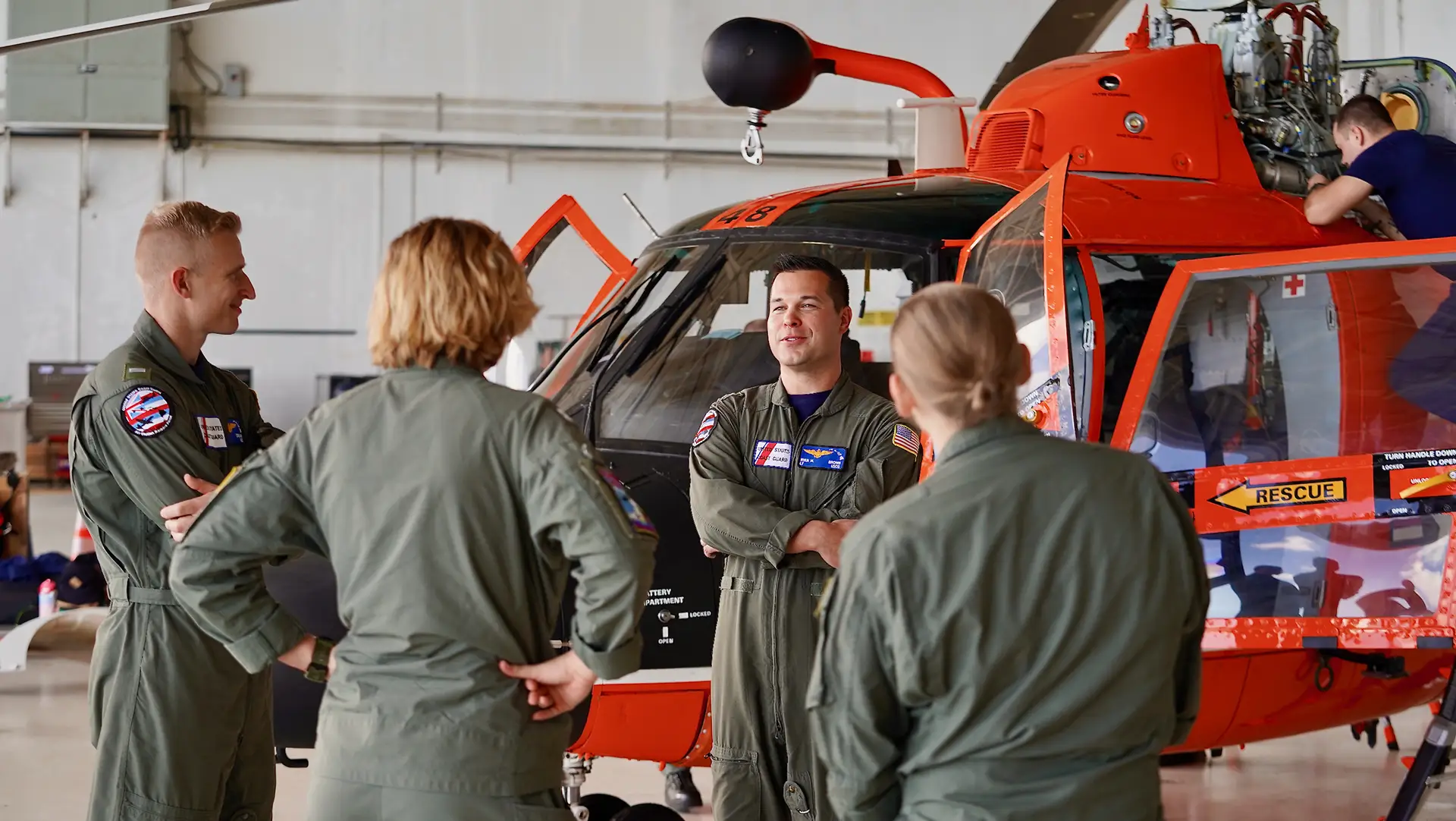
Oral histories recorded and distributed through internal company podcasts are one way; an ‘I learned about flying from that’ style
newsletter is another. It is important that the information remains on message, however, with the ‘so what’ of each story directing people
into a certain section of the manuals or reinforcing the ‘Why?’ of a given local process. I’ve used the written form of this as a line
trainer in the past, and it does work to get people in an operation distributed by time and place to focus on the same thing, so long as
you’re willing to put yourself out there to do it – start with your own misadventures! Any major points arising in discussion can still be
made explicit through ASRs, Lessons Learned or any other local formal system. A deliberate attempt to choose the tacit information that
mostly matches up with our chosen point in the circle can aid in achieving the coherency between the culture and the ops manual.
Conclusion
This series has strayed somewhat from its initial intent to highlight the difference between military and civil CRM training but hopefully has proved at least a prompt for talking about and resolving any differences in expectation before launch. One observation for me is that the differences between ex-mil and civil trained pilots in behavioral outcomes are going to be more or less manifested depending on the type of role flown. If EBT is recognizing that the use of ‘bolt-on’ maneuvers in training is inadequate, as we are not flying early jetliners, then equally we must develop a system that recognizes that cultural differences within the helicopter community also exist and that this is not a bad thing. We just need to lean into the level of flexibility that best suits our job, location and aircraft. Acknowledging this variability and complexity, we can truly achieve the best of both worlds.