 HOME
HOME




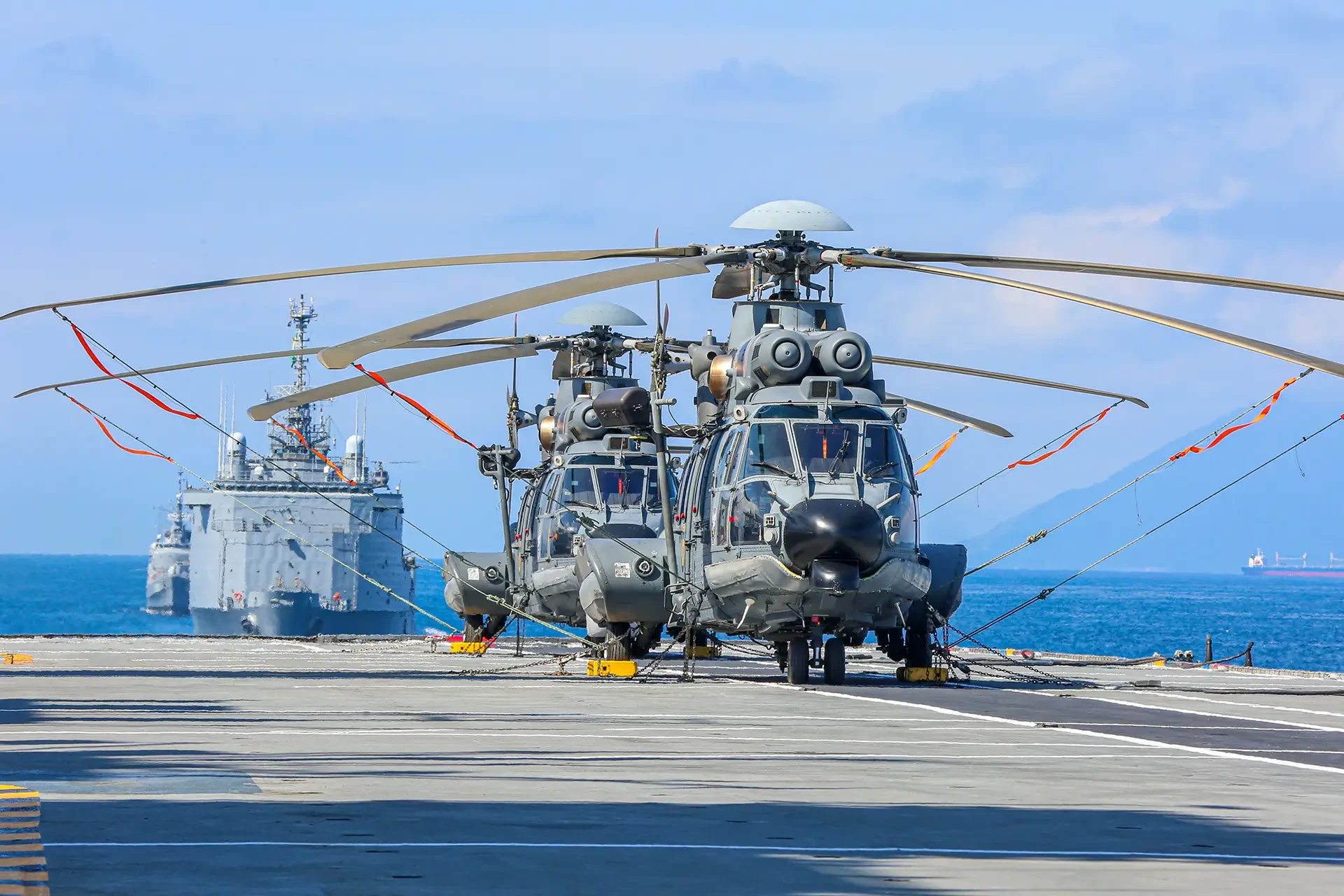
November 19, 2021, marked a historic day for the Brazilian Navy (the Marinha do Brasil - MB) with the commissioning of the H225M naval variant helicopter. Designated AH-15B, the first of four units acquired through a broad program covering 47 helicopters for the Armed Forces was not just a step in the modernization of Naval Aviation, but the recovery of capabilities that had been reduced or even lost with the deactivation of the Agusta-Sikorsky ASH-3H Sea King fleet, which had employed AM39 Exocet anti-ship missiles in the anti-surface warfare (ASuW) mission.
In addition to being the most modern and capable aircraft in service in Brazil, the AH-15B has also become the most advanced of its type in operation in Latin America. Its operational base at the São Pedro da Aldeia Naval Air Base, located in the Região dos Lagos of Rio de Janeiro, is home to the 2nd General Purpose Helicopter Squadron, the unit designated to receive, develop doctrines for, and continuously project the capabilities of this helicopter to defend Brazil’s coastal sovereignty.
A versatile squadron
Formed on 18 September 1986, the “Pegasus Squadron” is about to celebrate its 40th anniversary. The squadron was formed after the MB
confirmed the purchase of six AS.332F1 Super Puma helicopters from Aerospatiale (now Airbus Helicopters) one year earlier, in a deal valued
at approximately USD 54 million at the time. Designated UH-14, these new Naval Aviation rotorcraft were acquired primarily to support the
Brazilian Marine Corps (Corpo de Fuzileiros Navais - CFN) and to undertake other logistics, transport and general-purpose missions for the
MB itself.
The AS.332F1 was a navalized version of the Puma family that could fold its main rotor blades and tail rotor to fit inside the hangars of the MB's ships. The MB specifically requested the folding tail rotor feature so the helicopter could fit on the lift of the A-11 Minas Gerais Light Aircraft Carrier, since even with the main rotor blades folded, its length still exceeded the platform size of the lift. The Minas Gerais was the former HMS Vengeance, a Second World War era Colossus-class light carrier, and its lifts reflected the size of aircraft it was then designed to carry. The six Brazilian aircraft were the only ones in the world with this capability.
In general terms, the AS.332 could carry up to 18 fully equipped soldiers or up to 4.5 tonnes of external cargo on its cargo hook. Because
it incorporated a series of modern avionics systems for its time, the squadron soon began to be used for Search and Rescue (SAR) missions.
It had the long-range and power required for this kind of operation, as well as the ability to use its weather radar to carry out maritime
search and reconnaissance.
In naval operations, its missions with the fleet were conducted from the larger ships such as the former A-11 Minas Gerais,
the A-12 São Paulo aircraft carrier, the tank landing ship (NDCC) Mattoso Maia, and the dock landing ships
(NDD) Ceará and Rio de Janeiro (the latter now decommissioned).
In September 1990, the squadron suffered its first operational loss with the crash of an aircraft moments before landing on the A-11 Minas Gerais, resulting in the tragic death of two crew members.
In 1992, the MB purchased two more Super Pumas of the AS.532 SC variant, which were slightly more modern than those acquired nearly a decade earlier. With the arrival of these new aircraft, Naval Aviation decided to upgrade the earlier examples, maintaining the fleet to the same standard to simplify logistics and maintenance. Although one Super Puma was fitted with the requisite wiring for firing the AM39 Exocet, the missile was never employed by HU-2.
From 2011 onwards, the aircraft were equipped with FN MAG 7.62 mm machine guns mounted on lateral supports to provide self-defense for
disembarking troops and for the helicopters themselves. With the increase in piracy activity, this armament was suitable for countering such
actions on the high seas.
New winds
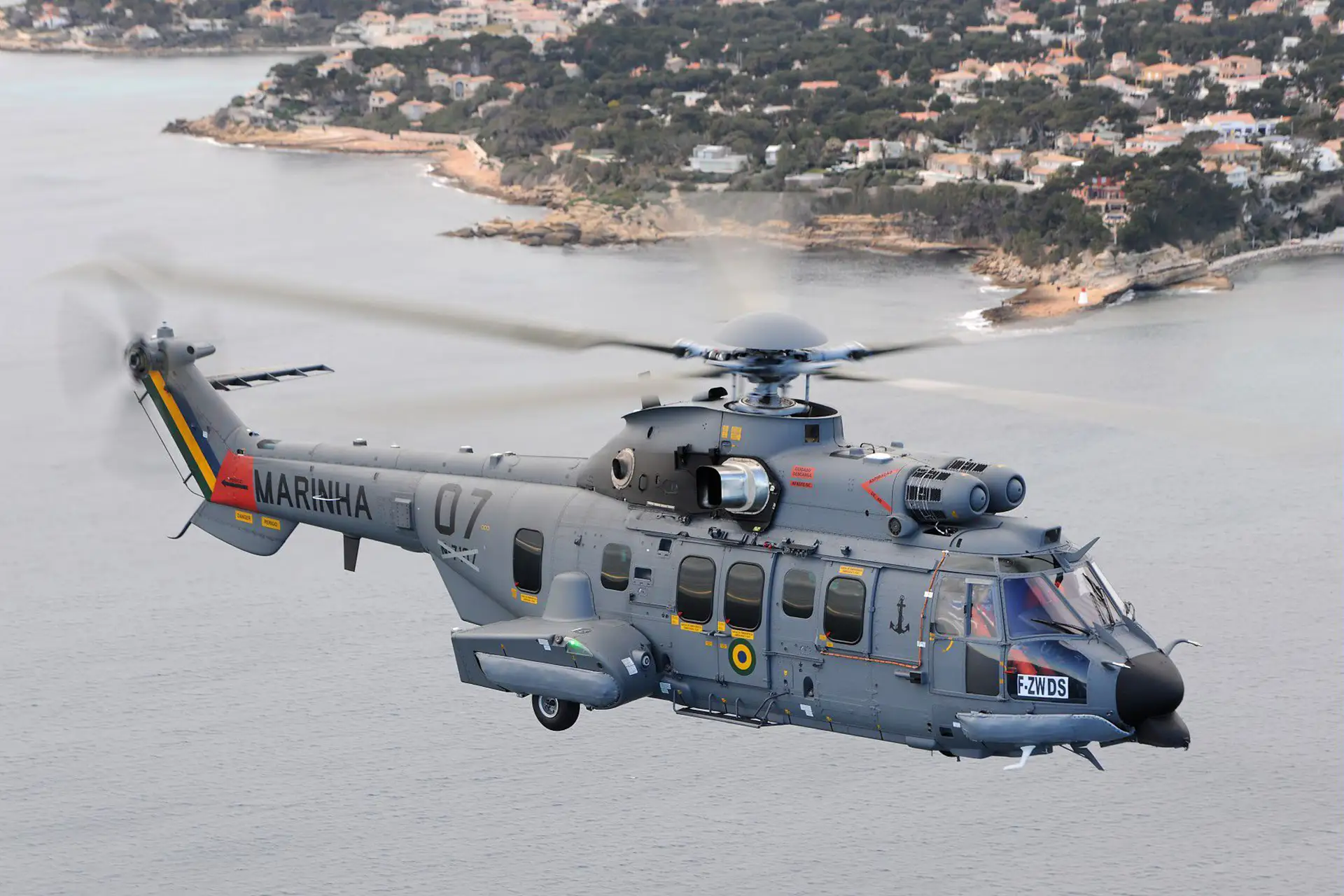
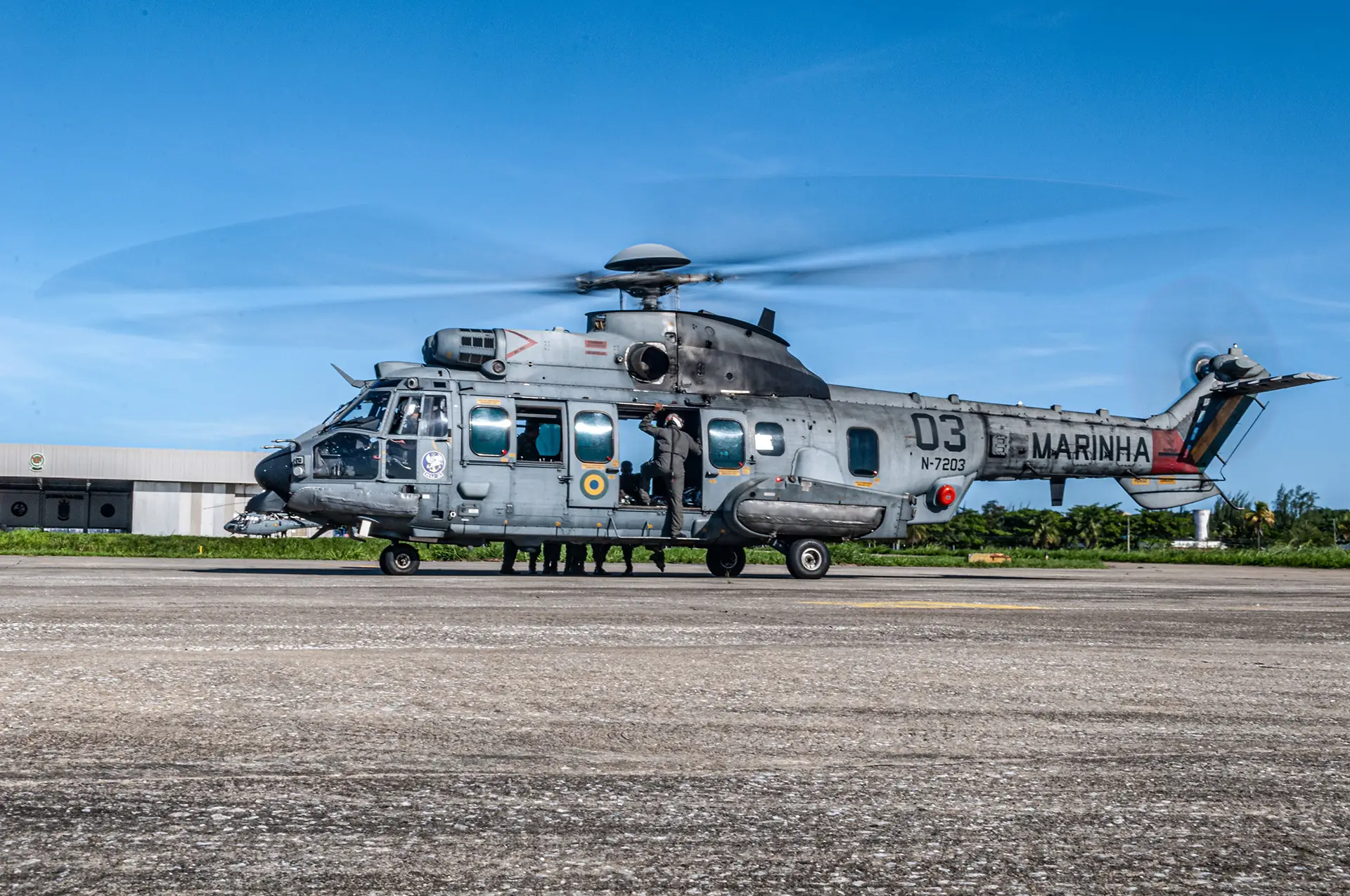
On 18 April 2011, HU-2 entered a period of renewal with the arrival of the first UH-15 Super Cougar helicopters; modern rotorcraft acquired through a joint contract between the Brazilian Ministry of Defense and France to modernize the rotary-wing aviation capabilities of the Brazilian Armed Forces.
Initially, 50 H225M helicopters of various variants were ordered: 16 for each branch of the military and two in VIP configuration for
presidential use, to be assembled in Brazil by Helibras.
Later, the total order was reduced by three units, with one unit removed from each branch.
The MB received three distinct versions: the basic model (UH-15) dedicated to logistics transport and general-purpose roles; the SAR version
(UH-15A), equipped with Electronic Warfare systems, engine exhaust heat suppressors, and imaging sensors; and the anti-surface warfare
version (AH-15B).
The H225M is a five-bladed main rotor helicopter powered by two Makila 2A1 engines each capable of delivering 2,101shp. If the helicopter loses its lubrication system, the transmissions are claimed to bes capable of operating “dry” for up to 30 minutes. The modular maintenance system improves availability, as it only requires the replacement of the defective part without the need for a complex engine teardown. The Makila 2A1 engines are equipped with dual-channel Full Authority Digital Engine Control (FADEC) systems.
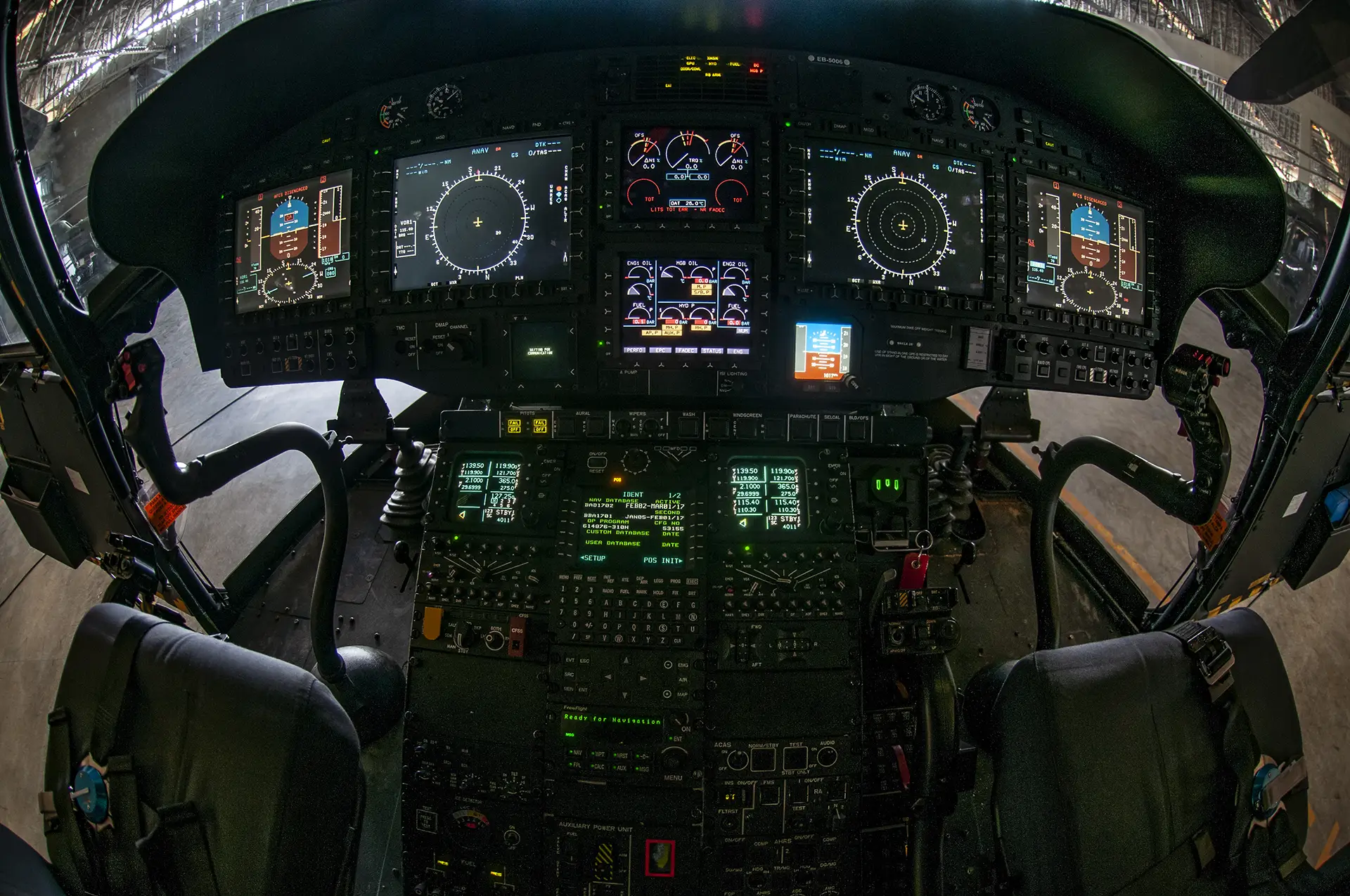
Pilots benefit from a full glass cockpit, which is NVG-compatible, with four color Multi-Function Displays (MFDs) measuring 6x8 inches each, and two Primary Flight Displays (PFDs) measuring 4x5 inches each. The aircraft's systems parameters are also transmitted to a backup display, which provides data such as airspeed, altitude, and artificial horizon.
Additionally, the crew has access to the Enhanced Ground Proximity Warning System (EGPWS), the Traffic Collision Avoidance System (TCAS), and a four-axis autopilot.
The Flight Management System (FMS) integrates Doppler and GPS and is capable of operating in SAR mode, which automatically configures search patterns within areas designated by the pilots. The crew also has access to a high-definition digital moving map and an imaging sensor that provides conventional and infrared imagery, with an integrated laser rangefinder.
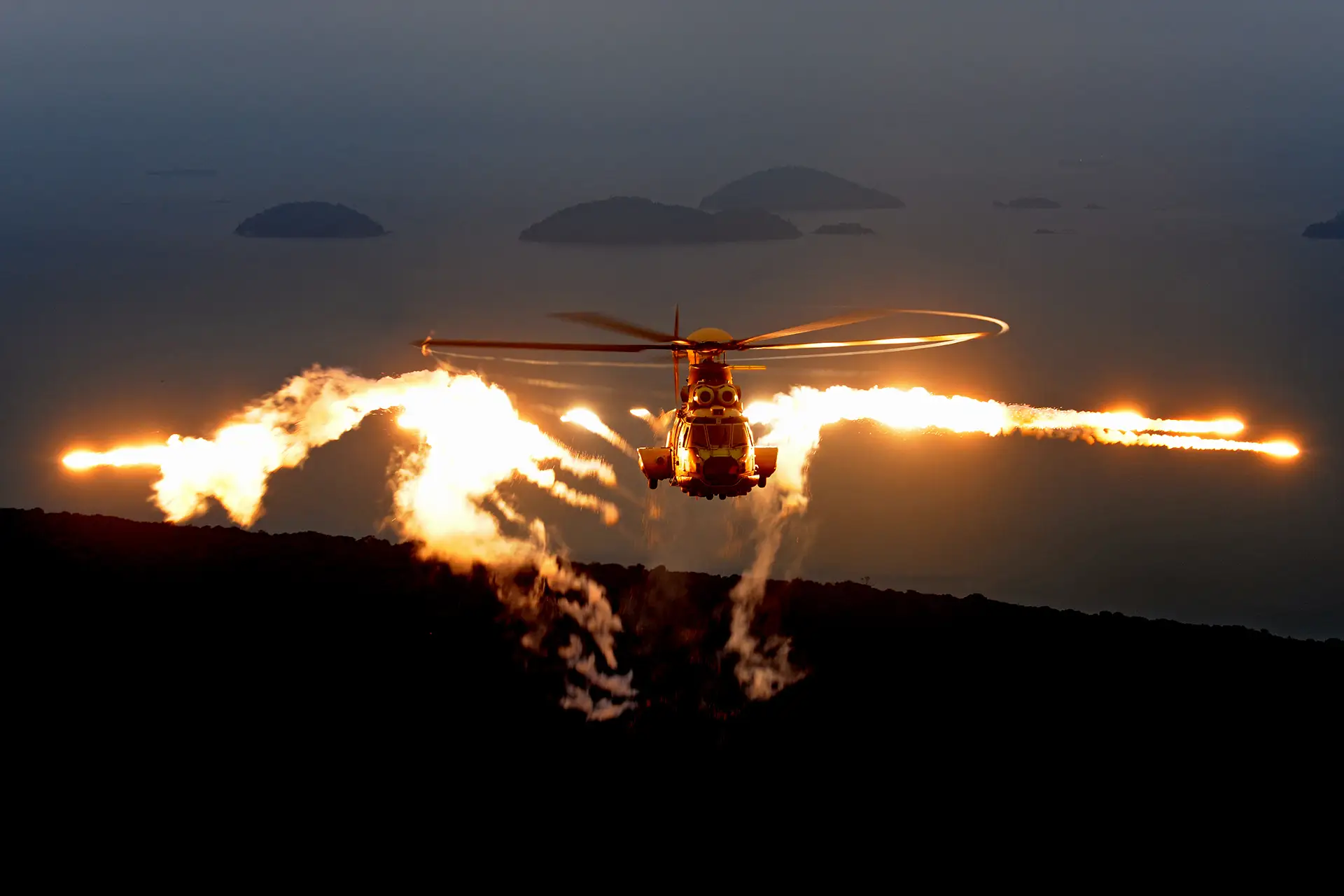
In terms of self-protection, the aircraft are equipped solely with passive sensors, including a Radar Warning Receiver (RWR), Missile Approach Warning System (MAWS), Laser Warning Receiver (LWR), and a Counter Measures Dispensing System (CMDS) for chaff and flare cartridges(for the C-SAR and ASuW versions).
The engine exhausts are fitted with heat suppressors, and the fuel tanks are self-sealing in case of bullet or debris impact. The aircraft
is also equipped with two side-mounted FN MAG 58 machine guns, 7.62 mm caliber, with 1,000 rounds each.
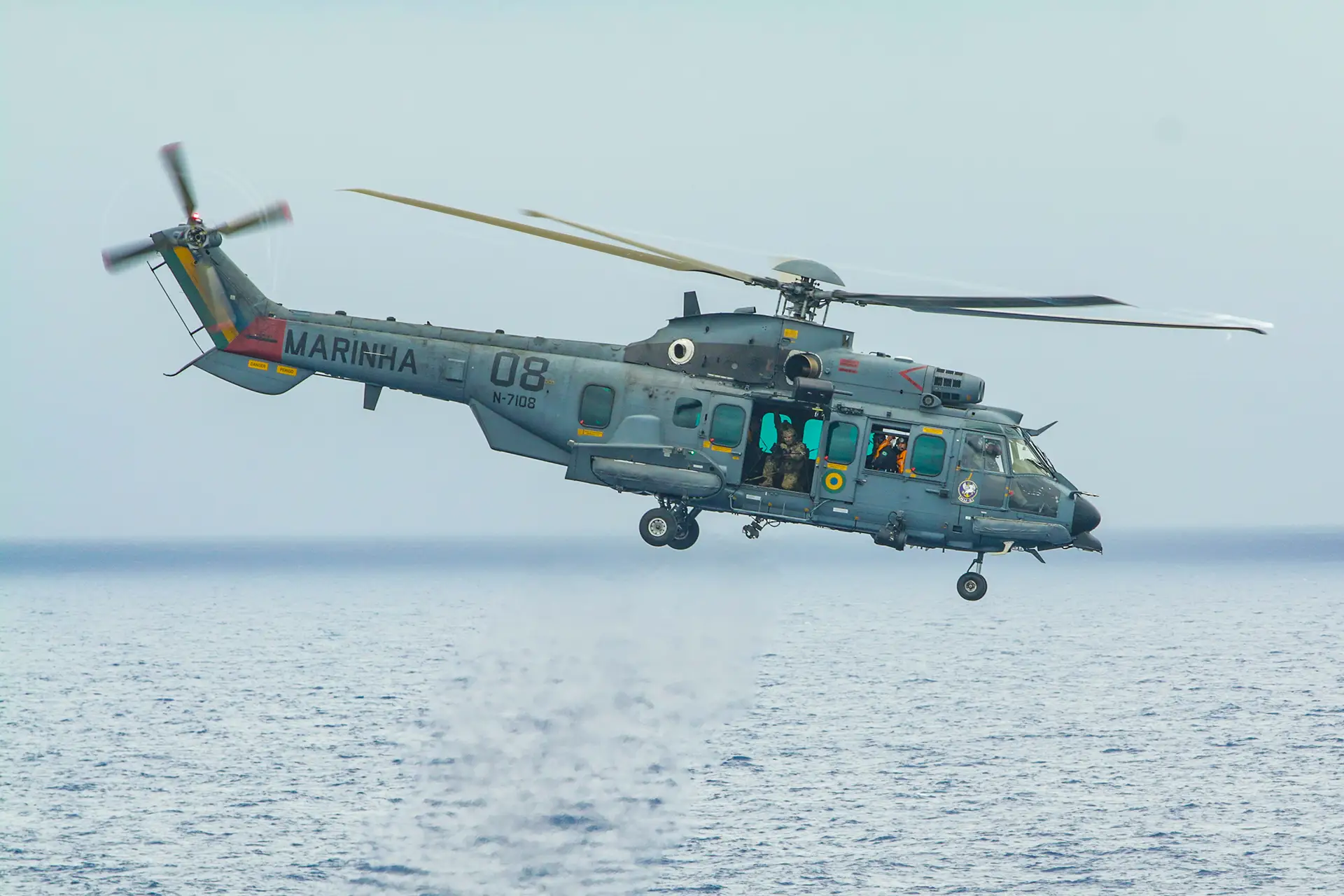
The aircraft are each equipped with a Personal Locator System, which facilitates search efforts following an accident, on land or at sea. If the accident occurs at sea, the flotation system enables the aircraft to remain afloat even in sea state 6 (wave heights up to 6 meters).
The H225M is a platform capable of operating day and night in all weather conditions and environments.
The cockpit and other critical areas are protected with Ballistic Protection (BP) against 7.62 mm and 12.7 mm rounds. The pilot seats, along with 14 additional seats located on the sides of the cargo cabin, are designed to be impact-absorbing, improving crash survivability. The engines are equipped with filters to remove sand, ice, and salt. Additionally, cable cutters are installed above and below the cockpit.
The H225M is also equipped with a mission planning system that streamlines the preparation of a complete flight plan, including joint operations with other forces. Once the mission is planned, the crew requires only five minutes to take off.
Pre-flight checks are required every 15 flight hours or seven days. Further inspections are conducted every 100 hours. A basic maintenance check is carried out every 1,200 hours or three years, while the most comprehensive inspection takes place only after 16 years.
Each helicopter requires four technicians to provide ground support. One of the systems that facilitates independent operations without the
need for extensive ground support equipment is the Auxiliary Power Unit (APU).
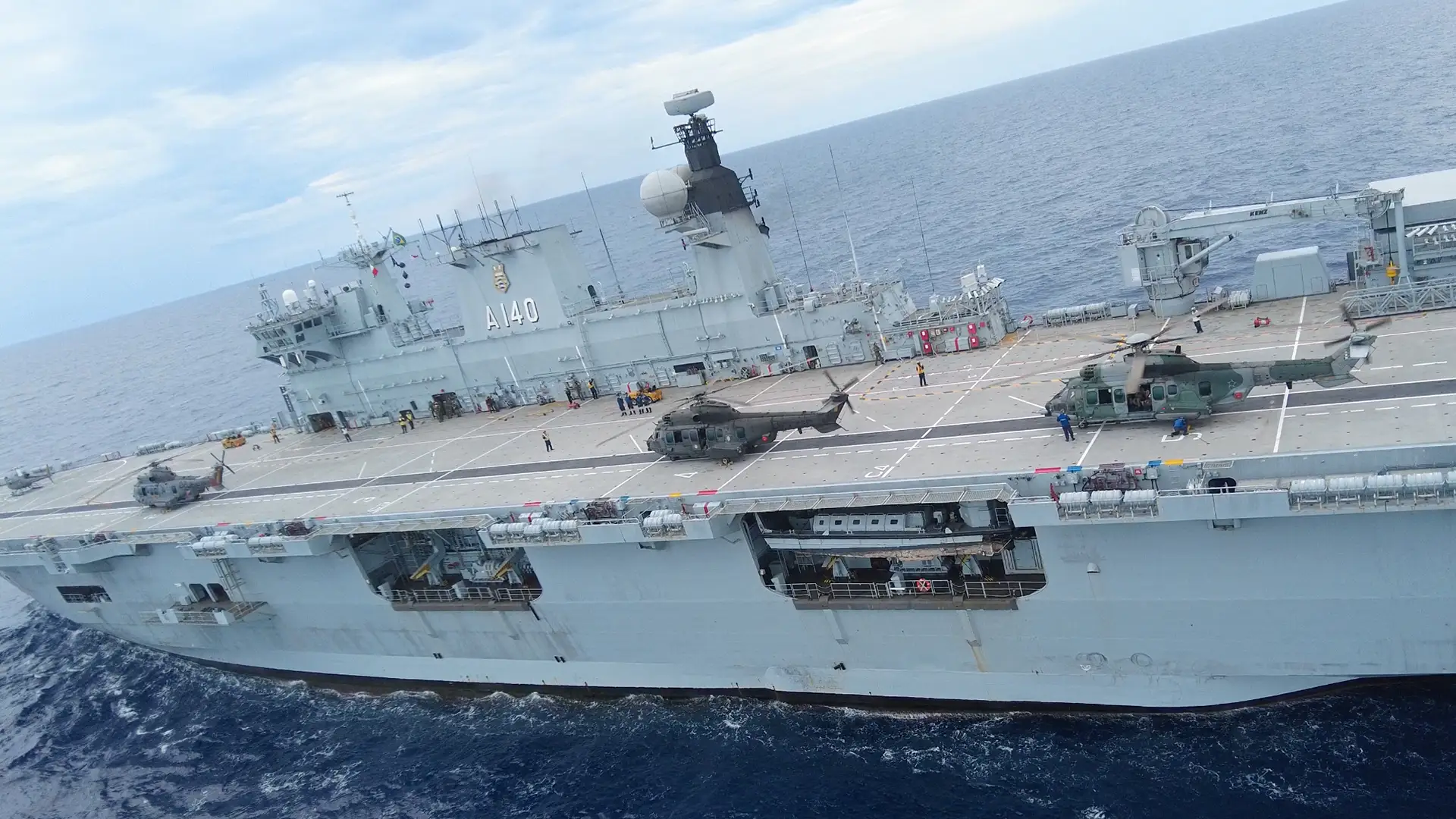
The aircraft destined for the Brazilian Navy are also equipped with the Automatic Identification System (AIS), a transponder that receives information such as heading, vessel name, location, country of origin, and more, all transmitted by nearby ships.
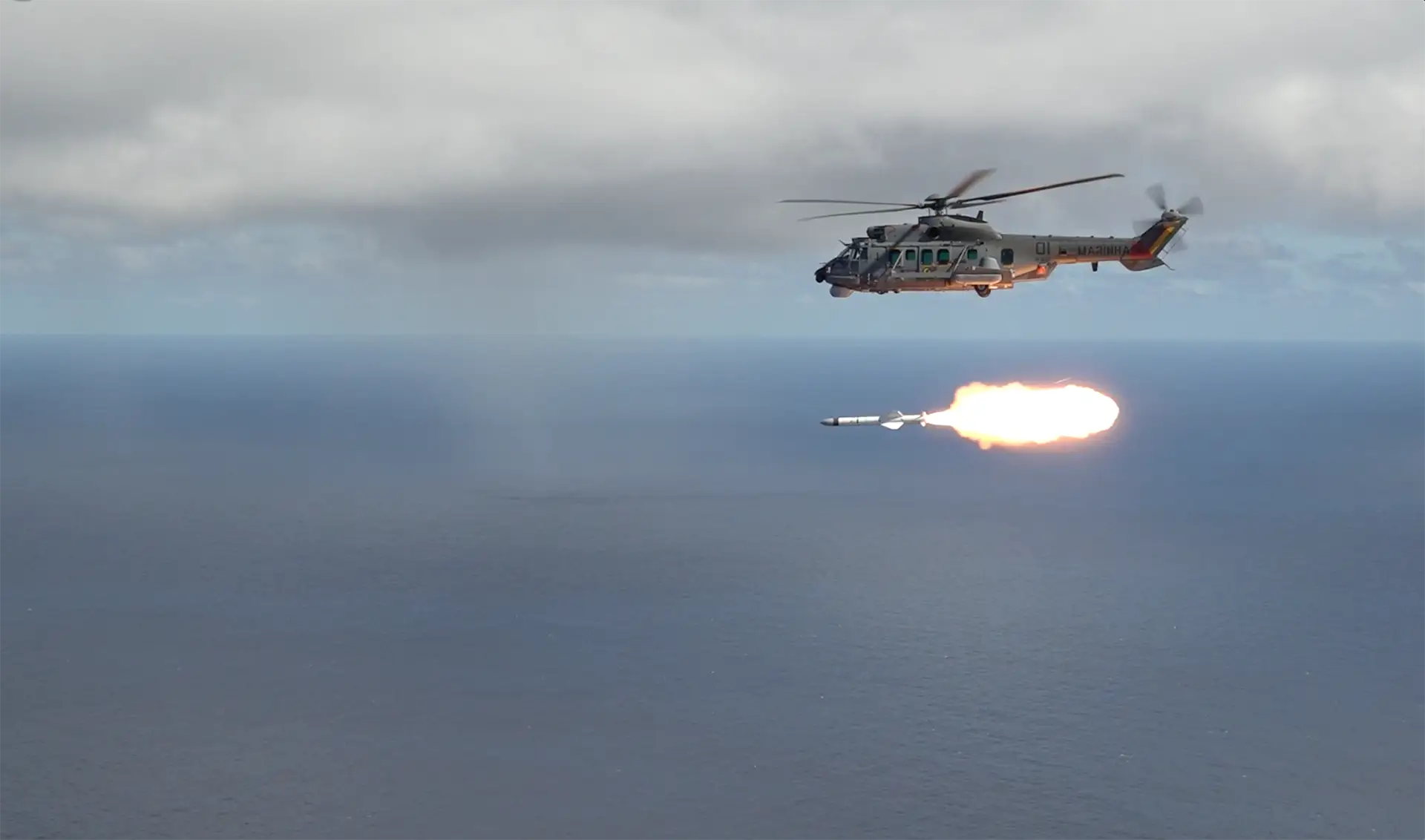
However, the most critical capability of the AH-15B is the ASuW role, for which it is armed with two operational Exocet AM39B2M2 missiles. In addition to carrying two Exocet missiles, the aircraft has a tactical radar for maritime surveillance; the Telephonics APS-143C(V)3 OceanEye, which is mounted under the nose of the aircraft, providing a full 360-degree scan. This is the same system used by the Navy's fleet of six Sikorsky S-70B Seahawks. With a range of 400 km, it can detect targets even in severe weather conditions.
The radar features an Inverse Synthetic Aperture Radar (ISAR) mode, in which the Doppler effect caused by wave movement creates a silhouette image of the target, allowing the crew to identify whether the ship is civilian or military, and even determine its class. For medium-sized ships, the detection range drops to 111 km, and for small fishing vessels, to 65 km.
A console station was installed in the aircraft for a fifth crew member. Its development was carried out in partnership with Atech, a company based in São Paulo and one of the technology transfer contractors in the H-XBR program. It is an integral part of the Tactical Data Mission System (TDMS), allowing an operator to have a complete view of the tactical scenario surrounding the aircraft, as well as the ability to fire weapons or activate the EWS.
The transition
The transition from the Super Puma to the H225M was a process that required great care, as it meant essentially shifting from analogue to digital technology, bridging a significant generational gap between helicopter platforms. “We selected the most experienced personnel to operate the UH-15. They first completed the theoretical course, then went to France to train in the simulator, and finally returned to Brazil to begin the practical phase, acquiring the necessary knowledge to gradually expand the aircraft’s operation,” explained Commander Alexandre Fonseca, Commanding Officer of HU-2.
HU-2, must be ready to respond to any situation. This includes not only having aircraft ready on the flight line but also maintaining an
organized, trained, and available structure to support deployments.
“The squadron’s primary mission remains unchanged: to support the Marine Corps (CFN) in all its operations on land and at sea, employing
techniques such as fast rope, rappel, troop transport, and external cargo lifting, among others.
The advancement in SAR lies in the onboard systems—such as automatic hover approach, which significantly assists the crew. At the same time, we must always be prepared to respond to any failure that may occur during this process or to perform the maneuver manually if necessary. The introduction of this technology compels us to fully understand and master the procedure to ensure everything is functioning as expected,” explained Commander Fonseca.
“C-SAR, or combat search and rescue, does not rely solely on the helicopter and its crew, but on the entire surrounding environment. The airspace must be secure and controlled by the Brazilian Air Force (FAB) for us to safely enter the operational area without becoming a target. This is already a well-established doctrine within the FAB, and we intend to expand this joint integration through an operational exercise involving all three branches of the armed forces operating in the same environment—for example, with fighter aircraft providing cover and an airborne early warning and control aircraft conducting full situational awareness.
This doctrine is currently being developed within the Navy, even though we already possess the capability from the helicopter’s perspective.
In terms of offensive operations, we’ve had extensive interaction with the 1st Helicopter Reconnaissance and Attack Squadron (HA-1), which has experience with this doctrine. The AH-15B possesses significant attack capability—we are the only operators in the world of this variant. At the beginning of the project, Helibras asked the squadron what we wanted in the helicopter, and the specifications included many aspects of the HA-1’s mission, as well as the 1st Anti-Submarine Helicopter Squadron (HS-1).
Through the tactical console with the operator stationed in the main cabin, we have access to the operational scenario and can engage a target if necessary,” concluded Commander Fonseca.
The arrival of the H225M has influenced the internal organization of the squadron, which will now have dedicated crews for general-purpose missions and separate crews focused on attack operations, given the high level of specialization required for the latter.
“Those who try to do everything end up doing nothing well, so the idea is for these personnel to delve deeper into their respective
missions. For C-SAR, once the doctrine is fully consolidated, we will need specialized crews, but they should still be part of the
general-purpose framework. A key point is the helicopter’s range and endurance in rescue operations—we can reach up to 150 nautical miles
offshore to retrieve someone at sea. With the installation of two additional internal fuel tanks, this range increases to 190 or even 200
nautical miles,”
he added.
The use of night vision goggles (NVG) is a recent development in Naval Aviation, despite the Navy having been the pioneer in Brazil in employing this essential tool for modern battlefields. In the early 1990s, during the development of the NVG doctrine, there was a fatal accident involving a HA-1 crew operating a Lynx equipped with NVG, which led to the suspension of NVG operations.
“Here, we began learning how to use this system from the Army, which had the most experience and knowledge. After acquiring this know-how, we started delivering the training in-house through a course lasting approximately three weeks, where personnel receive both theoretical and practical instruction. Some of our pilots who were trained by the Army have further enhanced our mastery of NVG doctrine,” explained Commander Fonseca.
In terms of maintenance, the unit performs first-echelon support, responsible for basic interventions on the flight line, and second-echelon support for calendar-based or corrective inspections inside the hangar using slightly more complex tooling.
Now nearing 15 years of operation with the UH-15, “Pegasus Squadron” is just a few steps away from consolidating the operation of the most advanced helicopter in service in Latin America, a milestone that will significantly enhance the offensive and defensive capabilities of the fleet and Brazil’s coastline. A fleet that in Amphibious operations terms is rapidly acquiring a serious capability with the purchase of the former HMS Ocean (LPH) and the Former HMS' Albion and Bulwark (LPDs).
Brazil is indeed developing a potent littoral manoeuvre capability.