 HOME
HOME




In this two-part series, Declan Daly provides an insight into the machinations associated with the Irish Air Corps helicopter replacement program.
Commencing in December 2024, the Irish Air Corps embarked on an ambitious recapitalisation of its helicopter fleet. With the focus on the successor to their AW139s, a casual observer could be mistaken for thinking this will amount to OEMs readying for a re-run of the UKs New Medium Helicopter (NMH) program. However, the Irish requirements will require a different approach from industry, with a potential for multiple types being purchased, in several tranches, with historical experiences influencing future decisions. As the acquisitions are being pursued through government-to-government sales, rather than an elongated tender process, the results may also appear sooner rather than later, and with less public discussion than the NMH. The reasons why are explored below, with Part One of this story focussing on Ireland's current helicopter structure, and why it needs something very different to deal with a more robust security environment.
Incumbent fleet and capabilities
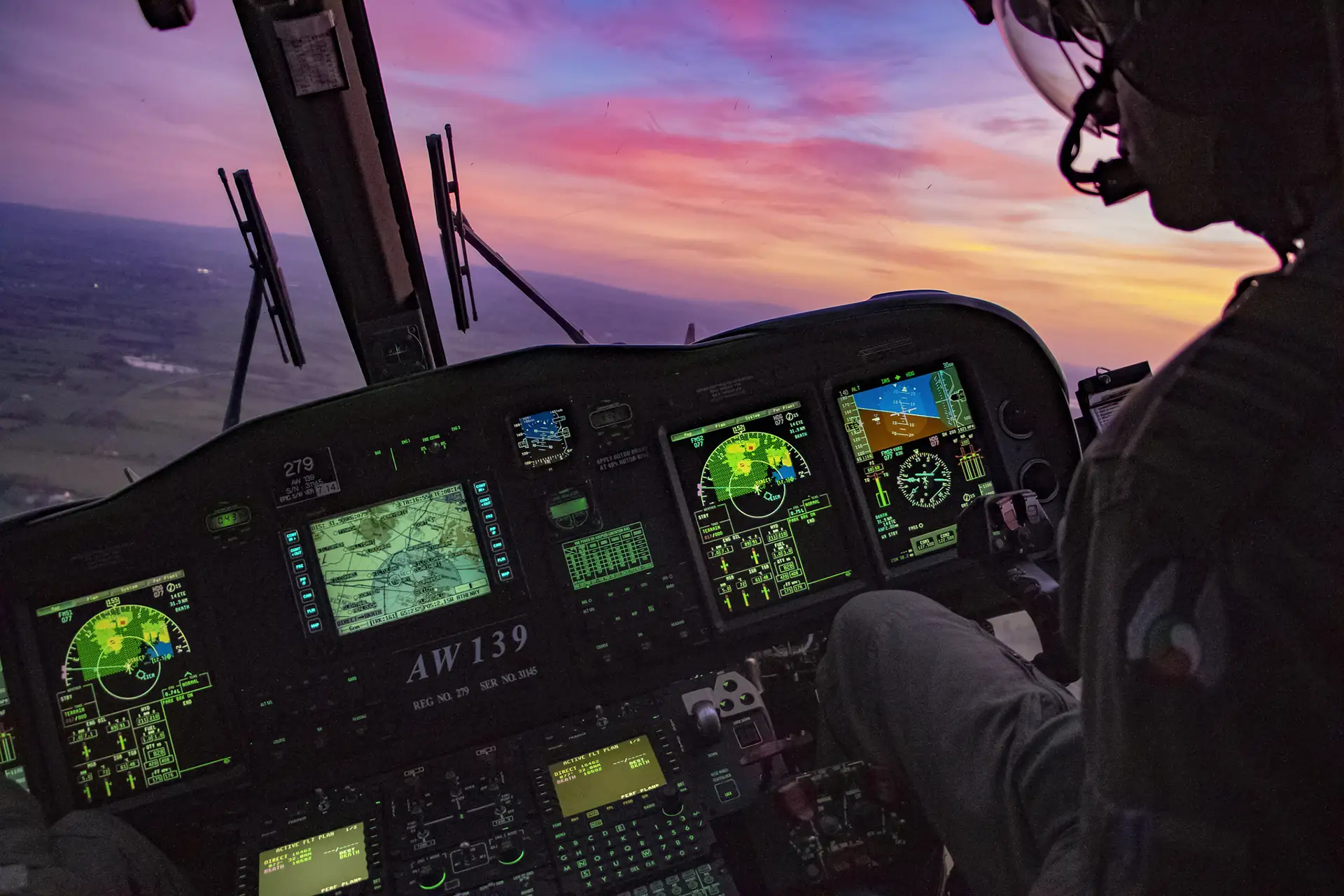
No 3 Ops Wing is the unit of the Irish Air Corps tasked with helicopter aviation and currently operates a fleet of two EC135P2+ and six
AW139s, along with providing pilots and aviation oversight for the two EC135T2s of the Garda Air Support Unit (GASU). These last two
aircraft belong to the An Garda Siochána, the Irish police force, but are operated with military pilots and Garda crewmembers, from a joint
military/police building on a military base. While the operations of the GASU aircraft mimic those of police units everywhere, the role of
the rest of the fleet can be summarised as ‘not attack helicopters, but everything else’. Being the sole unit in the military providing
helicopter support, they are frequently tasked with a wide variety of jobs, but the main military tasks are generally focussed on troop
transport, recce, underslung load and internal cargo transport, and medevac in the 'green' role, with varied supporting and operational
activities being carried out for the special forces in the 'black' role including domestic counter terrorism and maritime counter terrorism.
Traditionally, most if not all training has been carried out in-house, albeit in recent years, students have carried out ab initio
helicopter conversion courses with the US and UK militaries as well.
Compounding this, the Air Corps has always had a disproportionally large amount of its time directed to supporting civilian oriented tasks. These have taken the form of flights in support of the Gardaí where they have needs that cannot be met by their own EC135s, and also on specific government directed tasks in support of individual departments. These usually include observation and orientation flights for local govt authorities post flooding or other weather-related events, firefighting with bambi buckets or cargo slinging a wide variety of loads for just about everyone.
Per hour, the most resource intensive, and the public facing role most often associated with the helicopters of No 3 Ops Wing, is its HEMS service provided in concert with the National Ambulance Service or NAS. This role occupies much of the attention of 301 Squadron, the AW139 'home unit'. Crucially, it was not envisaged at the time of the aircrafts’ induction into service, meaning that, as a result, every other role was down one aircraft every day.
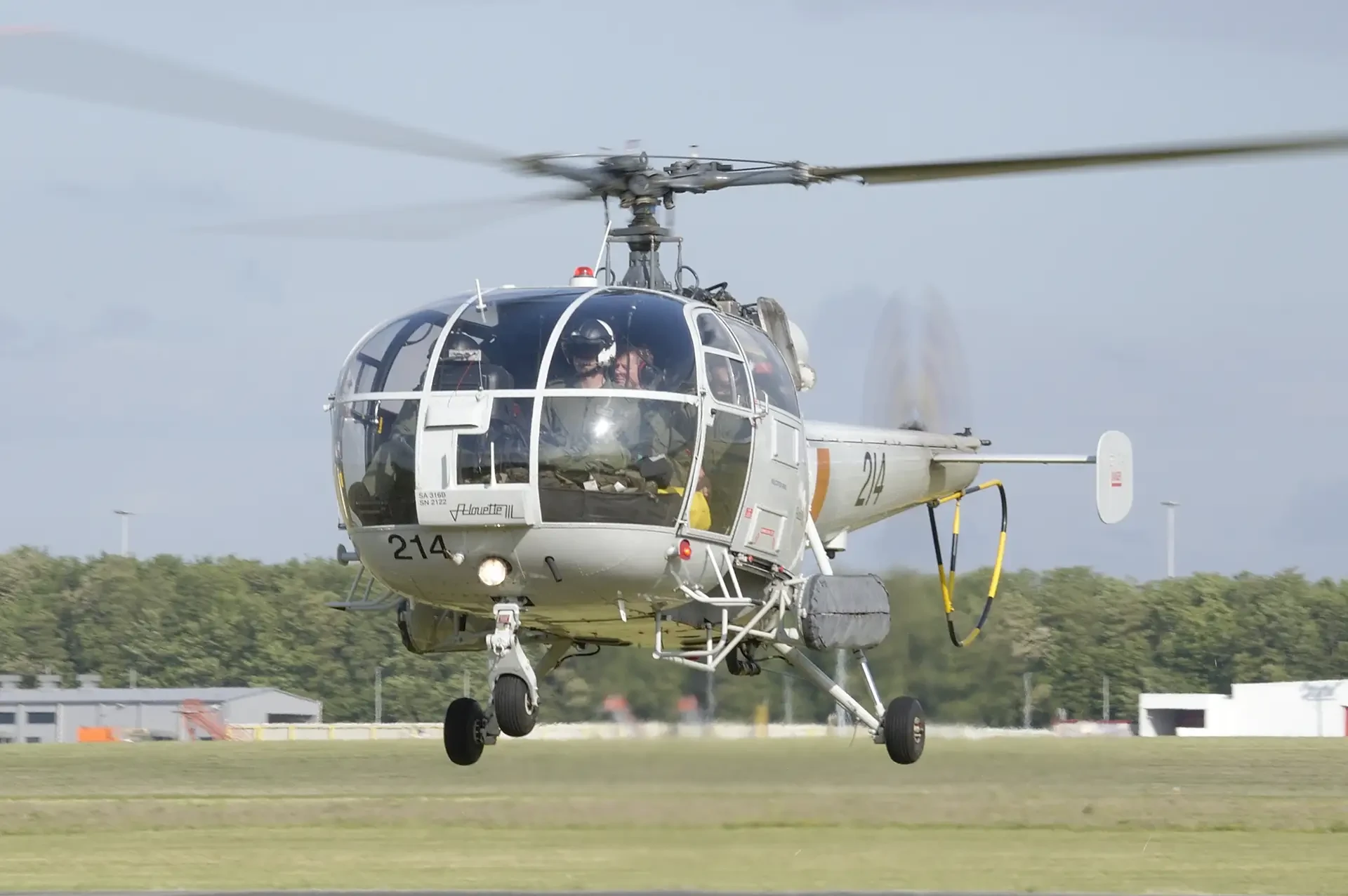
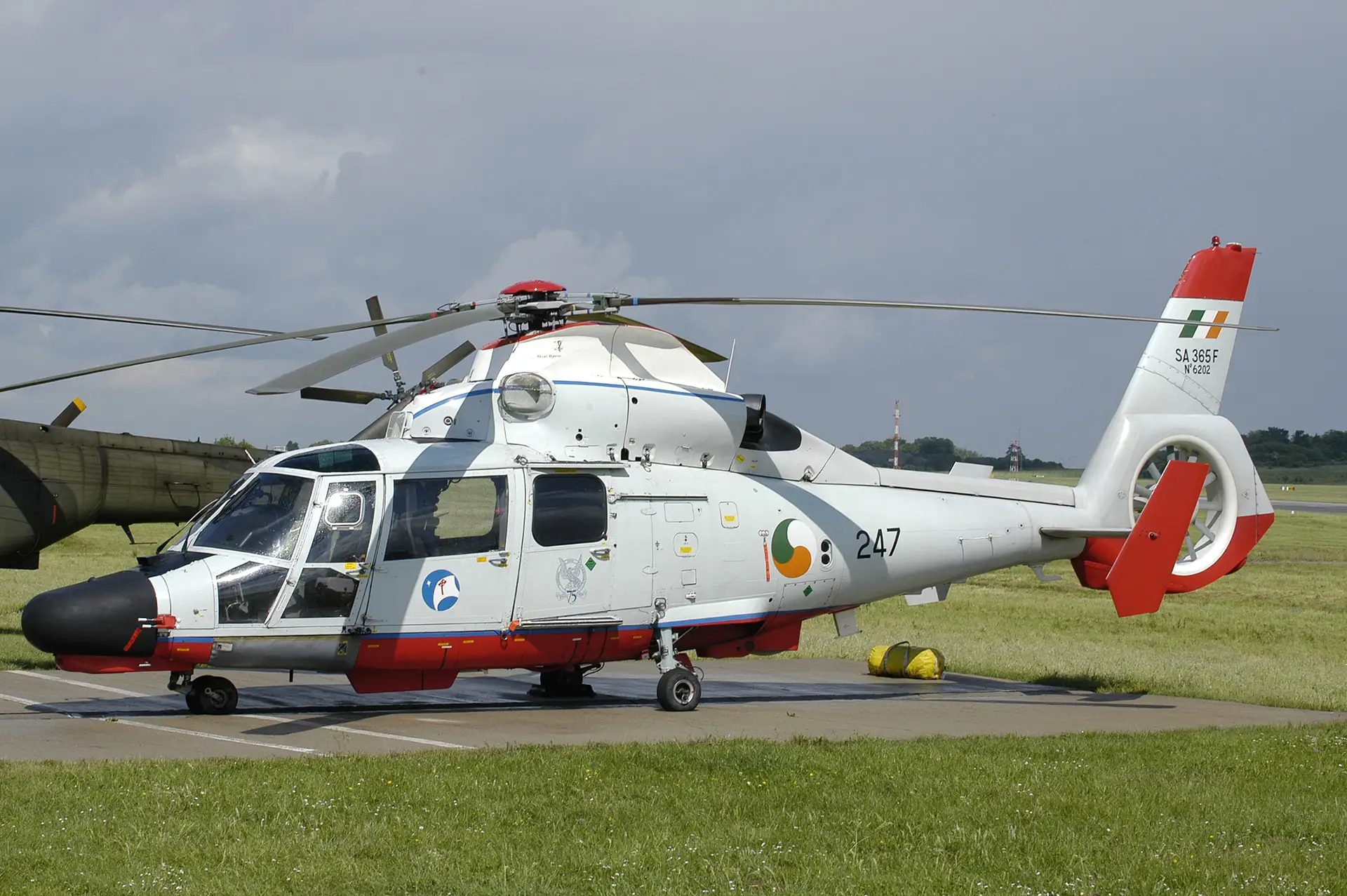
The aircraft performing these roles are now beginning to show their age. The EC135P2s were introduced in 2005 to replace the SA342L Gazelle as trainers and to adopt some of the roles of the Alouette III, which remained in service until 2007. The other main competitor for this tender was the A109. The AW139s were introduced in 2006, succeeding in a competition with the EC145 and Black Hawk as the other finalists. The first two AW139s were numbers forty-eight and forty-nine off the production line, which meant that their early service was marred by serviceability issues as both the OEM and operators were getting to know the aircraft in actual live operational service. Replacing the Alouette III, which had a long and storied service on the border and in SAR, and the Dauphin which had a shorter shelf life at nineteen years rather than the forty-seven of the Alouette, both the Airbus and Leonardo offerings were bought in a post Good Friday Agreement world when the domestic security environment was relatively benign. The aircraft supplanting them will be introduced in a much-changed world, with significant drivers towards adopting heavier machines. A needs-based analysis, and a look at the inevitable compromises in any large purchase, is in order to assess what shape the overall fleet may well adopt in the future.
Fleet design – helicopters for future roles overland
A fun fact to start off. With a fleet strength of eight aircraft in total, as the units then operations officer, I once calculated that we
needed twenty-two AW139 sized aircraft backed up by four to six EC135s to service all the tasks that actually filtered down from the
variety of customers and supported units through Air Corps HQ and ultimately to No 3 Ops Wing. Fortunately, given the precarious manning
situation, this could be reduced to only fifteen of the AW139 classed aircraft if you added in three to five heavy lift helicopters such as
a Chinook or CH 53. The demands of modern military operations have far outstripped the number of helicopters available in Ireland. In the
last few years, the emergence of drones as a threat means that even at section level, some form of Counter UAS equipment will become a
standard feature of soldiering in even the most slightly elevated threat level, either domestically or abroad. This means extra weight and
volume which, added to the defensive aides that will also be a mandatory feature, start to highlight a problem that the AW139 or similar
aircraft can’t solve – it doesn’t matter how good the basic airframe is, the nature of the roles they are used for have exerted an upward
pressure on weight and size requirements.
This pressure is not only present in basic trooping tasks. In all other roles, a similar evolution of requirements exists. With the removal of the policy that blocked the use of Air Corps helicopters overseas, the use of helicopter detachments in the opening phases of an overseas mission is now not unlikely in roles such as medevac. As far back as 2010 it was identified that the AW139 coupled with deployed clinical assets would have far outstripped the medevac capabilities that Irish soldiers availed of in the EU and UN mission in Chad. Over time however, it has become clear that the gold standard of casevac/medevac in large AOs looks a lot more like the MERT system employed by the UK in Afghanistan and less like militarised HEMS. This means that in addition to the clinical team, the aircraft must also have sufficient space and lift capacity to carry a security detachment, armament and fuel equal to the security environment.
Another role that was not considered when the AW139 was purchased, but whose execution has increased in frequency, was that of Noncombatant
Evacuation Operations (NEOs) – the removal of Irish or other entitled civilians from conflict or disaster areas. There is no reason to
expect that this role will absent in the future, nor that we as a country will continue to be lucky, as we have been to date. So far, we
have been able to extract personnel from airports where fixed wing aircraft (Irish or otherwise) have been able to meet them. It goes
without saying that runways represent a single point of failure in such an operation. When Irish Air Corps CN 235 and Learjet fixed wing
aircraft were tasked with evacuating civilians from Libya, planning was also completed for the AW139s to perform the operation if the
airport at Tripoli was no longer a viable safe option. The upcoming Naval Service Multi role vessel will have NEO as a core capability, with
helicopters being the most logical and safest means of moving non-combatants from the point of threat to the ship. Again, the need to carry
the most people in the least amount of trips points to a larger machine. The nature of a NEO infers that permission is granted for
evacuation flights to land, however in war torn nations it's often impossible for all factions to be instructed to go 'weapons tight' when
they see an aircraft - it's therefore a key consideration for planners, and commanders, if the situation is safe enough for unprotected
aircraft to operate, or if some combination of Ballistic Protection and MANPADs protection is needed.
Referendum
There is another role that dares not speak its name, but also one that cannot be ignored. For various reasons, it cannot be ruled out that there will be a referendum on the constitutional status of Northern Ireland during the lifetime of the next fleet. It is unlikely to occur in the short to medium term, but political and demographic changes mean such a referendum in both Ireland and Northern Ireland may occur. With PSNI/MI5 and Gardaí all putting total Loyalist paramilitary numbers in excess of 12,000, and the more splintered Dissident Republican numbers in the hundreds at least, only the most naive or disingenuous would proclaim that any political campaign around the status of Northern Ireland would not also re-ignite a violent one, regardless of the supposedly inactive state of those organisations now. In that event, the Air Corps would be returning to previous roles in support of the Army’s’ EOD units ( see Antares Issue 12) but with a larger area to cover, as activity throughout a whole, unified, state could be logically anticipated. Given that the small fleet will continue to be heavily tasked in such a scenario, this would also represent a pressure towards a larger aircraft that can carry an EOD team plus kit plus security all in one helicopter and deploy it without external assistance such as Landing Point Commanders to detach underslung loads. Whilst the other roles mentioned are frequent, but a lack of capacity would only affect individuals and small groups negatively, a Border Poll and the related terrorism would have to be risk assessed as a ‘Low Frequency, High Impact’ event with threats extent to the country’s economy and political stability along with individual lives. Helicopter purchases will have to be considered accordingly.
Steel is cheap and air is free – Big sea space, big helicopter. it's no co-incidence that the UK regularly deployed CH-47 Chinooks to Northern Ireland to support large movements of troops, and while in Theatre, they were often tasked with moving the Armament Technical Officer (ATO) and his 'EOD box of tricks', including the robot 'wheelbarrow' device inspection unit.
Embarked Aviation
Ireland’s previous experience in embarked Naval Support centred around keeping a Dauphin at sea on the Naval Service’s then flagship, the now retired LE Eithne, for the purposes of maritime patrol. Under resourced, with the same small pool of crews and aircraft also providing SAR at the time, the role was discontinued, and the need was largely overtaken by events with the introduction of the more capable Casa CN 235.
The future (full time) role for Irish embarked aviation will be quite different. Several events have come together to point towards clear,
primary roles for such helicopters, taking precedence over that of just NEO but with some overlapping traits.
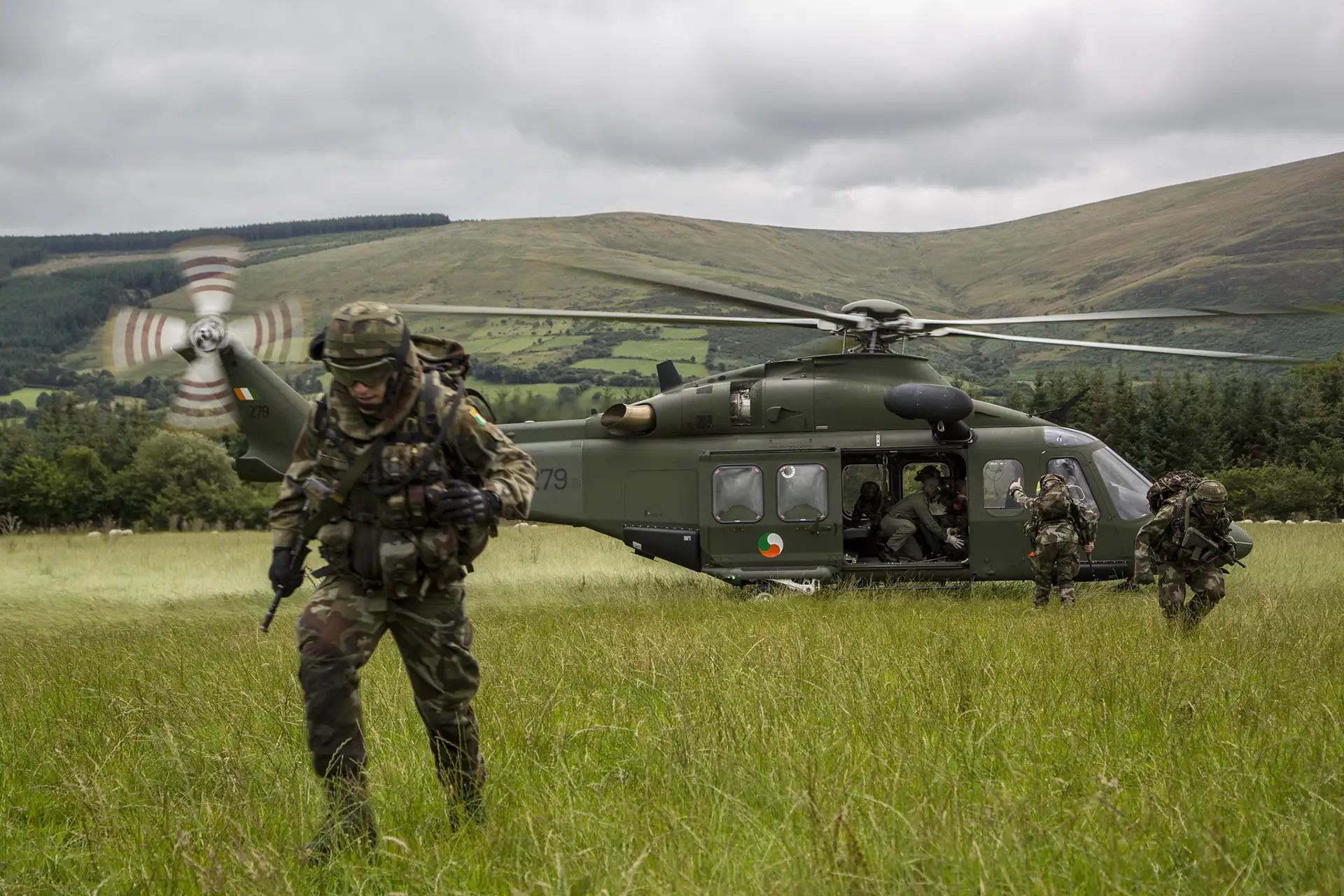
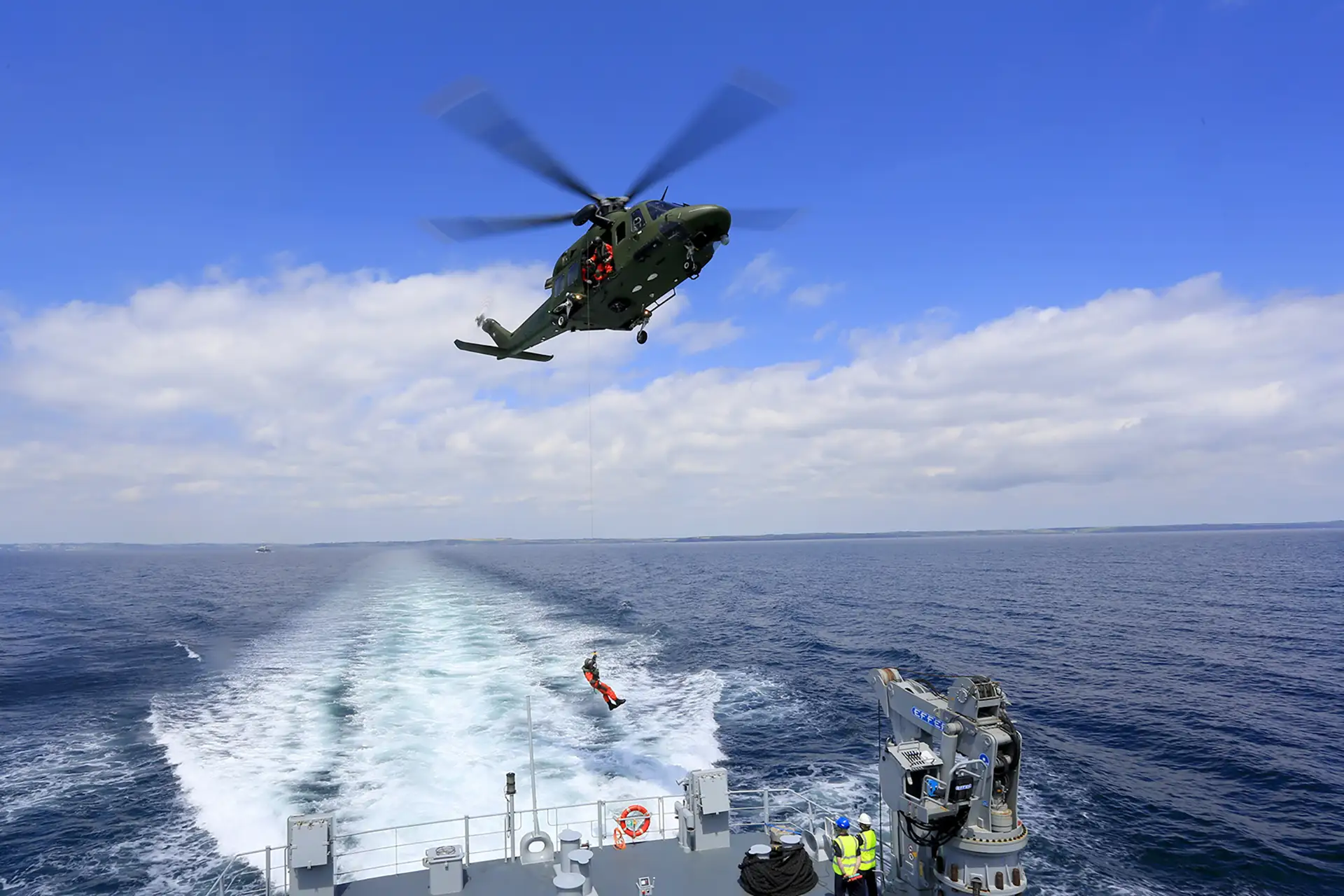
The first key event is that the Naval Service have secured approval for their long sought after MRV or Multi Role Vessel. This is intended to be a medium sized ship capable of acting as the State's Swiss Army Knife, with an assortment of capabilities to respond to a multitude of security and humanitarian tasks. It has not yet been defined in detail what exactly the equipment fit will be.
The second event is that, as noted in Antares Issue 15, the overt acknowledgment that a large amount of the worlds undersea communication
cables run through Irish waters, along with interconnectors for gas and electricity servicing the country’s own needs. This critical
infrastructure has not been adequately secured to date and, as we have seen too much of recently, it is a target in the liminal/hybrid war
that is currently underway between Russia and the West. A helicopter equipped with active sonar is now considered essential to properly
attend to the undersea picture, providing a speedy response which can then be followed up by the sustained presence of a naval vessel, with
both working together to generate an acceptable level of situational awareness around such critical infrastructure.
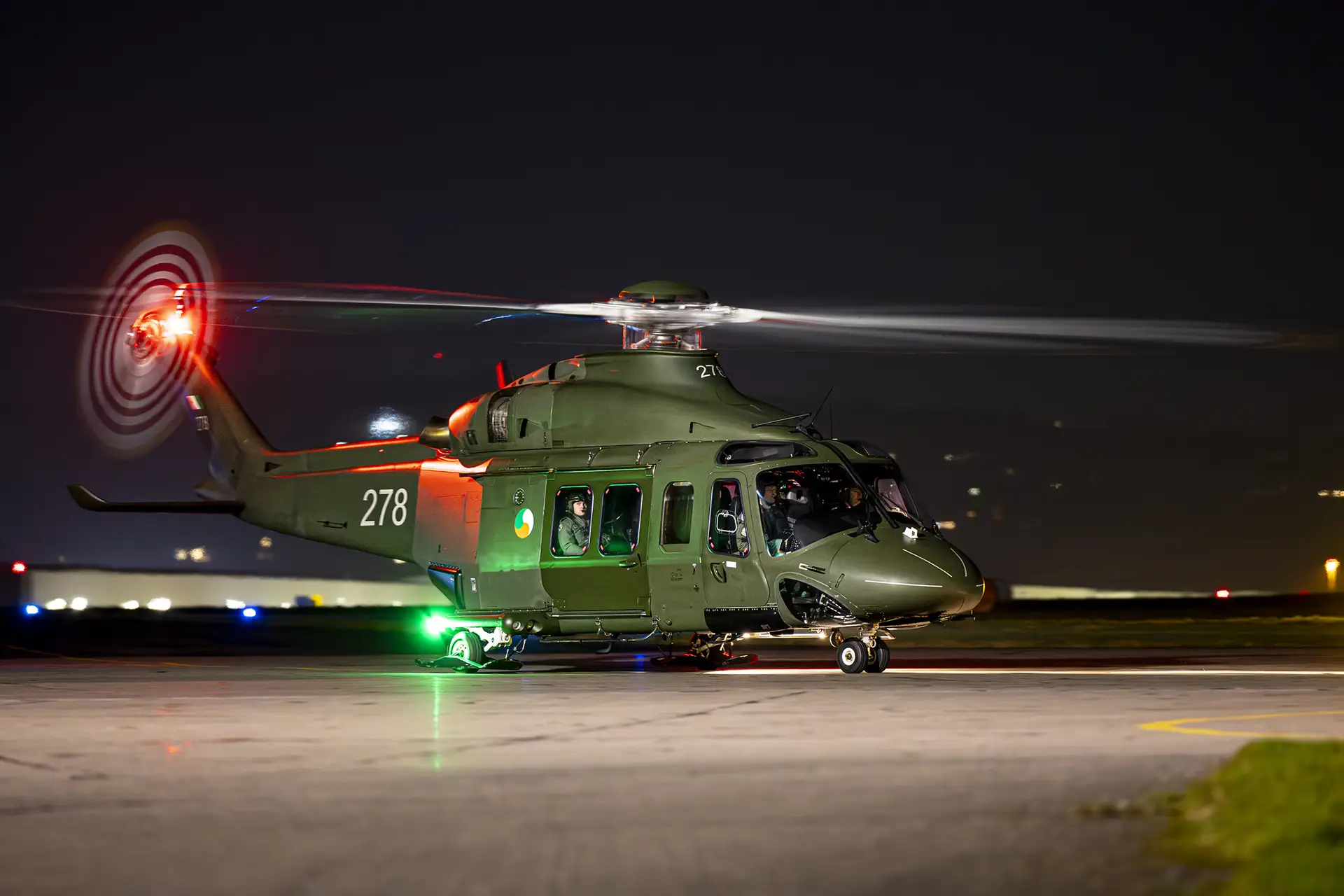
The third event is the seizure of the MV Matthew (a Hezbollah linked drug running mothership) by ARW, Air Corps and NS forces (Antares Issue 15), which has demonstrated in reality the need for an increased Maritime Counter Terrorism capability. This has been long sought after by various elements of the Defence Forces, but has to date only been resourced from within existing assets.
Taken together and, again, referencing the small fleet/less crews conundrum, these requirements point towards a larger airframe that can be routinely operated from a ship in the North Atlantic conditions around Ireland.
Flying FIBUA – The downward pressure on size
Not every role, however, requires a heavyweight, or even benefits from one. Greater than 63.9% of Irelands population are deemed ‘urban’.
This means that for a terrorist, the greatest number of easily available targets are in built up areas. Col. Ray Lanes recent book, Only A
Soldier Knows, goes into detail about the Counter Marauding Terrorist courses run by the Irish DF for international students, but from an
aviation perspective, the main result is a downward pressure on size to an aircraft that can carry a small counter terrorist team over
short range and manoeuvre around the buildings, wires and all the other obstacles and threats that exist in cities and towns without
wrecking the whole area or injuring civilians with downdraught and FOD.
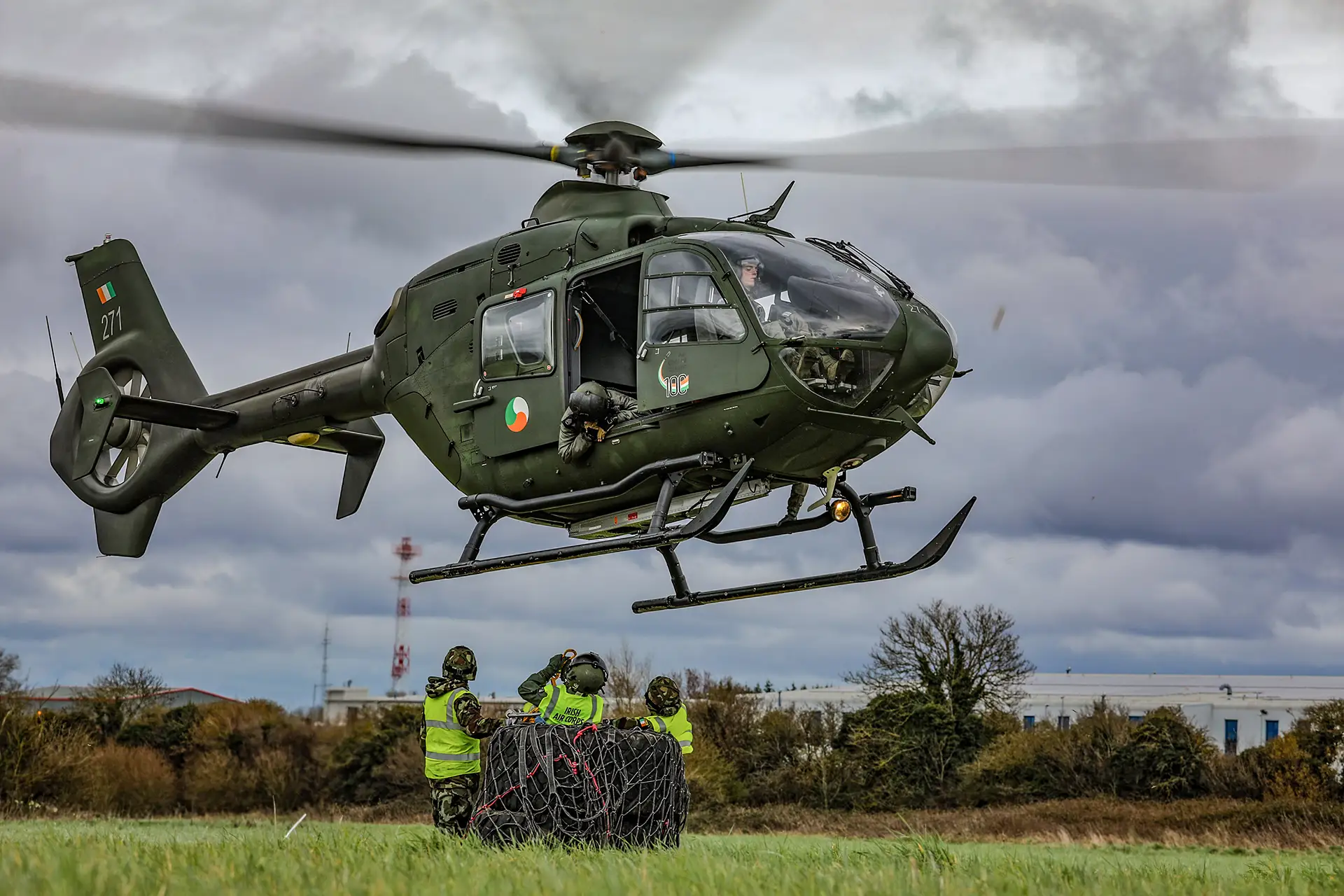
Less dramatically, in a small air component, such an aircraft can expect to do double duty as a trainer, recce aircraft and general utility machine where the cost of sending a bigger aircraft outweighs the need. In reality, any new fleet it will do a lot more flying hours on these kinds of tasks than addressing the high-end needs of the state.
So, with these competing but occasionally overlapping needs identified, what is the next fleet likely to look like aircraft turn up on the ramp?
We can say in synopsis that the Irish Air Corps have a requirement for a smaller armed LUH (Light Utility Helicopter) for everything from training to armed reconnaissance, a larger Medium/Super Medium Lift helicopter to form the main body of the fleet and potentially an even larger Medium/Heavy Lift Maritime helicopter for everything from NEO to MCT. This leads to a variety of potential outcomes being possible, but ultimately it seems the choice is between a straight super medium replacement for the AW139, but slightly bigger and a medium heavy replacement that lifts the Air Corps capabilities into a whole new space, but at the risk of having a gap in the middle between the LUH level and the primary aircraft in the fleet.
In Part Two, we will look at what aircraft are likely to meet the needs in each class.