 HOME
HOME




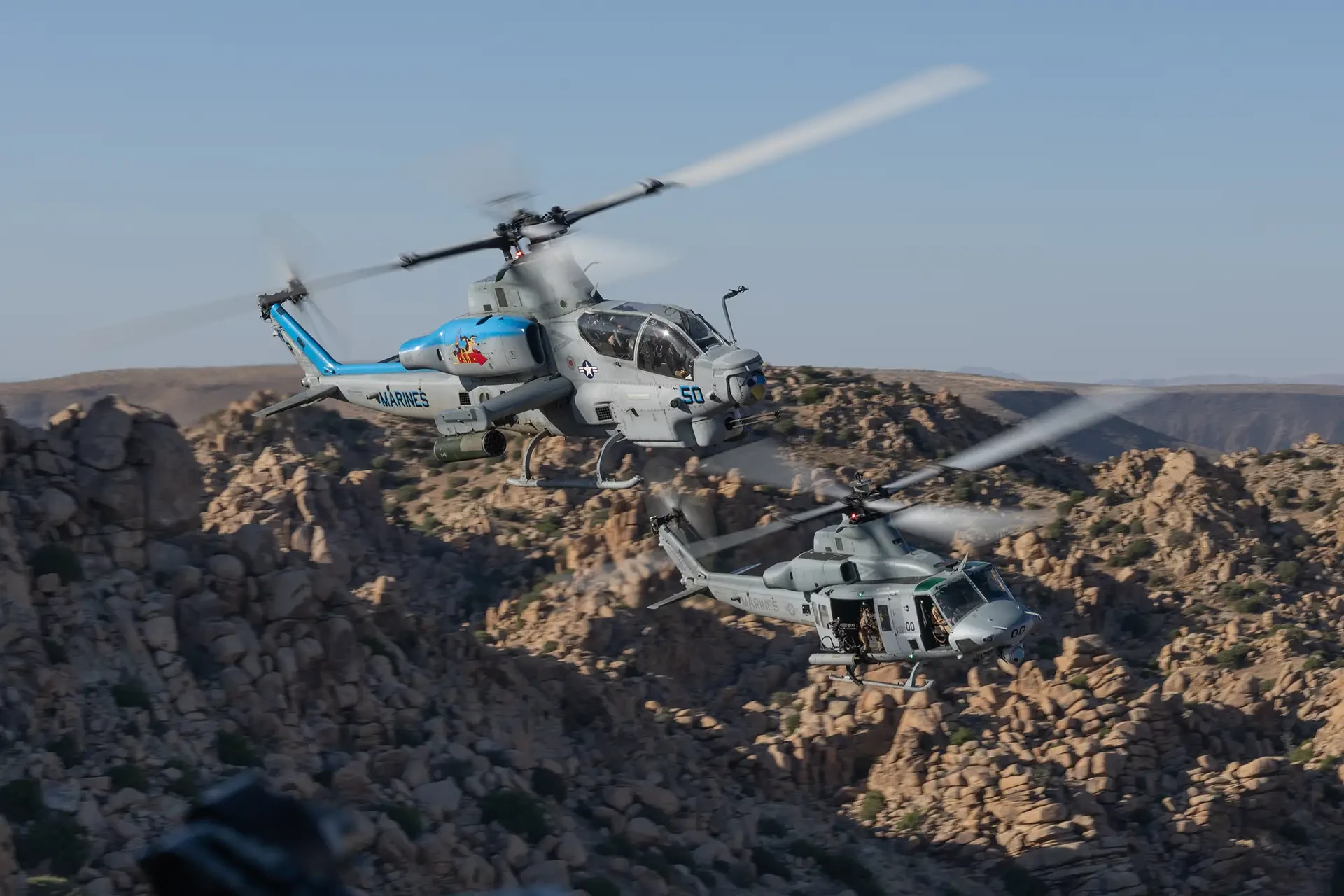
The phrase “one weekend a month and two weeks a year” describes reserve service only in the narrowest administrative terms. For Marine Light Attack Helicopter Squadron (HMLA) 775, the Coyotes, the operational reality is much more than that.
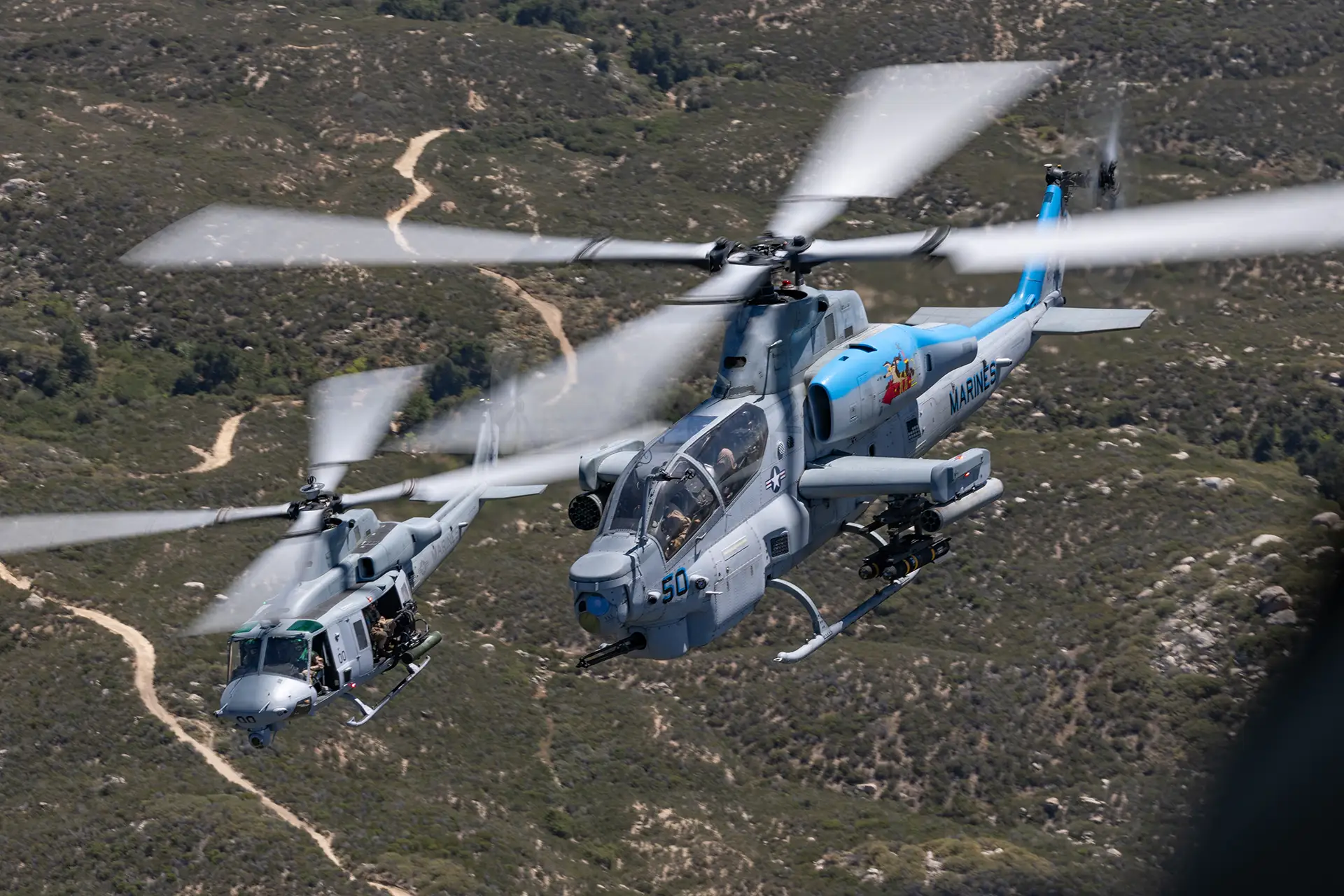
HMLA-775 is the Marine Corps’ West Coast Reserve attack and utility helicopter squadron, based at Camp Pendleton, California. The unit operates 18 aircraft: 10 AH-1Z Vipers and eight UH-1Y Venoms, and fields nearly 400 Marines and sailors. Most are Selected Marine Corps Reservists (SMCR) with civilian careers as business executives, helicopter emergency medical services (HEMS) or airline pilots, logisticians, teachers, students, and professionals outside military aviation. They balance that service with families, college schedules, and employers that must accommodate their absences.
The requirements do not adjust for the reserve calendar. Aircraft must fly safely, pilots must remain tactically current, and maintainers must produce mission-ready helicopters. Flight operations, administration, logistics, medical readiness, and professional military education must meet the standards expected of any Marine aviation unit.
Reserve status does not reduce those requirements. It changes how HMLA-775 meets them: through full-time support, part-time depth, and sustained individual commitment.
A Squadron Built From Multiple Components
HMLA-775 does not function like a conventional active-duty squadron. It integrates active-duty Marines, Active Reserve (AR) personnel, traditional SMCR drilling reservists, and Navy medical support into one operating structure.
Roughly 100 active-duty and AR Marines work at Camp Pendleton full-time, handling daily flight operations, maintenance, scheduling, administration, and training preparation. Approximately 300 are drilling reservists who normally assemble for one weekend a month and a two-week annual training period, often more, depending on squadron needs and individual availability.
Active-duty Marines serve standard tours at the site. AR Marines also work full-time but remain tied primarily to reserve organizations. SMCR Marines balance military service with civilian careers, education, and family commitments, sometimes traveling from across the country for drill periods and extended training blocks.
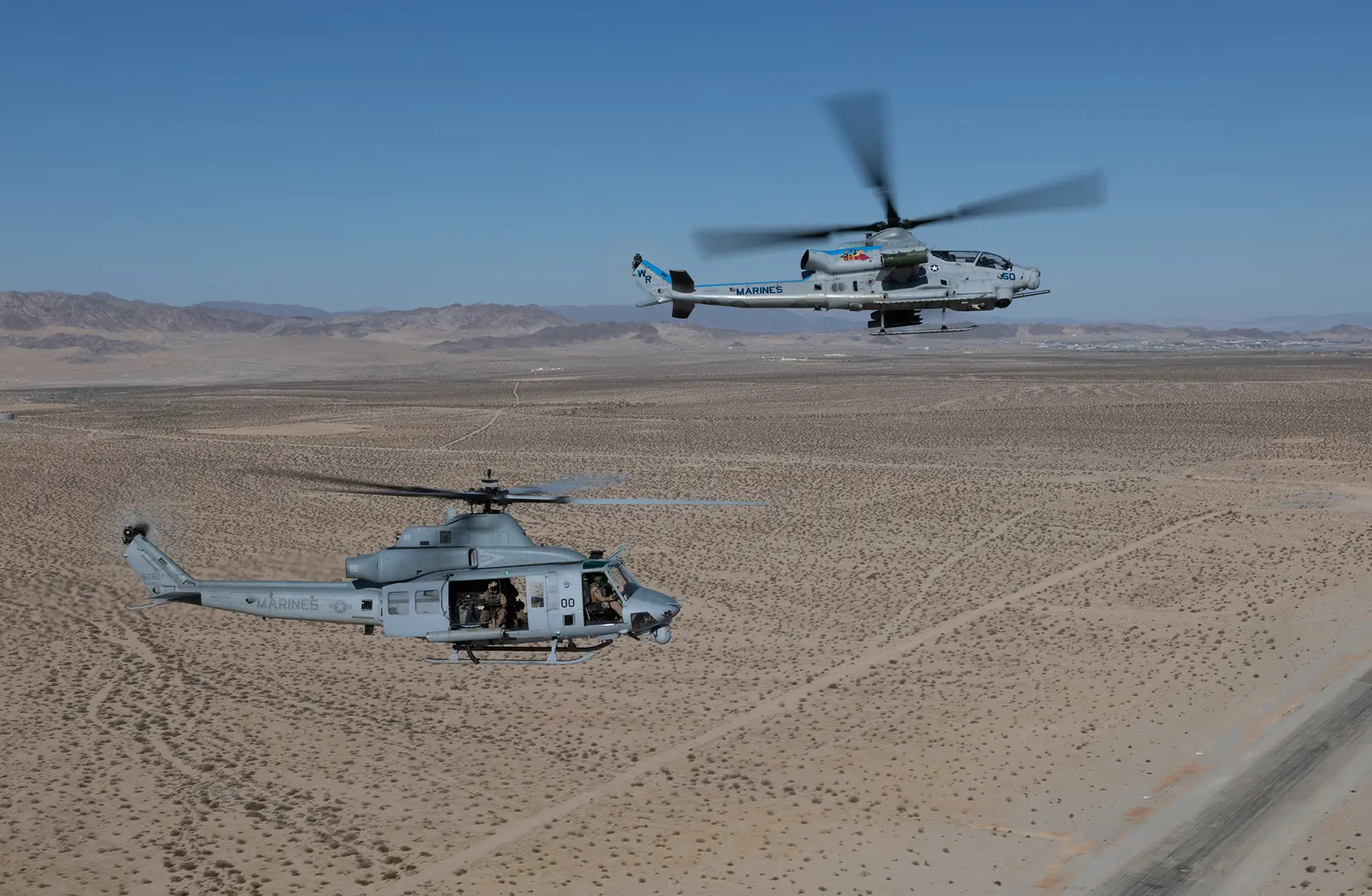
“We can’t just lock the doors 27 days a month and come in and make it happen,” said Lieutenant Colonel (LtCol) Jack “Chili” Guevara, Commanding Officer (CO) of HMLA-775.
Flight operations, maintenance, training plans, records, and logistics continue year-round through the squadron’s active component. By the time the drilling population arrives, the unit must already be ready to use the limited training time available.
Organizationally, HMLA-775 falls under Marine Aircraft Group 41 and the 4th Marine Aircraft Wing, the Marine Corps Reserve aviation component. Its East Coast light-attack counterpart is HMLA-773, the Red Dogs.
Together, the reserve HMLA squadrons preserve attack and utility helicopter capability outside the active Marine Corps aviation component. HMLA-775’s value, however, lies as much in the experience it retains as in the aircraft it operates.
Experience That Does Not Rotate Away
In a typical active-duty squadron, personnel rotate every two to three years. Pilots move between line units, instructor billets, schools, staff assignments, and non-flying roles, while commanding officers serve defined tours before moving on. The system continually develops new Marines, but experienced personnel and the knowledge they carry also leave on a regular cycle.
Guevara was commissioned as an officer through the U.S. Naval Academy and spent roughly nine years flying Cobras on active duty. His assignments included multiple overseas deployments, including combat operations. After leaving active duty in 2015, he entered the Marine Corps Reserve flying with HMLA-773 before later transferring to the Coyotes in 2017.
His civilian career has since taken him through graduate school and into operations and strategy in the energy sector. In uniform, he has remained in the H-1 community, serving with HMLA-775 for nearly a decade and becoming the squadron’s CO in April 2025.
Many Coyotes followed similar paths: substantial active-duty careers followed by reserve service rather than a complete departure from Marine aviation. Some attended flight school together, served in the same squadrons, deployed together, and remained connected through civilian careers and family milestones.
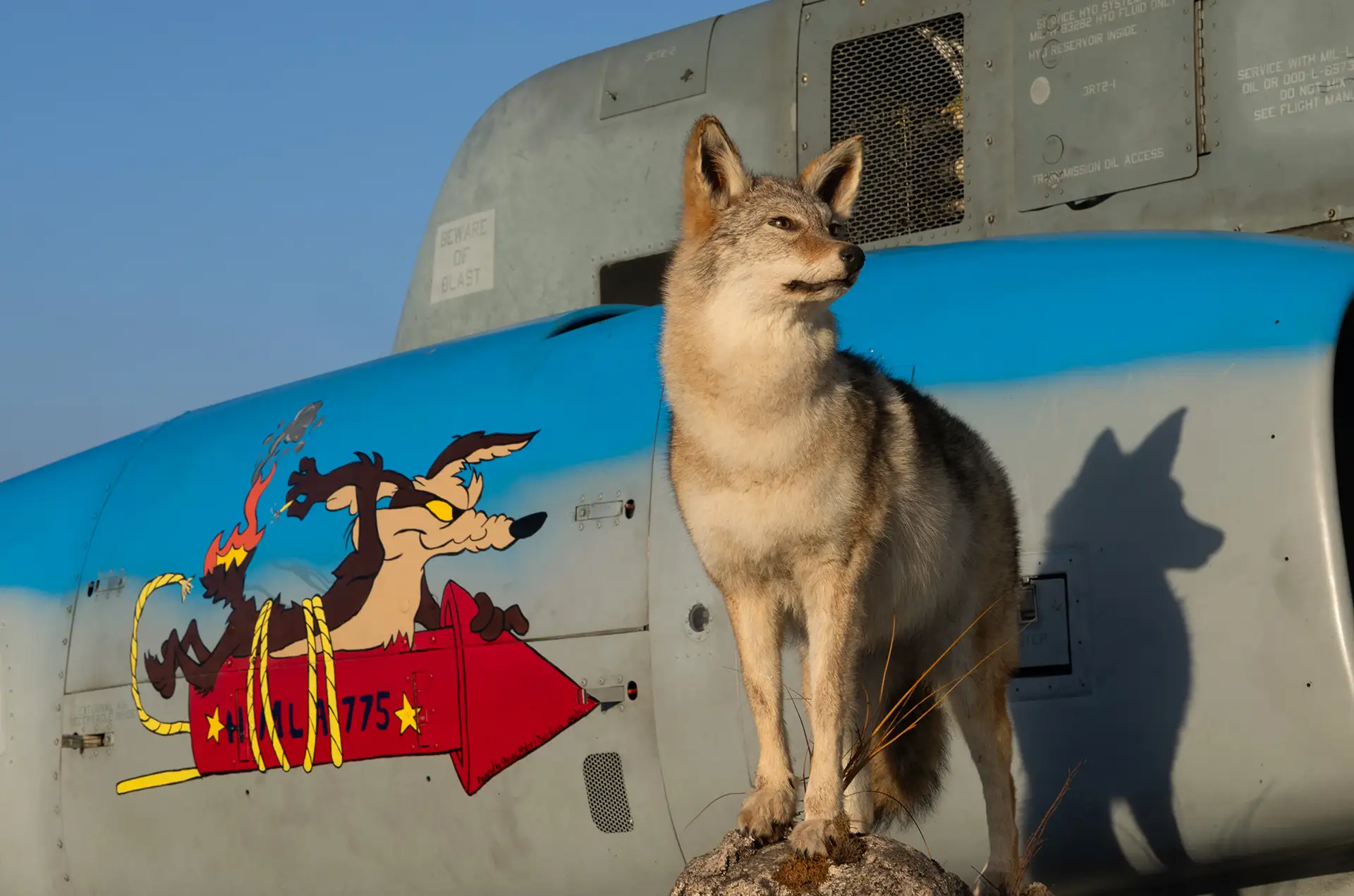
“Some of the folks in this squadron I’ve known for almost a quarter of a century,” Guevara said. “These are guys I went to college with, went to flight school with, deployed with. We were roommates in Afghanistan. Best man at each other’s weddings and godparents to each other’s children.”
For Guevara, HMLA-775 is not another temporary assignment. It is a professional home.
That continuity creates operational trust. Crews know how one another plan, brief, communicate, and respond when a mission changes. Many have already flown together in combat and demanding training environments, so they return to Camp Pendleton refining established relationships rather than rebuilding them.
It also, importantly, preserves institutional memory. Lessons from combat deployments, weapons employment, night operations, maintenance challenges, and years of H-1 integration remain inside the squadron rather than rotating out every few years.
The squadron’s roster reflects that retention. Numerous Lieutenant Colonels serve within HMLA-775. In an active-duty line squadron, the CO may be the only officer at that pay grade. At the Coyotes, the CO is surrounded by experienced peers.
That seniority on the roster includes a rare concentration of advanced tactical qualifications.
A Ready Room With Unusual Depth
Weapons and Tactics Instructor (WTI) is the Marine Corps’ highest aviation tactical qualification, representing advanced proficiency in aircraft employment, Marine Air-Ground Task Force integration, and instruction. Night Systems Instructors (NSI) hold the next highest tier of specialized tactical expertise. Most active-duty squadrons have only a small number of aviators with those qualifications at any one time.
At HMLA-775, nearly half the pilots are WTIs. With NSIs included, advanced instructors account for almost three-quarters of the ready room. Combat experience and “5000-hour” cockpits remain concentrated within the squadron even as that exposure declines across the wider active force.
“You’ll never see that concentration of qualifications, designations, combat flight hours, or just years of experience in an active-duty squadron,” Guevara said. “That’s pretty unique to the Reserves.”
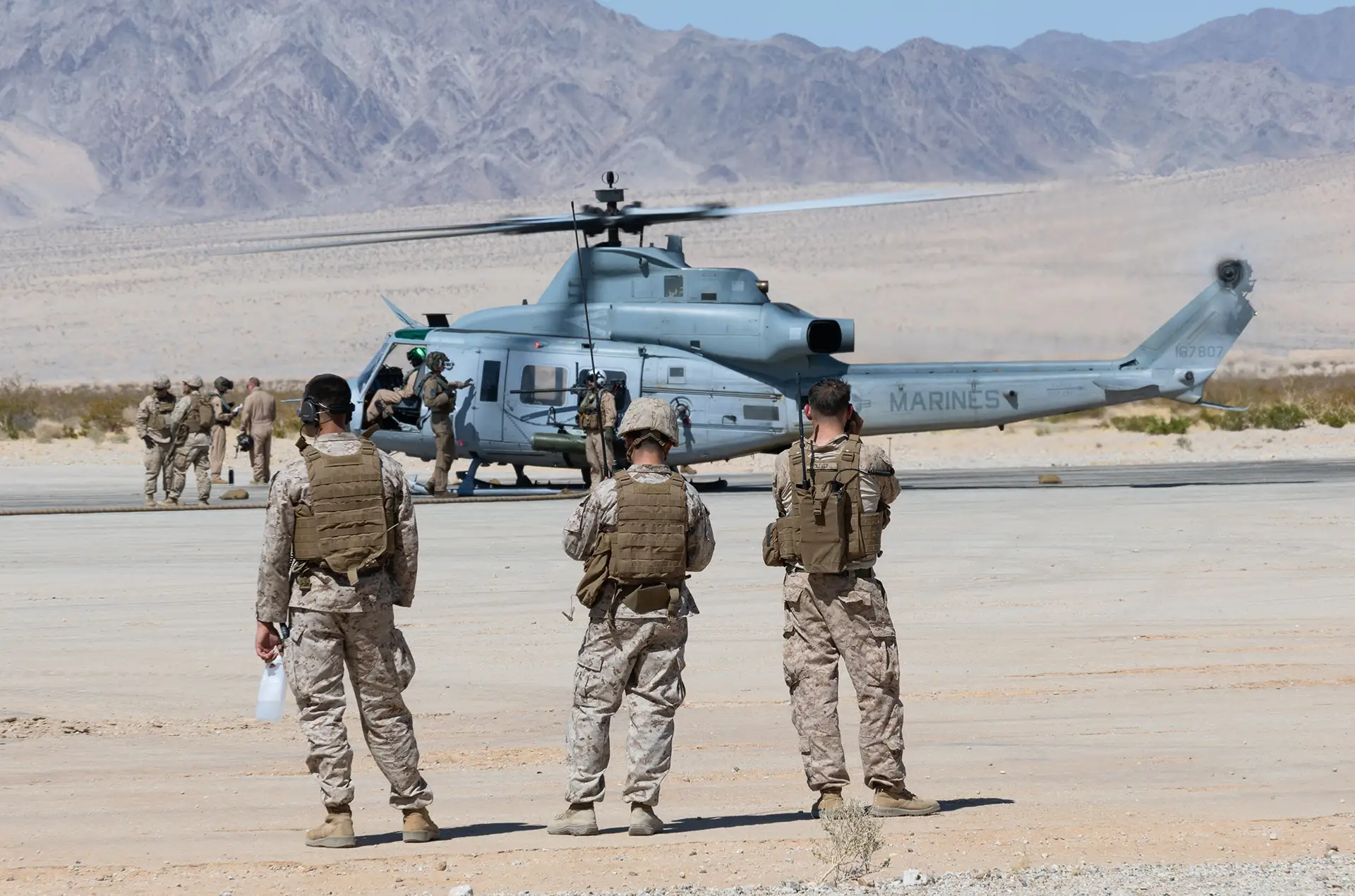
LtCol Vince “CLANG” Teixeira sees the value of that experience from the full-time support side of the squadron.
Teixeira is the Active-Duty Site Commander for MAG-41 Detachment Alpha at Camp Pendleton. A career Cobra pilot, he serves as Guevara’s day-to-day counterpart and leads the full-time structure that keeps the site operating between reserve periods.
“If the Coyotes were to deploy, it’s probably the most experienced ready room in the Marine Corps,” Teixeira said. “The pilots here show up extremely professional, and they bring more hours than a lot of squadrons have. You have pilots here with combat deployments all the way back to the early 2000s.”
That does not make HMLA-775 a substitute for an active-duty squadron. Fleet units carry the immediate deployment burden, develop new aviators, and sustain continuous readiness cycles.
That experience is only useful if it remains current, and proficiency is perishable.
Proficiency Cannot Be Part-Time
Retaining experienced pilots solves only part of the readiness problem. Combat aviation skills like night formation flying, low-altitude tactics, weapons employment, instrument procedures, degraded visual environment operations, and ground-force coordination all degrade without regular practice.
Reserve H-1 pilots generally arrive after completing an initial active-duty commitment, often six to eight years or more after flight school. Many already hold aircraft commander, instructor, division lead, NSI, or WTI qualifications. HMLA-775 receives developed aviators; its challenge is to preserve and sharpen their skills on a fragmented schedule.
The Marine Corps holds reserve pilots to the same baseline requirement as their active-duty counterparts: 100 flight hours annually, along with the same aircraft, instrument, night, and tactical currencies. Meeting those requirements usually demands far more than the minimum reserve schedule.
LtCol Russell “H-Man” Hromadka works in oil-and-gas trucking and logistics in Fort Worth, Texas. Rather than attempting to travel to Camp Pendleton for every drill weekend, he consolidates training into blocks of five to seven days every few months.
“You can’t meaningfully build new combat skills as a reservist in one weekend a month and two weeks a year,” Hromadka said. “You have to do more than that.”
That concentrated schedule lets him regain rhythm through several flights rather than completing one event and leaving the aircraft for another month.
LtCol Brian “Horsehead” Clegg flies for a HEMS operation on a seven-day-on, seven-day-off schedule in Northern California. His availability rarely aligns perfectly with the military calendar, so he uses off weeks for longer stays at Camp Pendleton.
He estimates that meeting ground-training, currency, and flight requirements takes at least 40 to 50 days a year.
“It’s all dependent on your civilian job,” Clegg said. “You might come in once a month, or it might be once a quarter, and you stay longer. You still have to meet the regular aviation requirements, the flight hours, and the currency.”
The flexibility is necessary, but time away from the aircraft still carries risk. A pilot returning after several months must be honest about what has degraded, making self-assessment, disciplined scheduling, and access to experienced instructors central to the model.
Clegg describes the approach as training against the weakness.
A pilot who needs instrument work flies instruments. Someone who has not completed night brownout landings recently focuses on degraded visual environment operations. If weapons currency has slipped, the schedule shifts toward live-fire evolutions.
“You already know how to do the things,” Clegg said. “You just have to brush up on them and stay ready.”
The model works because the ready room is filled with mature aviators who already understand the aircraft and mission. It is not designed to build basic airmanship and tactical competence from the beginning.
That standard becomes visible when the Coyotes move beyond local currency flying.
Vipers, Venoms, and Real Mission Applications
The Coyotes operate the same modernized H-1 family flown by active-duty Marine light-attack squadrons.
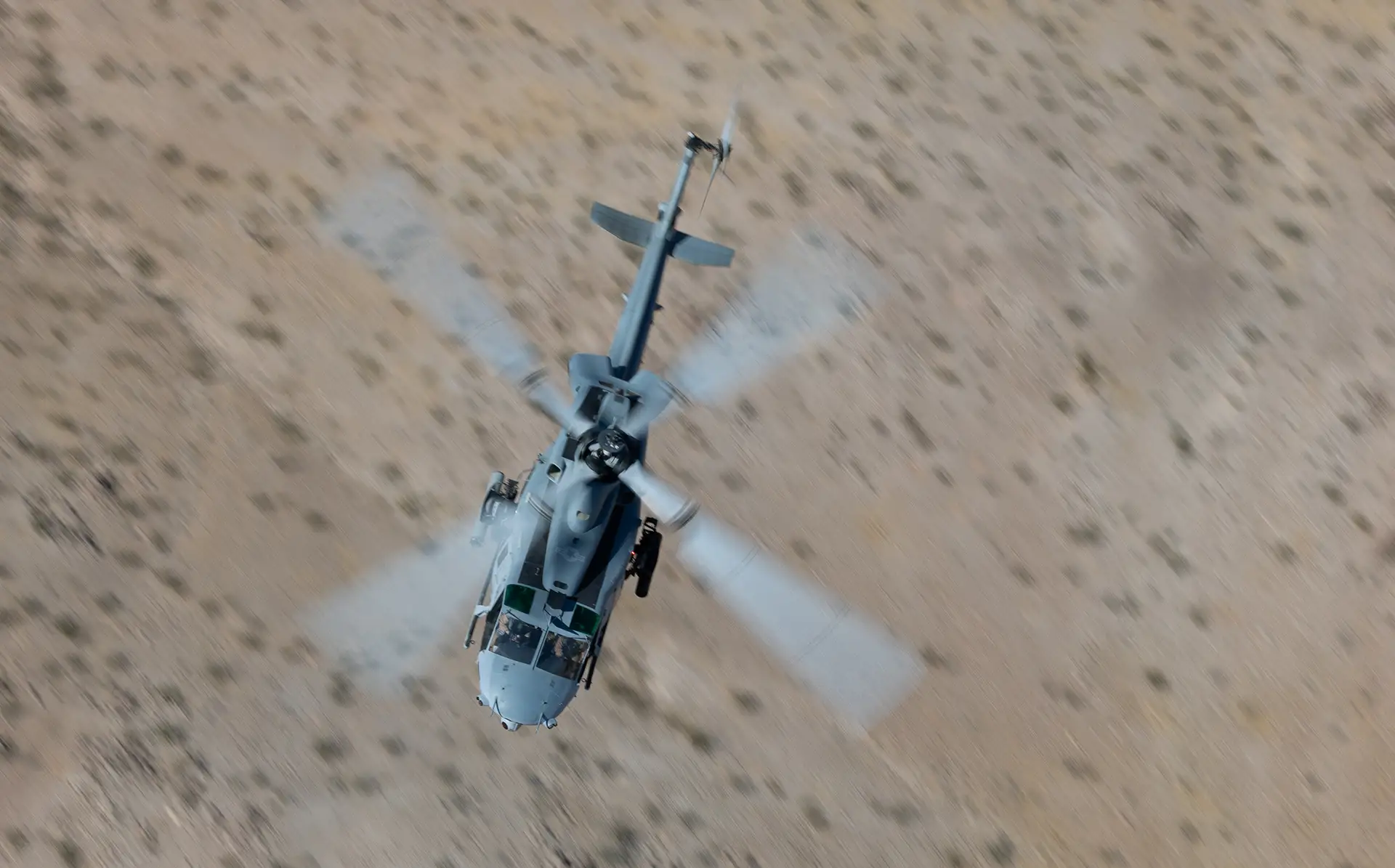
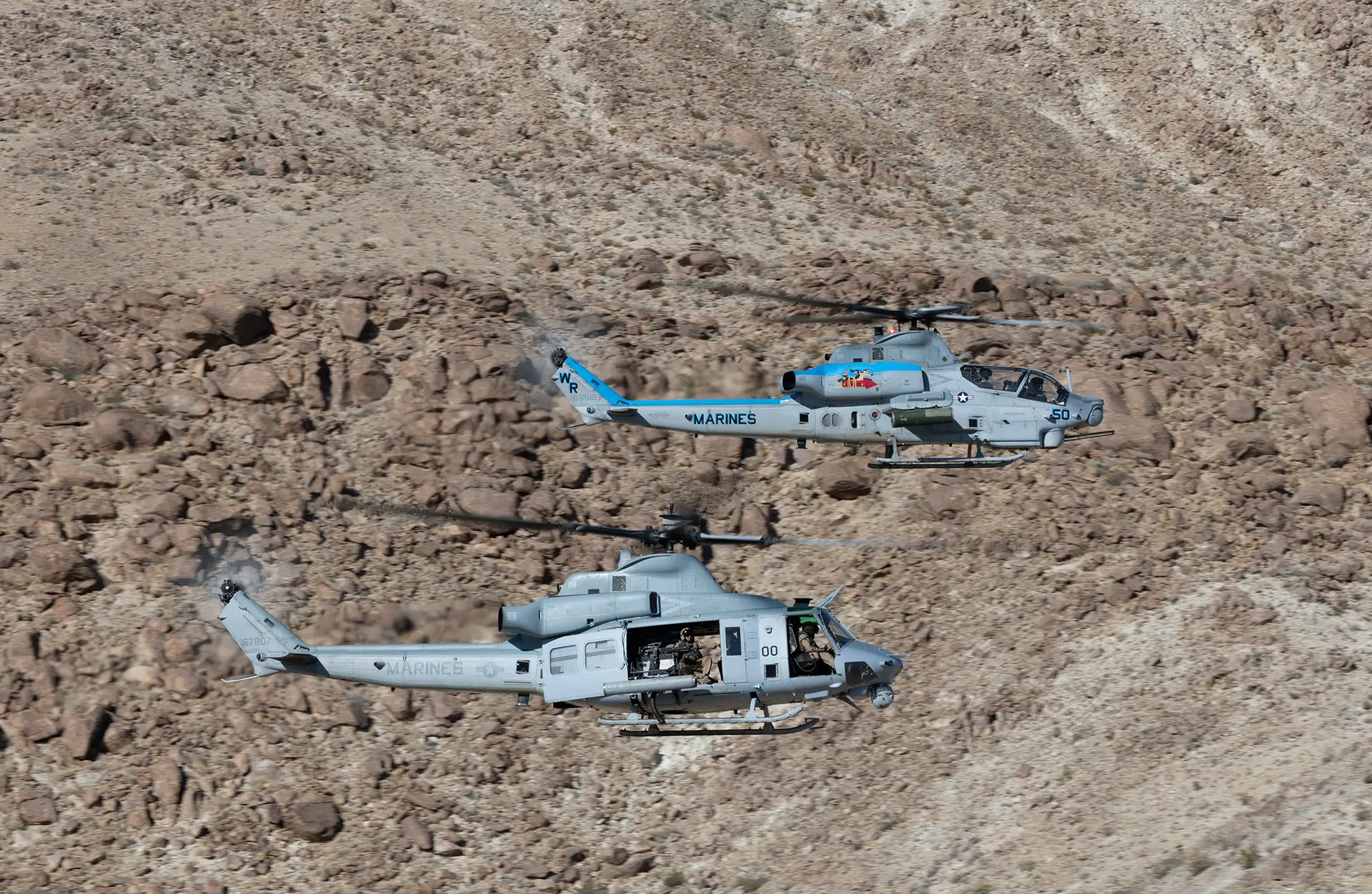
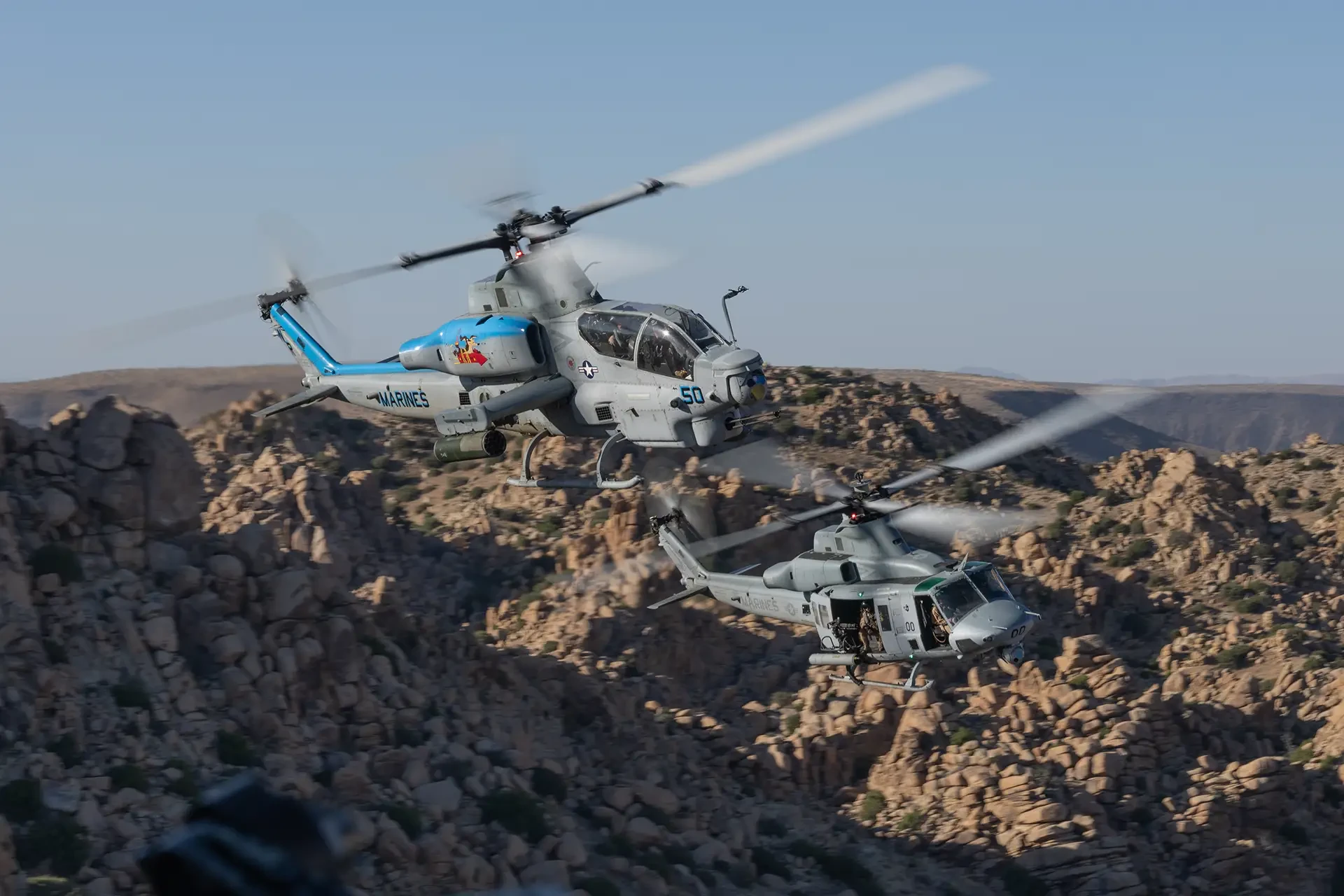
The AH-1Z Viper provides attack, armed reconnaissance, and close-air-support capability through guns, rockets, and precision-guided missiles. The UH-1Y Venom adds utility, troop transport, command-and-control, medical evacuation, and armed escort. Designed to operate as a team, the two aircraft support ground forces across a broad mission set.
Clegg began his career flying the earlier UH-1N. He remembers the transition to the UH-1Y as providing a substantial increase in power, handling, payload, and durability.
“Going into the new Venom is like going from a Fiat to a Lamborghini,” he said. “It has two big engines, it can carry more than you can fit in it, it’s nimble, it’s fun, and it’s durable.”
No aircraft is without limitations, and crews still identify systems they would change. Even so, the Viper-Venom team gives HMLA squadrons the performance and flexibility required to support Marines on the ground.
For the Coyotes, that support extends well beyond Camp Pendleton.
HMLA-775 works with active-duty units, reserve forces, weapons schools, special operations training, and joint-force customers. The supported organization changes with the tasking; the requirement remains attack and utility helicopter support where the force needs it.
During a recent annual training period, HMLA-775 moved eight aircraft roughly 2,000 miles from California to northern Michigan for Exercise Northern Strike, a multinational event involving active and reserve forces from the Marine Corps, Army, Navy, Air Force, and partner nations.
The operational challenge began before the tactical flying.
The aircraft had to cross the country first, with maintainers prepared to sustain them far from their own hangar. Crews would arrive to integrate with controllers, command relationships, and ground forces none of them had worked with before.
In Michigan, the Coyotes operated inside a joint-force problem rather than an isolated squadron flying schedule.
Frequent Weapons Detachments at Yuma and El Centro create a different training environment, allowing crews to regain currencies, employ the aircraft’s weapons, and work through tactical events that routine local sorties around Camp Pendleton cannot reproduce.
Together, those exercises test what the reserve squadron must preserve: the ability to deploy, sustain aircraft away from Camp Pendleton, integrate with other units, and deliver attack and utility support within a broader operational plan.
The Full-Time Force Behind the Reserve Squadron
By the time reservists return to Camp Pendleton, aircraft, facilities, instructors, schedules, and training plans must already be in place.
That responsibility falls largely to Teixeira and the active-duty and AR Marines who remain with the unit throughout the month.
“Our job is to make sure the pilots and maintainers in the reserve have ready aircraft, facilities, and training available when they show up,” Teixeira said. “They have a limited amount of time to show up and become as ready as they possibly can, and it’s our job to have the squadron and the aircraft ready when they’re here.”
Between drills, the full-time force maintains aircraft, manages flight operations, prepares training, supports administration, and keeps the facilities functioning. Reservists return to an organization already in motion.
A currency flight is more than a line on the schedule. It requires an available aircraft, an instructor, suitable weather, approved airspace or range access, completed paperwork, and enough maintenance margin to support the event.
Maintainers likewise need tools, publications, parts, supervision, and qualification plans.
All of it must be built and maintained before the reservist arrives.
Aircraft availability is the most visible result of that preparation.
Maintenance Under Resource Constraints
HMLA-775’s maintenance department supports 18 aircraft with roughly 40 active-duty and Active Reserve mechanics, a considerably leaner permanent structure than an active-duty squadron. The maintenance requirements are the same; the available manpower is not.
Gunnery Sergeant Eric Henry serves as a maintenance controller at HMLA-775. An AR Marine, he accepted temporary full-time orders to fill a personnel shortage. His civilian aviation career has included line maintenance with Hawaiian Airlines and maintenance control with Frontier Airlines.
The experience exchange works both ways. Marine aviation prepared Henry for civilian airline maintenance, while the judgment and systems knowledge gained in commercial aviation returned with him to the reserve squadron.
“We have all the same maintenance requirements as an active-duty squadron,” Henry said. “We just have fewer people.”
Day crews prepare aircraft for the flying schedule. Night crews often handle heavier corrective work, clearing discrepancies so aircraft can return to the line the following morning.
The shop cannot address every issue at once. Work is sequenced by safety, aircraft availability, manpower, parts, and the next operational requirement.
The maintenance organization is divided by specialty. Flight-line Marines support engines, drive systems, rotors, and daily servicing. Airframers maintain structure, flight controls, hydraulics, panels, blades, and composites. Avionics Marines handle wiring, communications, navigation, and electronic systems. Ordnance personnel support the aircraft’s weapons.
An aircraft reaches the schedule only when those specialties converge.
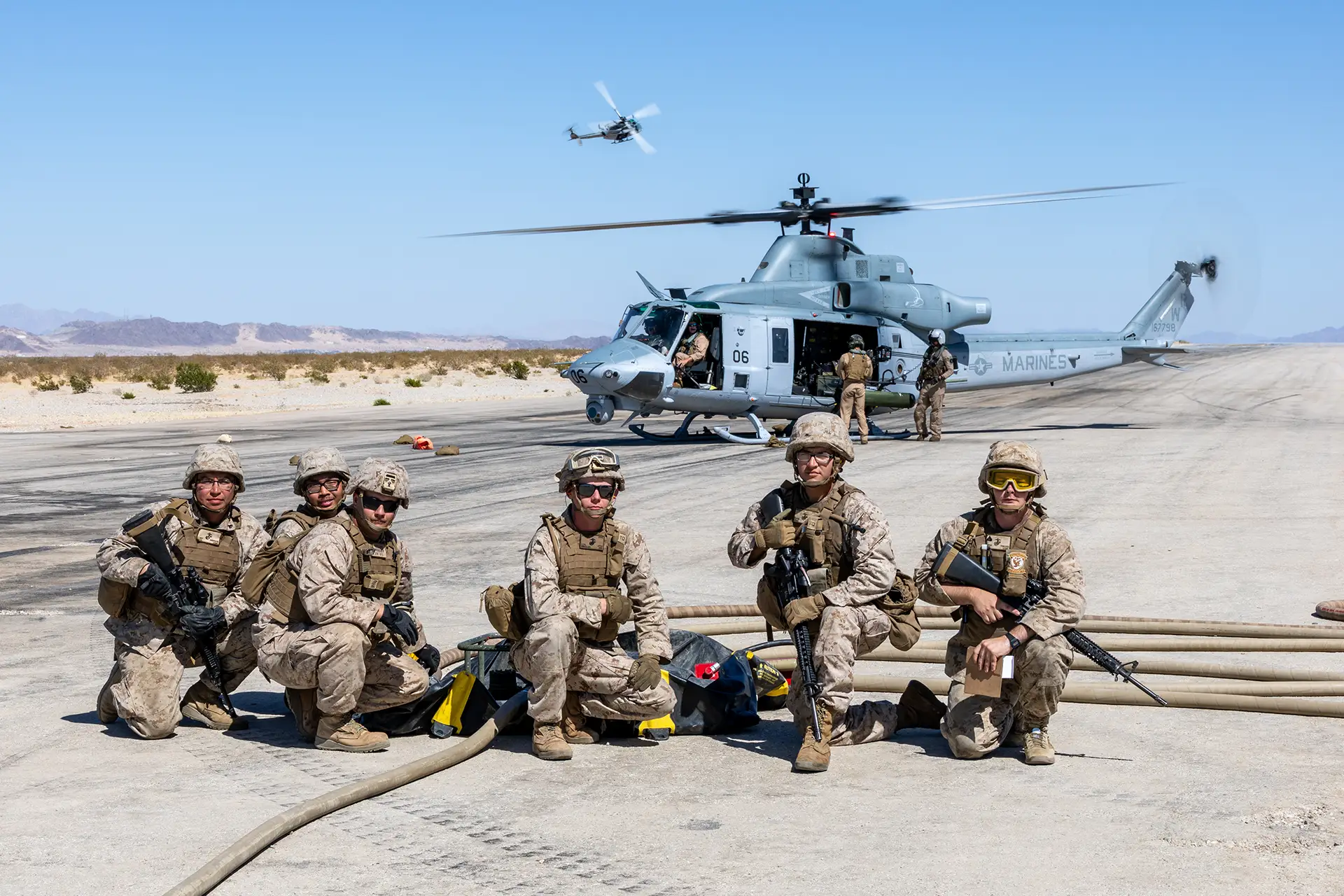
Lance Corporals Kevin Ruiz and Joshua Mingus serve as airframers, handling hydraulic systems, structural repairs, panels, blades, composites, and bird-strike damage. During larger exercises, corrective maintenance can continue through the night.
“You get to see the fruits of your labor immediately,” Mingus said. “You work on the aircraft, and then you see it go out and fly.”
For junior Marines, the connection is direct: a repair completed overnight can determine whether an aircraft launches the next morning.
The environment also accelerates their development. They work alongside senior Marines with years of military and civilian aviation experience, often taking on responsibilities difficult to match in a civilian workplace at the same age.
Producing an aircraft is only part of the problem. The squadron must also move hundreds of people into position to support it.
Administration, Logistics, and the Surge
Before a reservist can fly or turn a wrench, that Marine must reach Camp Pendleton with valid orders, current records, lodging, transport, and access.
Sergeant (Sgt) KenYon Jones works within the squadron’s logistics structure, supporting supply, billeting, transportation, and aircraft recovery.
If an aircraft is down away from the home hangar, Jones’ section may have to move maintainers, tools, parts, and transport assets to it or coordinate its return. During drill periods and annual training, the same small staff helps move and house reservists arriving from across the country.
Marines outside the local commuting area may require flights, hotels, and ground transportation. Orders, reimbursements, and schedules must align closely enough to avoid wasting limited training time.
Annual training creates the largest surge. The squadron’s population expands quickly; the permanent support sections often do not.
Personnel administration faces the same pressure.
Sgt Frida Martinez, an AR Administrative Specialist, and Staff Sergeant Nicholas Valentine, an SMCR Marine and Reserve Administration Chief, work in a combined S-1 and Personnel Administration Center responsible for records, orders, travel, transfers, pay issues, and medical tracking.
In a larger active-duty organization, those functions may be divided among several offices. At HMLA-775, a small team carries much of the workload, and staffing gaps intensify the surge during peak periods.
Valentine, who owns a gym in West Los Angeles, describes the familiar Marine Corps practice of “doing more with less.” Personnel rotations and unfilled billets can leave the shop understaffed during annual training, exactly when demand peaks.
A missed flight can cost a day of training. A problem with orders or medical status can prevent a Marine from participating. A transportation delay can keep a maintenance team from reaching an aircraft.
In a compressed reserve schedule, small administrative failures consume a disproportionate share of the time available.
The full-time cadre keeps those systems moving. The next requirement is passing the squadron’s accumulated knowledge to the Marines who will eventually take the reins.
Passing Experience to the Next Generation
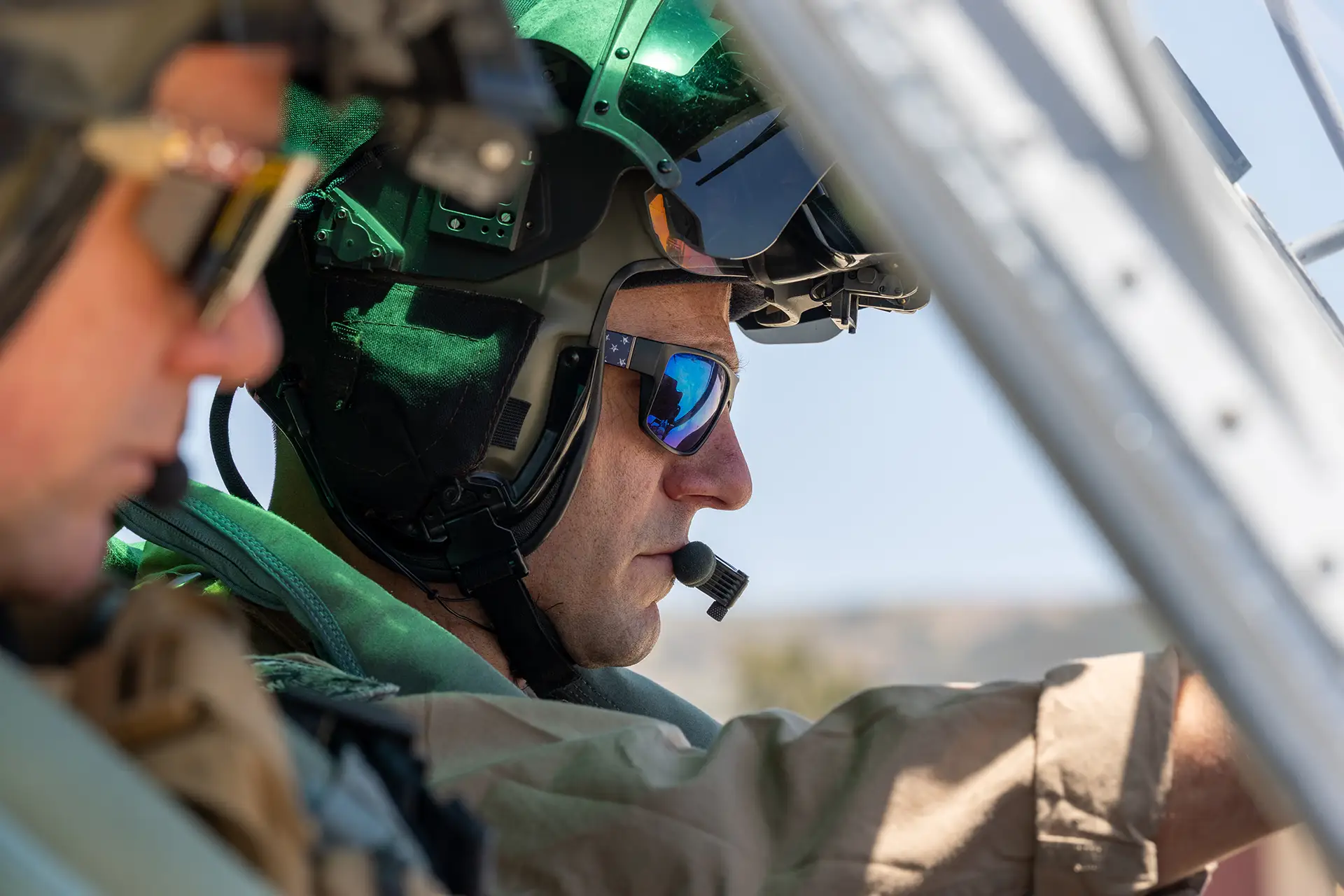
Guevara expected that flying and making command decisions would be the most rewarding parts of leading HMLA-775. Instead, he has found even more satisfaction in developing junior Marines.
He teaches at Lance Corporal Seminars, Corporal Courses, and other leadership programs, drawing on experiences from deployments, tactical aviation, command assignments, and years inside the H-1 community.
“They are the next generation of leaders,” Guevara said. “You get to impart some of those hard-fought lessons learned and watch them grow and develop.”
Experienced aviators teach mission planning, tactical judgment, and aircraft employment. Senior maintainers pass on troubleshooting methods and technical standards. Noncommissioned officers prepare the Marines who will eventually lead shops, sections, and crews.
Ruiz hears senior leaders describe themselves as the past and younger Marines as the Corps’ future. The point is practical: the organization will eventually belong to the Marines currently learning to repair aircraft, manage records, move equipment, and lead small teams.
Reserve service also allows military and civilian development to reinforce one another.
Mingus entered the Marine Corps while pursuing an interest in paleontology. He wanted to obtain technical skills and experience without giving up college. Working on the Venom and Viper has since shifted his career plans toward civilian aviation maintenance.
Ruiz joined after several years of maintaining powerboats and yachts. He brought that mechanical background into the squadron and has since gained technical experience unavailable in a typical civilian shop.
“I’m not just a Marine on the weekends,” Ruiz said. “I’m always a Marine.”
That sense of identity exemplifies why Marines continue serving even when the schedule becomes difficult.
Two Careers, One Military Standard
For most of HMLA-775’s reservists, the squadron is a second profession.
Its Marines include commercial and HEMS pilots, executives, lawyers, firefighters, law enforcement officers, teachers, students, business owners, mechanics, and tradespeople.
They step away from those roles and return to an organization flying in formation at night, employing weapons, maintaining combat aircraft, and supporting tactical missions.
The transition can be immediate.
A pilot may spend the week managing business operations, then fly an attack helicopter on the weekend. Another may leave a civilian medical helicopter rotation and return to degraded visual environment training. A business owner may work before and after drill times because the company does not stop during military service. Having a civilian job does not lower the military standard.
Hromadka sees reserve aviation as a way to remain connected to the work and identity that shaped his active-duty career.
“If you’re not ready to fully leave the military, that’s really why a lot of us are here,” he said. “You still get to do what you love doing, and you still get to wear the uniform.”
The squadron keeps experienced Marines connected to the aircraft, mission, and people they know. But every day devoted to the reserve has to come from somewhere else.
Families and the Cost of the Second Profession
Reserve service can provide greater family, geographic, and professional stability than active duty, but it does not eliminate absence. Monthly training, annual exercises, additional flight periods, temporary orders, and command responsibilities take weekends, civilian leave, evenings, and time with family.
The operational risk also remains. Night flight, close formation, weapons employment, and degraded visual environment training are no less demanding because the pilot worked a civilian job earlier in the week.
Before accepting command, Guevara discussed the decision with his wife because it would affect the entire family. The time was not his alone to give, and the risk was not his alone to carry.
“For almost everybody, this is our second job,” he said. That can mean missing family events, using civilian leave for annual training, traveling across the country, or turning down professional opportunities to maintain military proficiency.
Henry entered the reserve partly because of that balance. During active duty, deployments and workups caused him to miss much of his first child’s first year. He wanted to remain a Marine and continue working in aviation, but he also wanted to be more present at home.
“Being a reservist allows me to keep my foot in the door, keep being a Marine, and keep contributing,” Henry said. “But I get to see my family a little bit more.”
Families, employers, schools, and business partners create the space that allows Reserve Marines to return to Camp Pendleton. Their contribution rarely appears on the flight schedule, but the squadron depends on it.
Those demands define the limits within which HMLA-775 must produce readiness.
Supporting the Total Force
A typical active-duty HMLA squadron operates approximately 27 aircraft. HMLA-775 operates 18. Guevara estimates that the Coyotes have roughly one-third of the day-to-day resources available to an active-duty squadron while generating about two-thirds of the flight hours and maintaining comparable readiness across many mission sets.
The comparison shows the reserve model’s output and its limits.
HMLA-775 depends on experienced reservists, a lean full-time support structure, and the ability to concentrate personnel and training when required. It is not organized to mobilize on the same timeline as an active-duty squadron.
The Coyotes are not the Marine Corps’ immediate “fight tonight” force. Mobilization would occur over a period measured in months, depending on the needs of the Marine Corps. Their role is to augment, reinforce, and eventually relieve pressure on active-duty units as demands grow.
“We need both components to ensure we can be ready when they need us,” Teixeira said.
The active-duty force provides immediate response, recurring deployment capacity, and the continual development of new aviators and Marines. The reserve squadron adds depth while retaining experience that might otherwise leave the service.
If activated, HMLA-775 would bring more than 18 aircraft. It would bring pilots with thousands of accumulated flight hours, advanced instructor qualifications, extensive combat experience, and years of operating together. Its maintainers combine military and civilian aviation knowledge, while its support Marines are accustomed to assembling and sustaining a geographically dispersed force with limited permanent staffing.
The squadron contributes before mobilization as well. Joint training, major exercises, weapons detachments, and specialized support missions keep its crews current while making their experience available to the wider joint force.
That role becomes more consequential as the distance from major H-1 combat operations in Iraq and Afghanistan grows.
The Marine Corps has invested years in every WTI, NSI, aircraft commander, maintenance controller, technical specialist, and staff noncommissioned officer serving at HMLA-775. Without a reserve path, personnel would complete active duty and carry that experience entirely into civilian life. The Coyotes keep part of it available to the Corps.
That availability is not limited to national emergencies. Many of the squadrons within the parent command, MAG-41, are already supporting or preparing to support combatant commanders on operational tasking across the Indo-Pacific, Africa, and South America.
That shift is reflected in the service's own planning. The 2026 Marine Corps Aviation Plan places greater emphasis on leveraging the 4th Marine Aircraft Wing for distributed operations and sustainment — a focus that has historically centered on active-component modernization.
Converting Past Experience into Future Readiness
Experience from Iraq and Afghanistan remains valuable, but the next conflict will not replicate the last.
Aircraft systems, threats, operating concepts, supported-force requirements, and the Marines entering the squadron continue to change. The 2026 Marine Corps Aviation Plan frames that evolution through Project Eagle, a modernization strategy built around Distributed Aviation Operations, Decision-Centric Aviation Operations, and the integration of unmanned systems with manned platforms. The plan's reserve component emphasis is explicit: the 4th Marine Aircraft Wing is a critical component of the total force, providing depth and experience. Ultimately, the 4th Marine Aircraft Wing serves as a professional aviation reserve force that is ready, lethal, and responsive to combat any threat.
Lessons not tested against those changes eventually lose relevance or disappear with the people who learned them.
Veteran aviators still fly the Vipers and Venoms — WTIs and NSIs among them, still instructing. Junior Marines learn to repair aircraft and lead small teams alongside people who have spent decades in those cockpits. Reservists bring back what civilian aviation teaches. Full-time Marines hold the structure together between drills.
The task is not to preserve the last fight unchanged. It is to carry its useful lessons forward, test them against current conditions, and turn them into readiness for what comes next.
“One weekend a month” may describe when some of the Coyotes gather at Camp Pendleton. It does not capture the work and commitment required to keep aircraft ready, maintain tactical proficiency, assemble a dispersed force, and preserve decades of operational experience for the Marine Corps.
For the Marines who continue to return to HMLA-775, the commitment is also personal.
“This is the best job in the Marine Corps,” Guevara said. “I’m just lucky to have been able to do it for as long as I have.”