 HOME
HOME




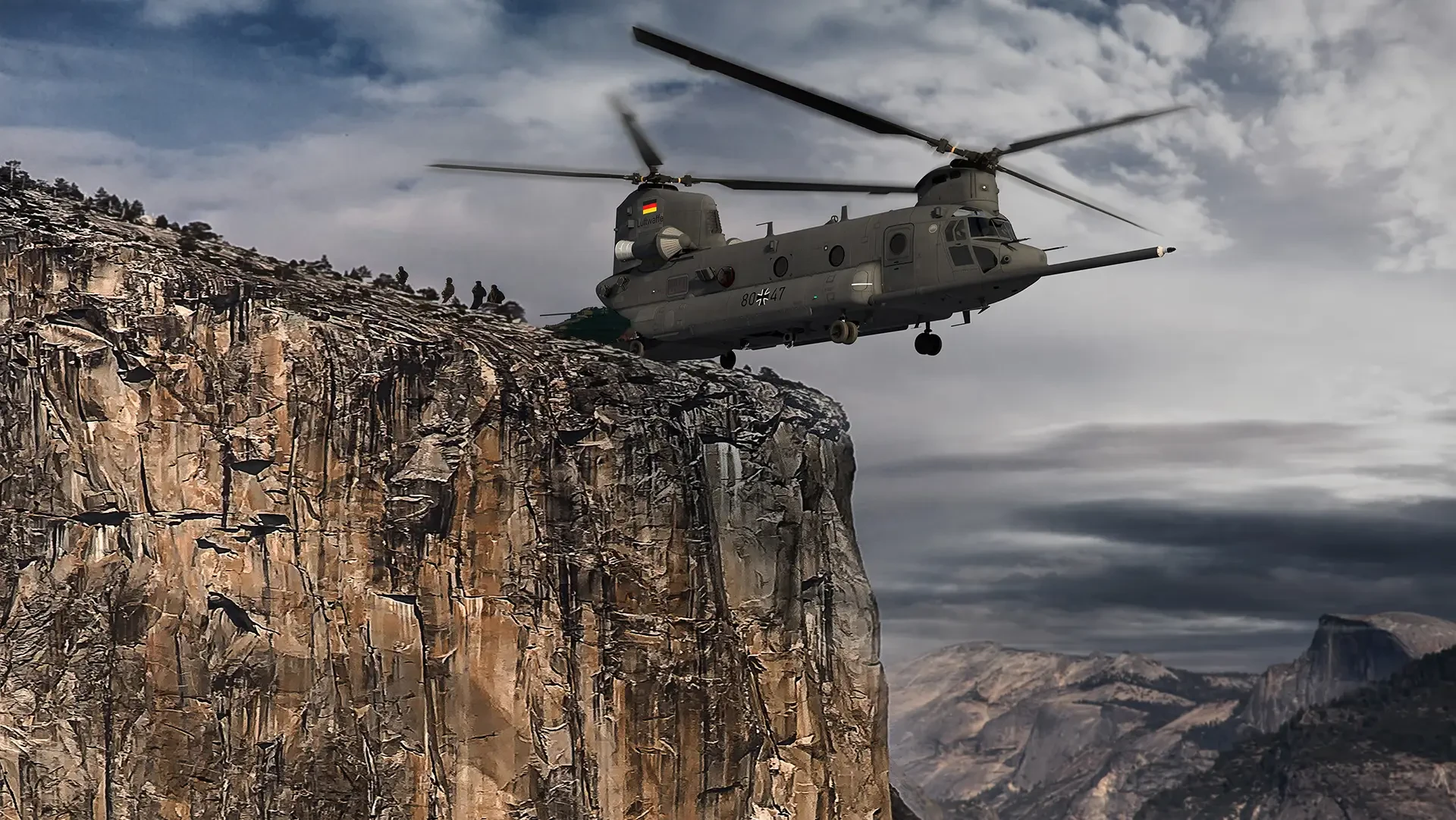
At the momentous NATO summit held at The Hague in The Netherlands earlier this year, NATO members committed themselves to significantly increasing spending on Defence to 5% of Gross Domestic Product (GDP). This represents a sharp rise in investment on security. NATO has, for many years, mandated only a 2% target for member nations, and even that target was often not met by several member nations. Countries such as Canada, Spain, Italy, Portugal and Belgium often lagged seriously behind even that modest ambition. According to NATO's own figures, as recently as 2024, i.e., two years after Russia's unprovoked aggression against Ukraine, none of those countries spent more than 1.6% on Defense. The further East you are, understandably, the urgency seems more elevated. Poland is already spending over 4%, while all three Baltic States, with a collective memory of Soviet annexation, spent in excess of 2.5% last year.
The background and general possibilities are examined here in Part 1. In Part 2, the potential programs are examined in greater detail.
Cold War Spending Dried Up
It's a far cry from the days of the Cold War, where 5% or more was routine. The threat was real, it was on NATO's Eastern doorstep,
and it was existential. The collapse of the Soviet Union, the 'winning' of the Cold War and the demand by many electorates for
improved Public Services led to an inevitable drawdown in spending. A 'Peace Divided' was demanded, and it was delivered by
politicians eager to remain in office. The sheer scale of Cold War militaries was no longer sustainable as most nations slashed their
military budgets to circa 2% or below. Troop numbers plummeted, and while the force mass put in place up to 1991 was able to present
an illusion of strength in the decade or two that followed, the reality was that the stockpile of weapons, flight hours, and spares was
being eroded and not replenished. This tendency was leaving most NATO militaries largely hollowed out and likely toothless in the
event of any serious or enduring peer-to-peer conflict.
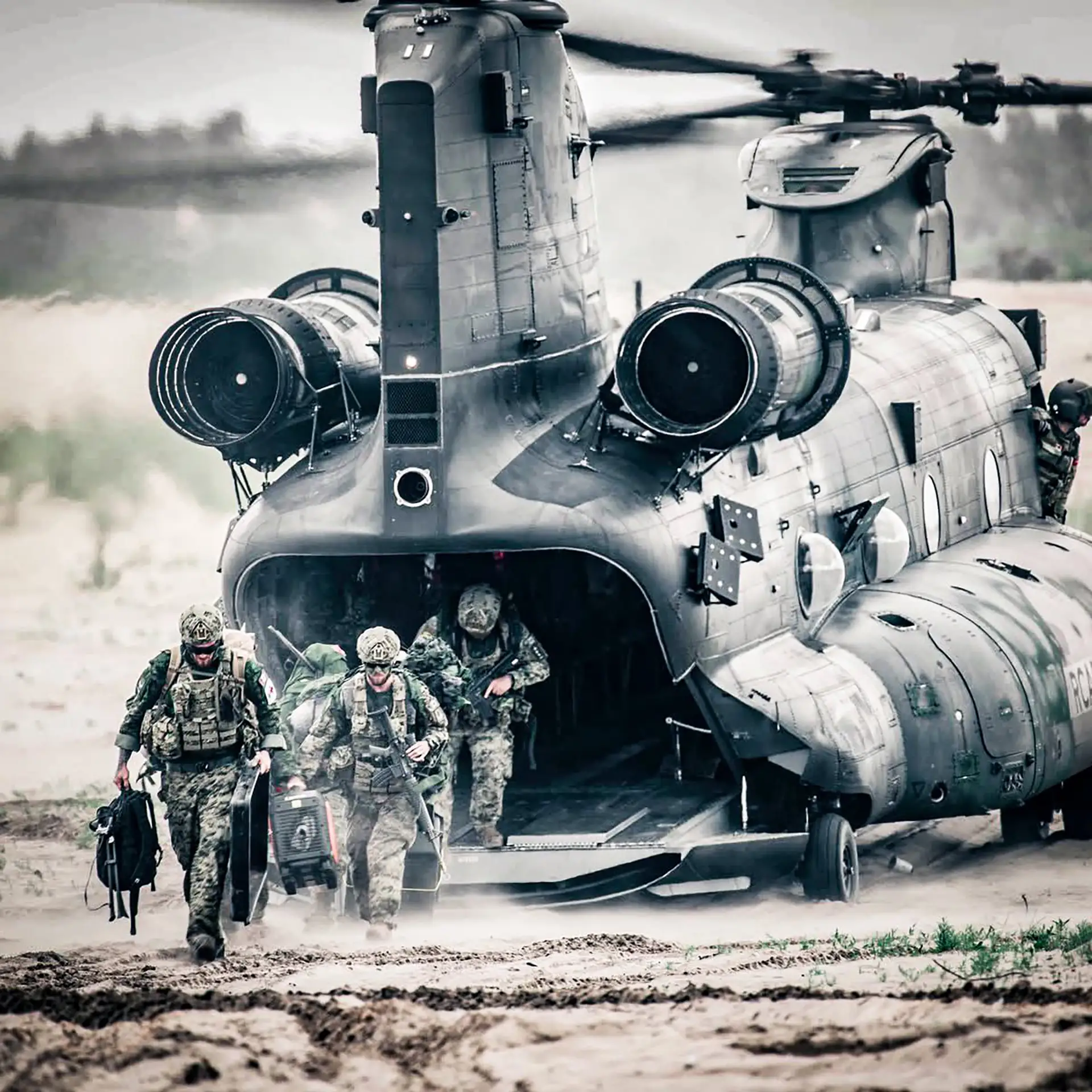
Successive US Presidents have warned Europe that it needed to step up its efforts. Even the US, which outspends most of the rest of the world combined on Defense, has limits to what it can do and where. A rapidly rearming China, both in terms of quality and quantity, makes it harder to enforce security guarantees in the Pacific. The annexation of Crimea in 2014 should have been the signal that the 'Peace Divided' was over, but it's actually taken another decade before European members of NATO have been stung into action by the current US administration. Basically, a 'pay up or shut up' edict has been rather bluntly handed down. Those members that fail to meet the new NATO-mandated minimum defense spending target risk losing both US protection in the event of conflict and the imposition of trade tariffs. Finally, about 15 years too late, deeds not words. Reluctantly, Europe's populist politicians have agreed to meet a 5% target by 2035, of which 3.5% will be direct spending on defence capability, with the other 1.5% on 'wider security initiatives' such as civil defence, stockpiling of critical resources and protection of key infrastructure. The latter could include helicopters to deliver functions such as border surveillance and patrol, support to Gendarmerie-style police units and even for Search and Rescue (SAR) machines.
Vertical Lift Possibilities
However, for the remainder of this article, I intend to focus on what 3.5% in direct military spending could mean for the vertical lift
fleets of major NATO members. I'll set aside the US in the main; the Army has made its big 'muscle moves' as a result of the Army
Transformation Initiative (ATI) directed by the new Administration and SecDef. Some of the resources saved by last year's
cancellation of the FARA program have already been reassigned to new CH-47F Block II and UH-60M production, with the ATI looking like it
will rapidly divest the remaining UH-60L Black Hawks and AH-64D Apaches. This will enable the Army to cohere round core sub-models
and, in the case of the UH-60 fleet, lower the airframe count from the current 2135 to under 2000 initially, as part of a longer term draw
down in numbers as the MV-75 comes on line, albeit against an acknowledgement that in some form the UH-60 will be in the Army's inventory
until the 2070s. There must be some doubt over the viability of the small (sub-100) UH-60V fleet of remanufactured UH-60Ls with their
bespoke Northrop Grumman digital cockpit and mission architecture; it's likely that they will be cut in the short to medium term as well.
The Improved Turbine Engine Program (ITEP) is also on the ATI 'hit list', although it might yet be put into some form of stasis rather than
full cancellation. The painful cuts are enabling, however, Bell's MV-75 tiltrotor program to be rapidly accelerated. Accepting
the risk of activity in parallel during the Developmental Testing, Initial Production and Operational Evaluation phases will, with luck,
see the Army field its first aircraft by 2030; and potentially even earlier if there are no major issues during T&E.
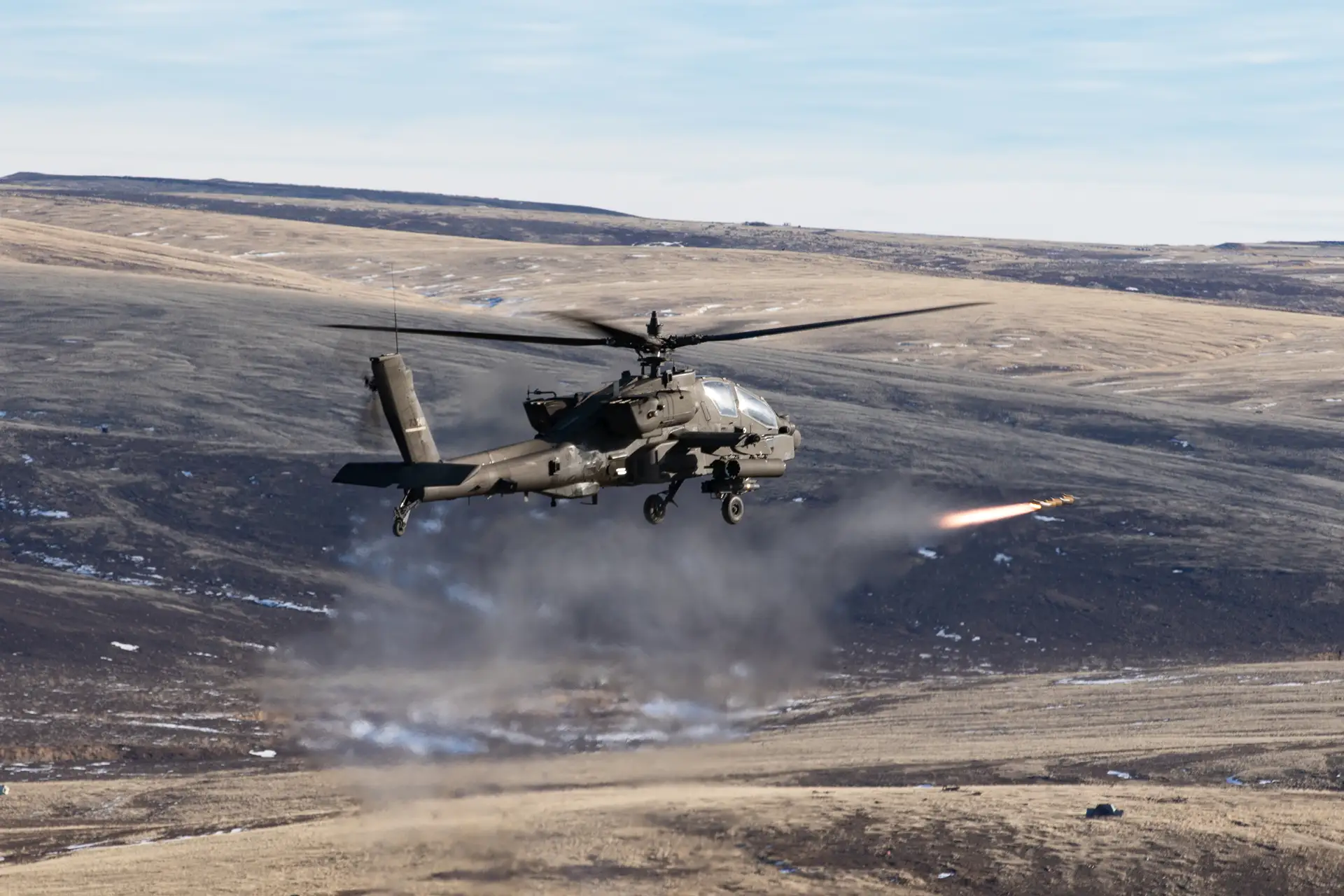
For those NATO members who have not matched the US' sustained defence investment over several decades, how will the relative 'windfall' of a near doubling of defence spending potentially impact future vertical lift fleets?
The first thing to make very clear is that the uplift is very much 'jam tomorrow' with much of the ramp-up not arriving until the next
decade. While some nations, such as the aforementioned Poland and Baltics are surging now, others are being more pragmatic and,
indeed, protectionist, and doubtless also moving slowly to try and keep their increasingly post-Cold War populations, who have grown used to
generous social programs, onside for political reasons. Poland doesn't have a huge multi-faceted defence industry to support, and with
the threat not far from its doorstep, it sees re-arming now as more important rather than waiting for the rest of NATO to catch up.
Consequently, it is willing and able to scour the globe for weapons and other equipment, and it's not been shy about ordering from Korea,
with K2 Main Battle Tanks, FA-50 light combat aircraft and K9 howitzers all in the 'shopping basket'. Somewhat bucking the recent
anti-US stance from some in Europe, Poland has also ordered significant amounts of materiel from the US DoD via Foreign Military Sales
(FMS). FMS enables access to US 'bucket pricing’ but normally requires the purchaser to stick with the US' specification, support
package and upgrade path. 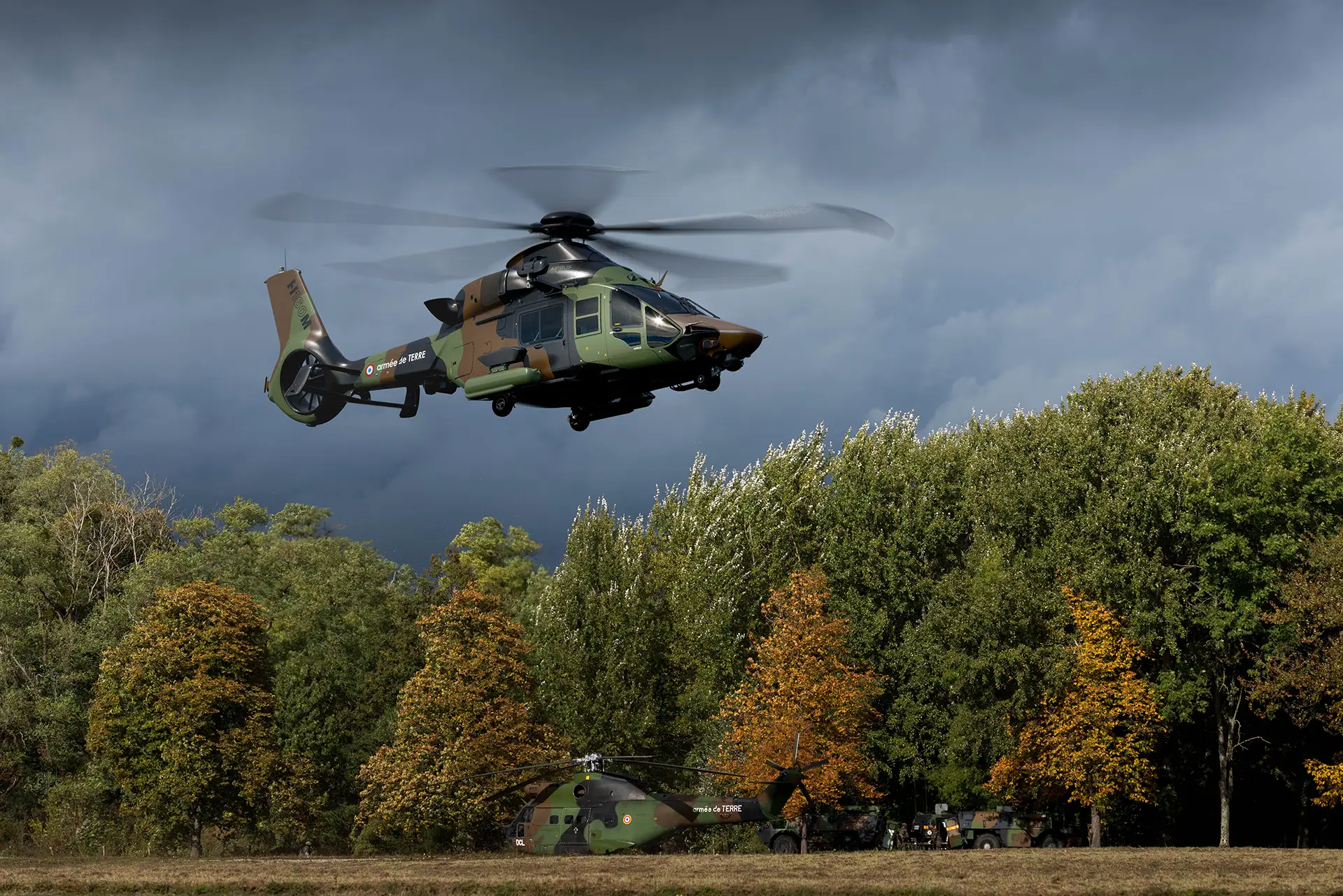
In terms of vertical lift, the impact of the increased spending has been significant. An order for no fewer than 96 AH-64E Apache
Helicopters will make Poland the second-largest user of the Apache after the US Army. Deliveries are due to commence in 2028, and in
the interim, a batch of eight AH-64Ds has been leased by the Poles to better prepare air and ground crews for the arrival of the new
aircraft, especially as the transition to Western Defensive Aids Suites (DAS) and sensors is a large one. The first 'D-Models'
are already in-country, and it's not beyond reason to suggest that if Poland felt the threat to her East becoming more acute, that further
AH-64D might be leased or procured, especially since the ATI directive to divest the remaining AH-64D's out of the US Army's inventory will
provide a pool of suitable airframes in the very near future. As well as Apache, Poland is reputedly talking to both Boeing and the
DoD regarding a purchase of the CH-47F Block II Chinooks to provide heavy lift support both the AH-64 and other elements of its growing land
combat power. The Polish Air Force is also in the process of seeking to modernize its fleet of training helicopters to better prepare
future crews for the AH-64E and other platforms. The two main contenders appear to be European: the H145M and AW109M Trekker.
The former would align with many NATO nations, as well as potentially providing a light attack and scout platform if the need arose, while
the latter would continue to build upon Leonardo's close ties with Poland and the recent acquisition of the AW149 as a Medium Support
Helicopter (MSH).
Not so Much
However, for the rest of the major players in Europe, the potential for increased spending on rotary-wing capabilities is less clear.
Germany has already made several muscle moves recently. The aforementioned purchase of the CH-47 Chinook is a significant commitment,
as is the process the Germans have now decided to follow. The original program to replace the ageing CH-53s foundered on costs;
Germany was simply trying too hard to offset the spend by fitting large swathes of European-supplied equipment to the aircraft, incurring
significant certification and testing overheads. The new approach is a 'Hybrid FMS' program - with a baseline US Army CH-47F Block II being
adapted with bespoke mission equipment. Looking at the German 'shopping list', and with an understanding of the sort of roles
envisaged, it seems that they really would have liked access to MH-47Gs, but unlike the UK, the aircraft was not releasable. Instead,
they have elected to add 'G Stuff' to a thin tanked -47F, including an AAR probe, M134 MiniGuns, EO/IR turret and various CSAR-styled role
equipment. Although Germany had already notably increased its defence spending prior to the recent NATO summit, much of that
investment was needed to restock depots with ammunition and spares to reverse decades of hollowing out. The decision to move away
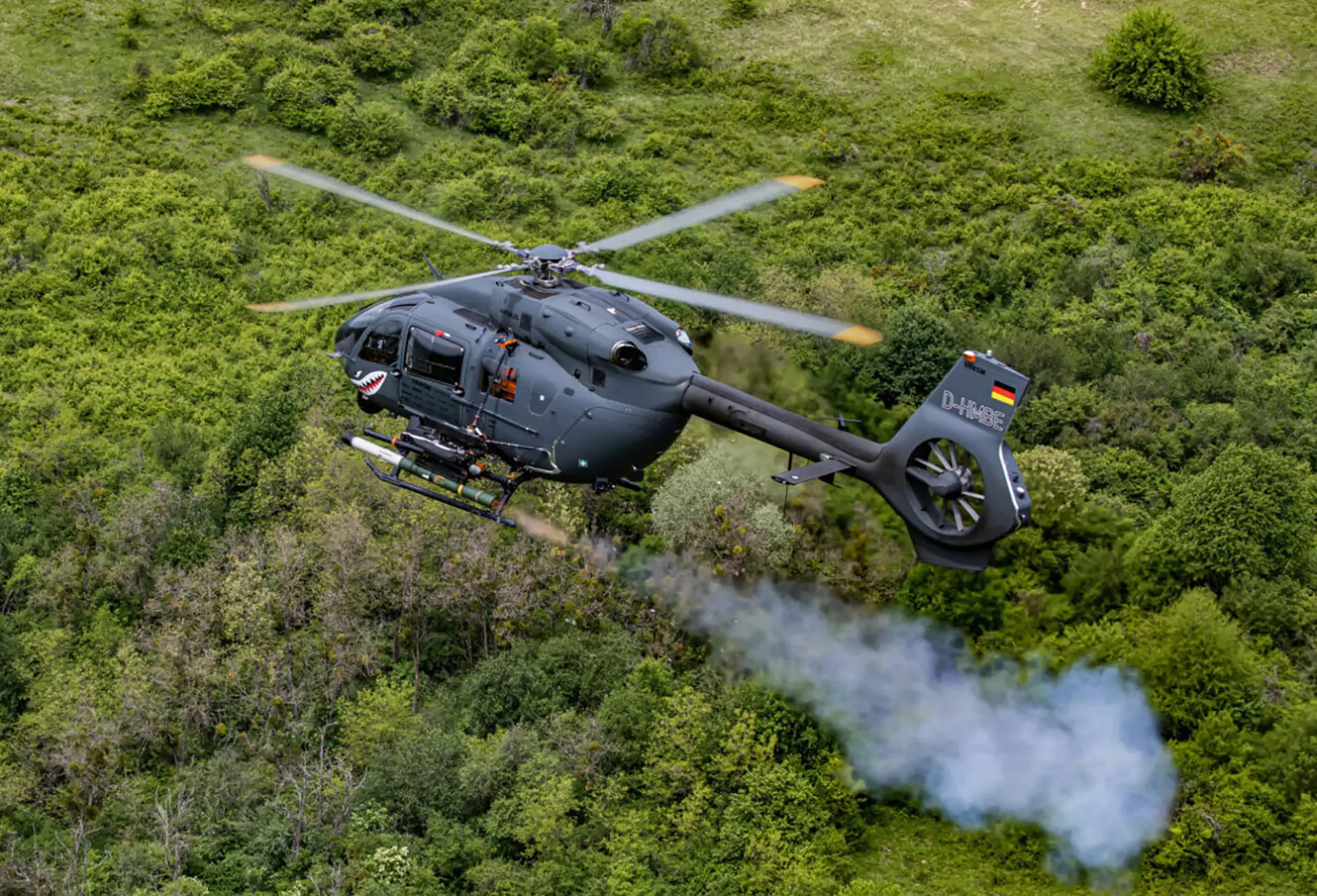
from the Tiger AH and, instead, opt for a larger fleet of multi-role H145Ms partnered with UAS and loitering munitions is instructive.
Maybe Germany will now consider firming up the 20 'options' it has for the airframe, and potentially even more? Equipping more German
units with the 'H-Force' H145M with a potent combination of gun pods, laser-guided rockets, and the long-range Spike-ER guided missile
would offer a sensible mid-term hedge against the potential threat from the East, as well as improve national resilience. After all,
remove the 'H-Force' weapons kit, but retain the winch and the Wescam EO/IR turret, and the H145M becomes a very useful rescue aircraft in
the aftermath of a natural disaster, much like how the US Army employs its Lakotas.
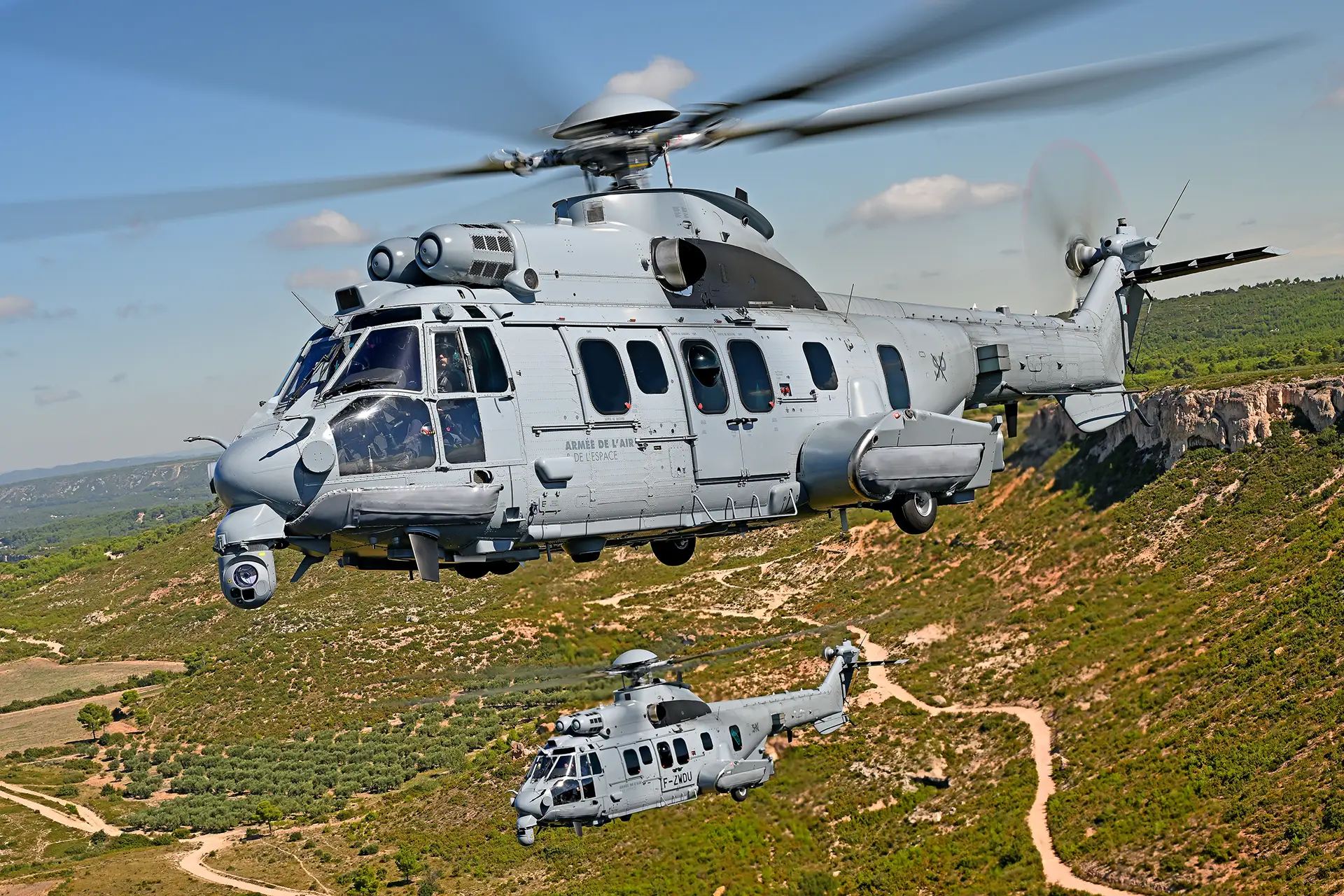
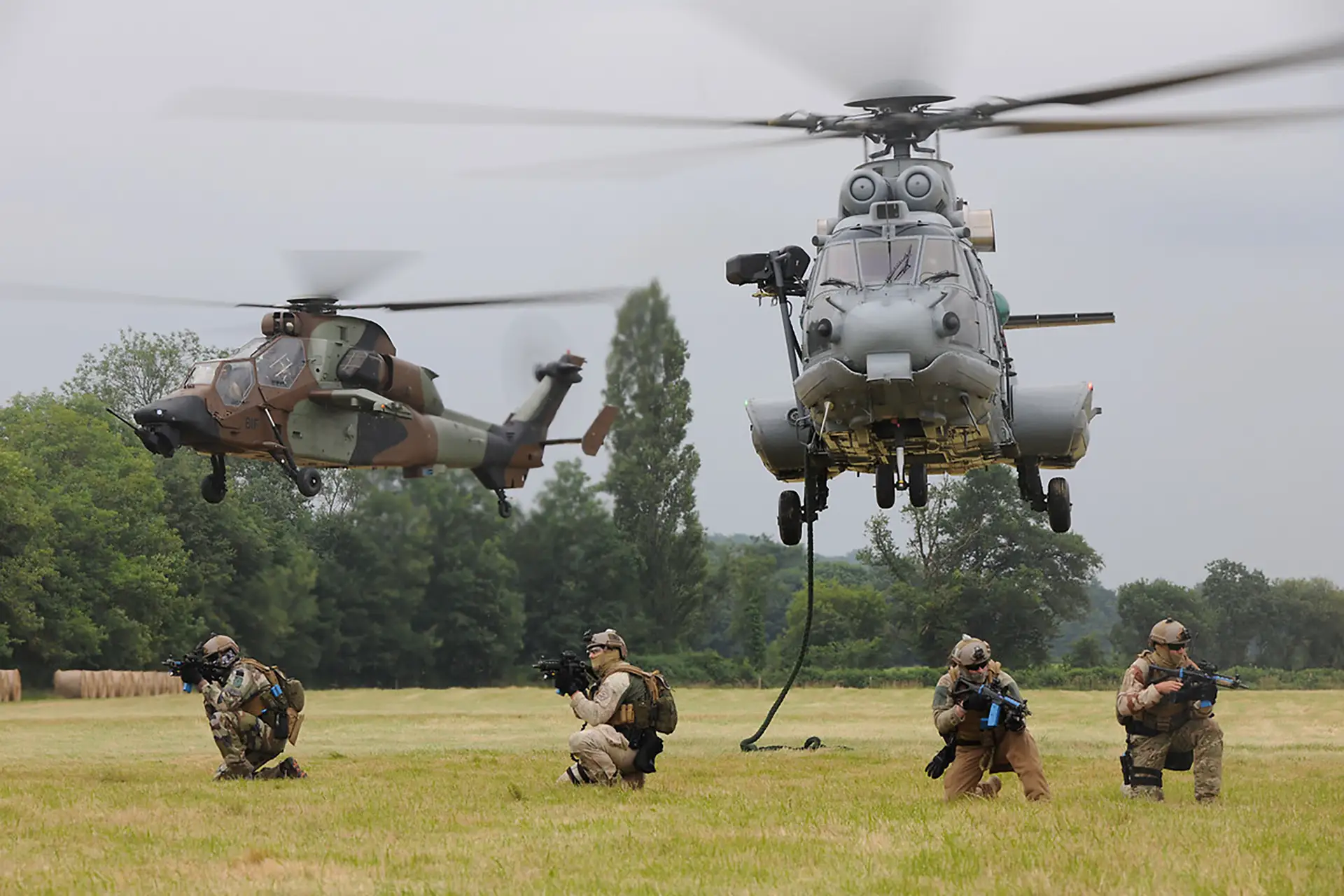
France continues to (unsurprisingly...) firmly back its own industry with Airbus (France) the main beneficiary, but with Safran, Thales and others receiving orders for engines and sub-systems. Orders for H225M, a dedicated SF version of the NH90, and a large order for H160M have all been made in recent months. Unlike Germany, France remains committed to the Tiger III upgrade - sensing, perhaps, that orders from non-aligned nations may be stolen off the AH-64 given the fractious nature of International Relations. Where might France go next with increased funding? It could well elect to mirror the US acceleration of the MV-75, wary of the Bell product becoming the first 'true' Next Generation design into production and, in time, available for FMS export.
To do so, France has to work with Germany. I think there's a strong chance that, unlike the 6th Generation fighter program, where France and Germany appear to be rapidly diverging, the output of the European Next Generation Medium Helicopter (ENGMH) may play strongly into both German and French future plans. In the Future Combat Air System, Airbus (Germany) is seen as a junior partner in the manned fighter part of the System by Dassault. The latter claims that Airbus is not a dedicated fighter manufacturer, despite its predecessor companies having played a full part in both the Tornado and Typhoon programs. To the casual observer, it seems like the standard 'Dassault Hauteur' - much like in the early days of Typhoon where the French company, having not got the workshare, it felt it deserved, nor priority over requirements, simply marched off to build Rafale by itself. However, in helicopter terms, despite the recent uncomfortable conversations over Tiger III, the countries are much closer.
Black Hawk Envy
In Realpolitik terms, nobody in Europe wants to repeat the mistakes of the NH-90 programs, with too much customisation per customer creating a painful, inefficient and expensive support overhead. They also look at the continued sales success of new UH-60M/S-70i and, increasingly, refurbished ex-US Army airframes, with no small degree of envy. Indeed, political pressure to 'buy European' is increasingly being either ignored or worked around. A prime example, perhaps, is Portugal - one of NATO's European perennial underpayers, and a nation that has been buffeted hard by adverse economic headwinds. Originally, Portugal committed to buying the NH-90, but due to funding pressures, it cancelled its order in 2012. Recently, Portugal has purchased civil refurbished UH-60 airframes from the United Aero Group in the US and placed them on the state register for operation by the Portuguese Air Force. Buying a used Black Hawk offers a huge reduction in up-front and operating costs when compared to the NH-90 and many other EU-derived designs. Portugal has ostensibly purchased these airframes as stopgap airborne firefighting assets, but tacitly acknowledges their utility as troop transports and SAR/CSAR aircraft.
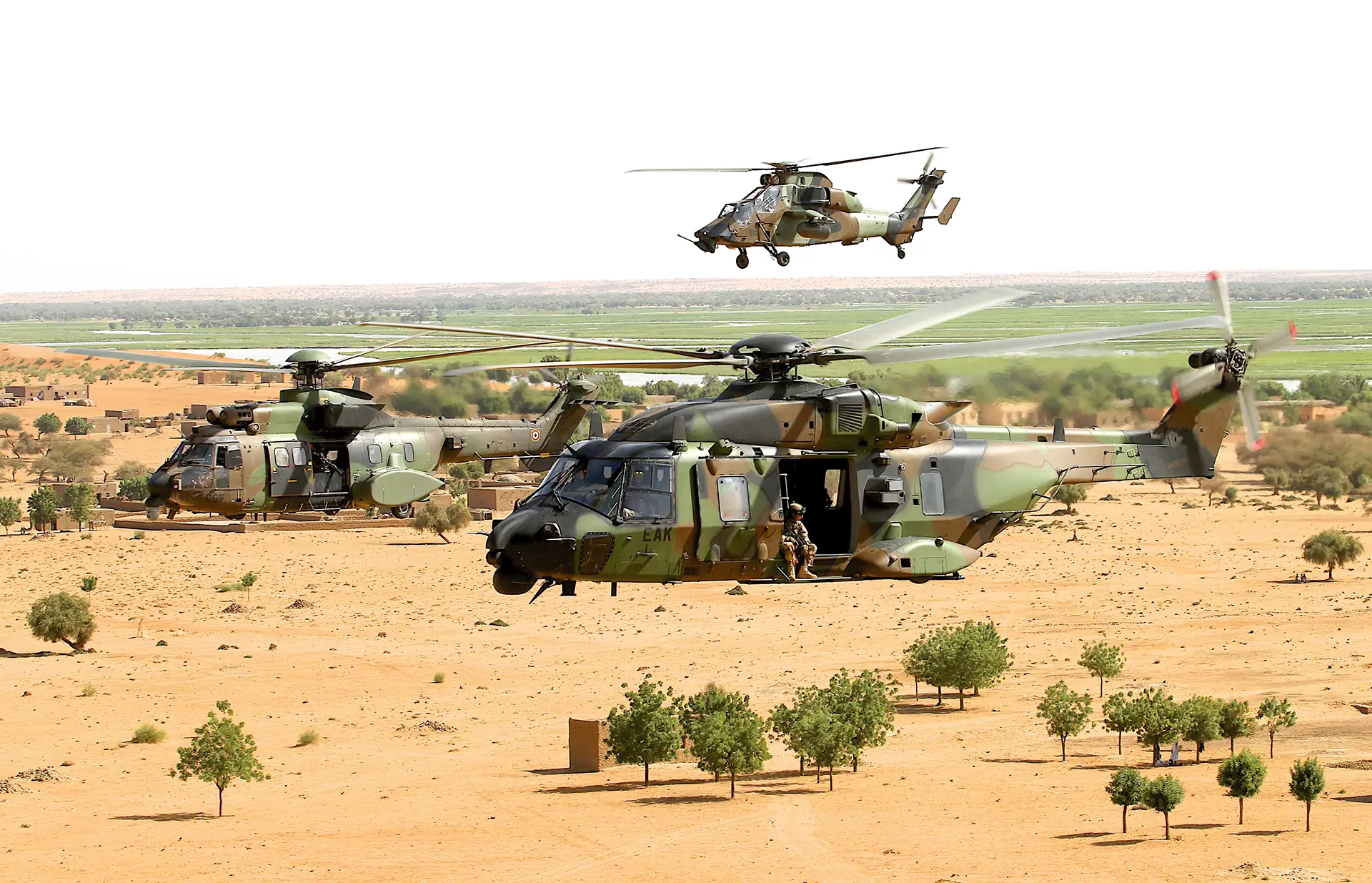
More refurbished Black Hawks may yet follow. With the ATI-mandated divestment of the UH-60L, some 500+ relatively lightly used Black Hawk airframes will, almost inevitably, appear on the surplus market. Some Rough Order of Magnitude (ROM) figures based on a US GSA auction price of $2.5m for a 6000hr UH-60L with reasonable TBO remaining, and my top level appreciation of what a refurbishment, digital cockpit, upgraded engines and basic mission equipment would cost, point to a very capable MSH platform being available at around the $10-12m mark; depending on how 'upmarket' a customer goes with platform protection, comms, weapons and sensors. Operating costs vary wildly with role kit, but a baseline of approximately $4k / €3.4k seems to be broadly accepted.
EU manufacturers don't welcome the competition, and hence, why the Next Generation Rotorcraft Capability (NGRC) program being run by NATO has strict limits on acquisition and operating costs. The mandated maximum cost per flight hour is €10k (with half that as the 'optimal' figure), with a platform fly away cost of not to exceed €35m. Those are ambitious targets. NH-90 costs upwards of €30m today as a fully mature and certified airframe, while part of the rationale behind nations such as Norway, Belgium and Sweden retiring the aircraft early is operating costs often exceeding €20k per hour. The Black Hawk is still, evidently, seen as the 'pacing threat', while the MV-75 is threateningly close.
However, there is also a distinct possibility that ENGMH may not produce a single design that satisfies everyone's requirements, both militarily and political.
France has been the most vocal nation in insisting that the uplift in spending by European members of NATO must be spent in Europe.
The €150Bn EU 'Defence Fund' should, according to the EU Commission's president, Ursula von de Layen, be spent in Europe (and in so many
words, the EU); a view that France strongly agrees with. After all, as the UK is the only other 'full spectrum' manufacturer of
weapons in Europe, the convenient 'EU' banner would put French companies at a distinct advantage.
Italy, however, has a versatile and comprehensive defence Industry, and one that it is keen to protect. With the exception of nuclear weapons and submarines, Italy matches the UK and France in terms of production. It is a key partner in Typhoon and GCAP (with the UK and Japan), and the latter must be assumed to be secured by the funding increase. Italy also has one of two F-35 Final Assembly and Check Out (FACO) facilities outside the US, the other being in GCAP partner Japan. Leonardo is the key player in the Italian aerospace sector, with a broad portfolio of fixed and rotary wing platforms, both manned and unmanned. It also has the Italian government as a substantial shareholder (30%), with a 'golden share' that permits it to impose blocks or vetoes if deemed in the national interest. The issue for ENGMH / NGR is that it seems increasingly unlikely that political, industrial and operational requirements between the 'big three' of Germany, France and Italy can be met by a single design. Airbus and Leonardo have been pursuing different design philosophies for NGR; the former looking at hybrid compound platforms, such as the X2 and RACER, while Leonardo has been focused on tiltrotor technology, as evidenced by the development of the AW609 and the tiltrotor MoU with Bell. Germany and France's operational needs tend to centre upon continental Europe, while Italy has a strong interest in patrolling the Mediterranean (the 'Mare Nostrum') and projecting power. Given that Germany is the financial 'engine room' of the EU and France eternally attempting to exercise political and military leadership, it suggests that Airbus will build the ENGMH come what may, and to a configuration that suits them. Other nations will be 'encouraged' to buy it.
That leaves Italy, and Leonardo, with a smaller slice of the NGR pie and not the same level of workshare they enjoyed on NH-90. The MoU with Bell may be a key factor here. Trialled as technical agreements to support the development of the Next Generation Civil Tiltrotor (NGCTR), a program designed to deliver a civil certified fast VTOL aircraft with twice the passenger capacity as the 'executive' AW609. The NGCTR-Technology Demonstrator (NGCTR-TD) matches an AW609 fuselage with a new wing and empennage, and a radical change to the Tiltrotor system. While the AW609 uses engine/nacelle tilting, as per the CV-22 Osprey, the NGCTR-TD uses fixed engine nacelles with tilting, split, transmissions - in effect the same system that Bell exploits on the V-280/MV-75. In fact, squint at the pictures released by Leonardo and the combination of a new 'V' shaped tail and fixed engines gives the NGCTR-TD very much the look of a 'slim MV-75'. It's therefore not much of a reach to suggest that while Airbus will likely deliver an NGR based on RACER tech to German and French militaries in the next decade, Leonardo could well design an NGCTR-derived MSH, or, potentially, license-build the MV-75 as they have done with the F-35.
And that opens an intriguing possibility.
The major nation not yet discussed, with due deference to Spain (who are likely to follow the Franco-German lead with Airbus, as per NH-90 and Tiger) and The Netherlands (who will wait and watch before selecting US or EU sourced kit), is the UK.
Leonardo is the UK's principal helicopter manufacturer; indeed, the Yeovil site is hailed as 'The Home of British Helicopters', and it has decades of history supplying the UK MOD with a variety of rotorcraft for all three services. Some of their most popular output have been upgraded licence-built versions of US designs; the Wessex (S-58), Sea King (S-61) and Apache AH.1 (AH-64). They also have a long history of partnership in co-developing new airframes, such as the Lynx, Puma, and Merlin. The facility at Yeovil is recognised as a strategic site by the MoD, and it's doing sterling work developing a family of UAS for maritime applications. However, at the time of writing, the UK's New Medium Helicopter (NMH) program appears to be somewhat stalled. This program is acknowledged as vital to securing the site's long-term future, and Leonardo is the only bidder remaining in the competition. Airbus pulling out, noting that continued involvement 'cannot be justified', while Lockheed Martin / Sikorsky also withdrew, stating that the Black Hawk couldn't make the minimum requirements as defined in the Invitation To Tender (ITT). The inference is that the NMH program has been constructed to deliver Yeovil the prize. The recent Strategic Defence Review (SDR) ominously delivered no endorsement of the program, nor the AW149. The brutal fiscal reality is that the original £1.5Bn allocated in 2022 for an entry to service in 2025 (to take over from the Puma) has been eroded both by the urgent need to purchase six H145s to backfill non-discretionary tasks and the slippage to the NMH program, causing 'defence inflation' to bite hard. The original NMH requirement was for 23-46 machines, and there's now serious doubts in the minds of many commentators that Leonardo can deliver 23 AW149s at the Threshold Capability status for the remaining budget. If NMH founders, Leonardo, will need to plug the gap somewhere, and either a 'militarised' NGCTR or licence-built MV-75 may be just the platform to do it.
The sums, on paper at least, seem to add up. If MoD cancelled NMH, using some of the remaining circa £1Bn to backfill other
struggling programs and retaining a slice to investigate what a UK tiltrotor project might look like, the increased funding as a result of
the '3.5%' uplift would arrive in good time to support a development and production phase. The 'capability holiday' is already
biting. Puma has retired, and even if NMH were now an unalloyed success, there would be no aircraft until circa 2028, and Full
Operating Capability (FOC) would be early next decade. The phrase 'embrace the suck' comes to mind, and many in the MoD would likely
accept an additional delay of a couple of years if it meant a transformative platform, such as a 'UK MV-75', was the prize that awaited,
rather than merely a warmed-over legacy platform like the AW149.
The firing gun for rearmament has been fired. Poland, Germany and The Baltics are out of the starting gate strongly and are rearming and re-equipping at pace. Others, such as the UK, are being more considered, doubtless easing their populations into the new Security realities in Europe. In rotorcraft terms, the old adage applies - 'we fight tomorrow with what we have today' and if hostilities were to break out in the next two to three years, it would be legacy types such as the Chinook, Black Hawk, NH-90, Tiger and Apache doing much of the work. But if we project forward to the mid-2030s, with the huge uplift in promised spending available, the rotorcraft inventories of NATO members could look very different. Faster, longer-ranged, better-equipped, and interconnected. The push for 5% will deliver a tangible enhancement to vertical lift capabilities - if time permits...