 HOME
HOME




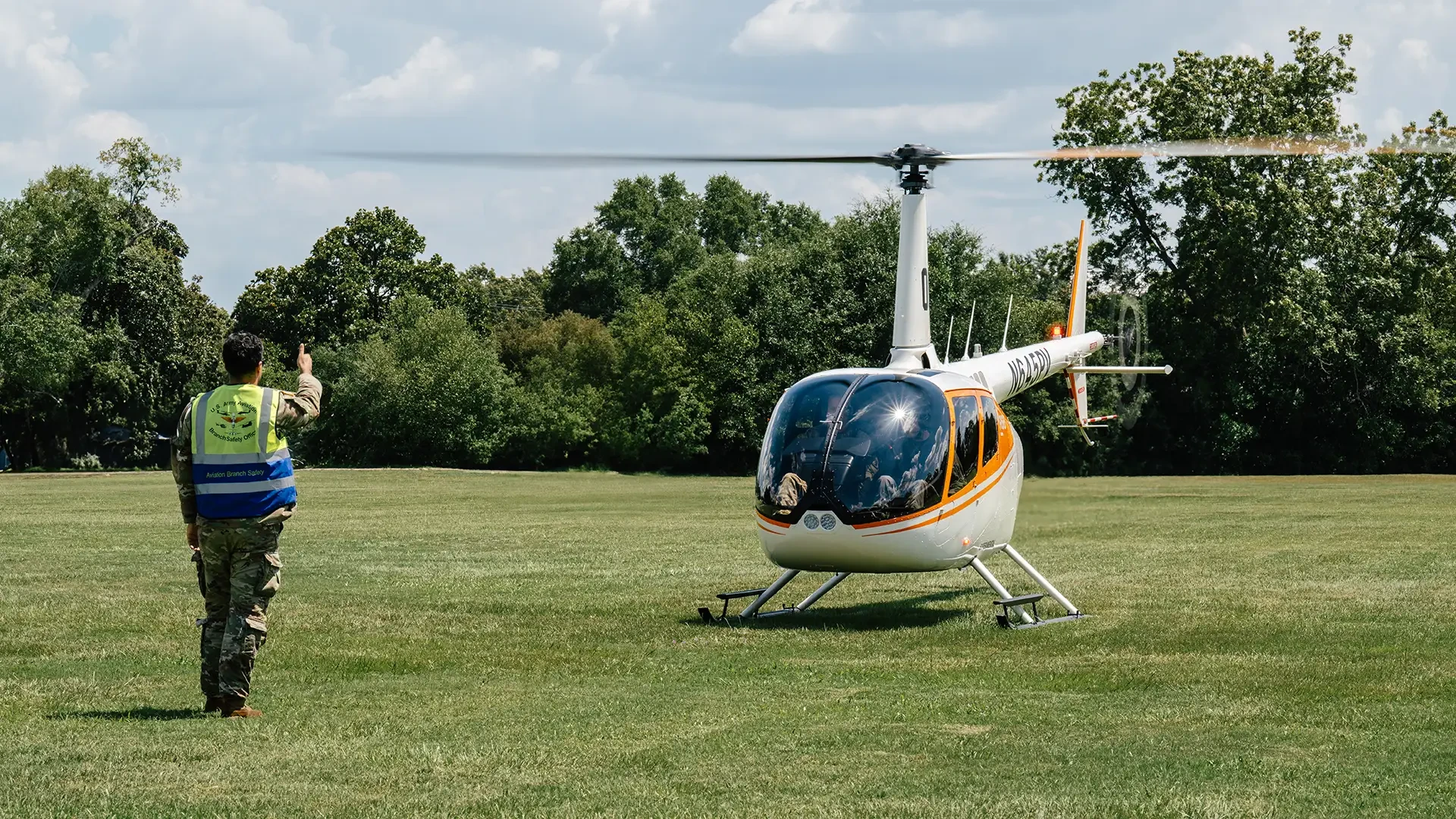
The Robinson Helicopter Company (RHC), according to the company's website, was founded by a man, Frank Robinson, who was driven by an idea - 'to put a small, inexpensive helicopter into the sky'. As mission statements go, it must be deemed a total success. Some 14 000 rotorcraft have emerged from RHC's production hangars over the years, with over 10 000 still flagged as being in the global fleet. RHC continue to build 'the most reliable, hardworking helicopters in the industry - allowing owners and operators all over the world to complete the toughest missions imaginable'.
Traditionally, these 'owners' and 'missions' have been within fairly narrow sectors.
The 'baby' of the range, the two seat R22, has become a fixture in the hands of private owners and flight schools the world over. The entry point for an R22 has continued to pace that of a high end sports car. The current R22 Beta II has a price tag of circa $375k (depending on options), broadly comparable to the price of a new McLaren, Ferrari, Bentley, Aston or Lamborghini. Used examples with respectable remaining component times can be acquired for comfortably less than $150k, and while not an inconsiderable 'chunk of change', that price point is within reach for many that may have multiple cars in their 'stable' and want to have a machine that enables point to point travel even quicker - and without the residual risk of attracting the attention of local law enforcement.....
For flying schools, the R22 arrived at an ideal time. Bell's legendary Model 47 was starting to show its age, and a robust training
aircraft with some more modern systems and accommodation was required. The R22 delivered in spades and has proven to be exactly the
aircraft the training industry needed - capable of demonstrating all the key traits of helicopter flying, including repeated touchdown
autorotations conducted by student pilots. Indeed, it may well have proven a 'gateway drug' into the world of helicopter ownership
with many R22 trainees becoming owners in due course. The extensive use of R22s by ranchers, especially in Australia, is also well
documented.
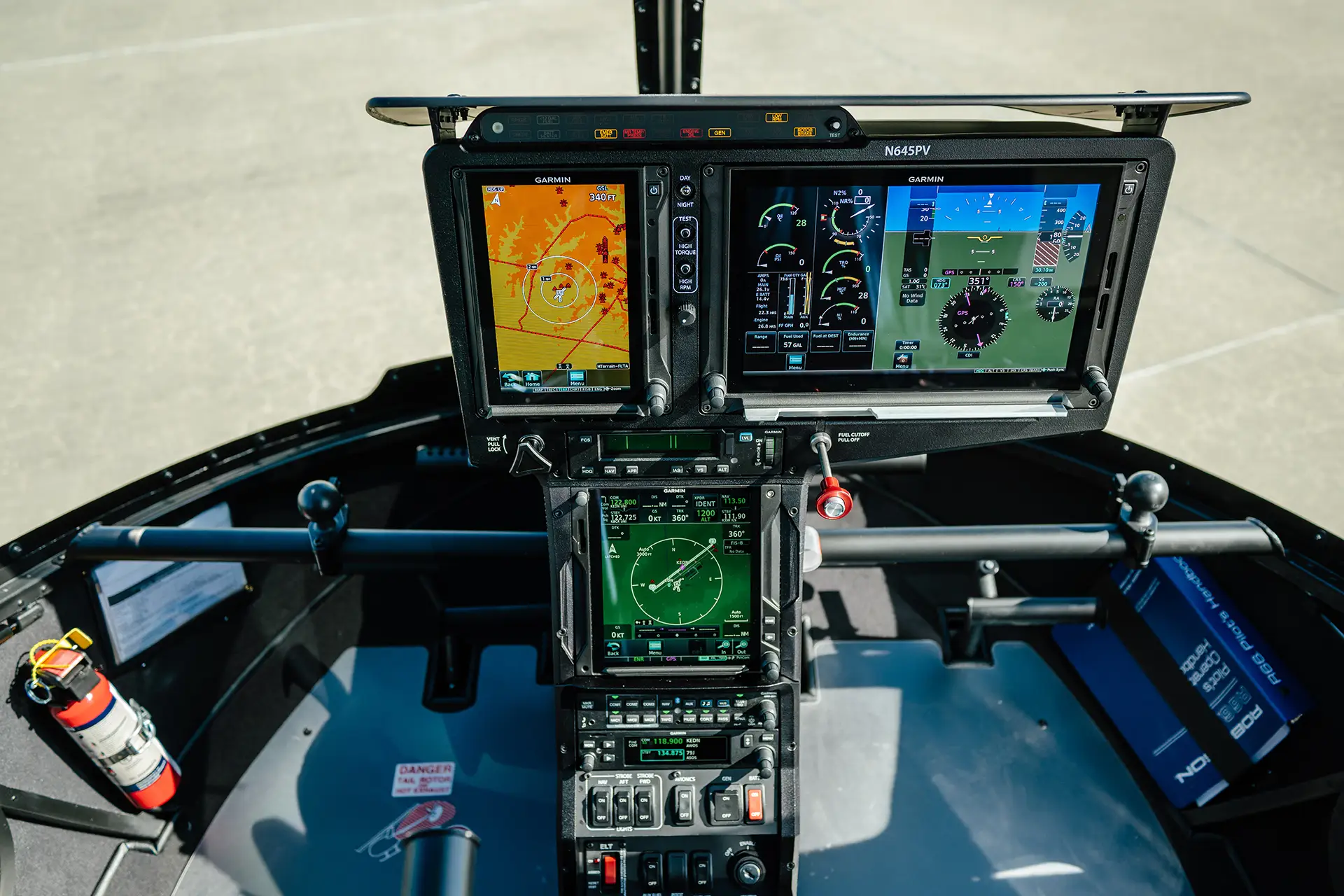
The R44 soon followed, allowing the owner/pilot to take his/her golf clubs to the Country Club, their luggage for a weekend away, or simply share the joy of flight with a couple of friends. The R44 turned other heads too. While flying schools also bought the larger machine for, ahem, 'larger' trainees, the R44 started to garner interest with other organisations - including Law Enforcement.
The first sign that RHC was starting to shed its 'cheap and cheerful' piston persona was the arrival of the turbine powered R66. First announced in 2007, the R66 has seriously disrupted the Single Engine Turbine (SET) marketplace. Based heavily on the mature R44, the addition of the Rolls Royce RR300 turbine was transformative. The RR300, a developed and slightly de-rated version of the popular M250 engine (often found in the likes of the MD500 family) only offered a modest horsepower uplift over the Lycoming IO-540 found in the R44 (both are 240-300hp class engines) but had significantly lower installed weight. Plus, as anybody that has tried to start a warm Lycoming on a hot day will testify, starting a turbine is significantly quicker and easier than a piston engine.
The R66 garnered serious Law Enforcement and other utility users attention. Over 1500 R66s have been produced, and the production rate remains, as does demand, prodigious. It is also the first of four 'planks' that, in my opinion, suggests that RHC is diversifying from just the training and private owner marketplace into a much more rounded and capable aerospace company.
Firstly, last year the humble R66 'got drafted' by the US military. .webp)
A partnership between Crew Training International (CTI) and the Helicopter Institute, creating an entity known as 'Team CTI', won a US Army contract to deliver ab initio pilot training following a FAA Part 141 curriculum. The concept was to both boost the throughput of pilots and, likely, generate data on an alternate 'pipeline' for training US Army aviators, as the Service was becoming increasingly concerned about the cost of training crews exclusively on the twin-engined UH-72A Lakota. The Lakota, a mildly militarised Airbus Helicopters H145, has proved controversial since its introduction at Fort Novosel, replacing the Bell Jet Ranger derived TH-67 Creek. As well as the increased Direct Operating Costs (DOCs) concomitant with any twin engined machine vice a single, there has been disquiet amongst many in the Army over the quality of the pilot output since the Lakota assumed the training role. The aircraft is highly automated, potentially 'numbing' the trainee of those raw, basic, helicopter handling skills, as well as being incapable of conducting repeated touchdown autorotations due to the strain, and subsequent maintenance penalty, it imposes upon the aircraft's transmission and rotor system.
Just how important touchdown autos are in a front line fleet (MH-6 excepted) that is entirely twin engined is a point for debate - as well as the fact that the front line types all have high fidelity flight simulators that can routinely, and safely, expose crews to OEI and double engine failure conditions. My sneaking suspicion regarding touchdown autos is that it's an IP/QHI 'thing' - almost totemic to their trade in decades past - and they want it back. However, there is less debate that a modern twin helicopter, designed for HEMS and VIP style tasking, does not present 'raw' helicopter flying traits to trainees in the way a simpler, less automated, design does.
Team CTI have been using the R66, rebranded as the TH-66 Sage, at their facility in Marianna, Florida, to produce Army pilots who have not only become well versed in those 'back to basics' helicopter techniques, but have also become the first ab initio Army pilots for decades to conduct true solo flying as the sole occupant of the aircraft. According to Helicopter Institute in a recent press release, all of the trainee pilots on Class SAGE 25-01 have now passed this key milestone by completing an hour of circuit consolidation flying. Moreover, in accordance with the Part 141 requirements, the class members will be conducting solo cross country navigation exercises to broaden their airmanship, captaincy and navigation skills. The rest of the course will prepare them for the transition to formal military training (still on the Lakota) with skills to a PPL(H) standard, as well as familiarity with basic Instrument Flying techniques. At the moment the R66, while not IFR certified, is capable of delivering IFR training in VFR conditions.
This use of the TH-66 Sage, and the familiarity the Army is getting with the airframe and the output it produces, will doubtless help
inform the Service's thinking as it seeks a longer term solution to its pilot training needs. Under the 'Flight School Next'
initiative, the Army is looking to replace the Lakota with a cheaper, simpler, single engined aircraft - one that can better inculcate
those core helicopter handling and operating skills. To reduce acquisition time and cost, the Army is intending to use a Commercial
Solutions Opening (CSO) construct, buying in a turnkey service solution rather than wearing the capital expenditure (CapEx) burden
'upfront' of replacing the Lakota with another Army owned aircraft.
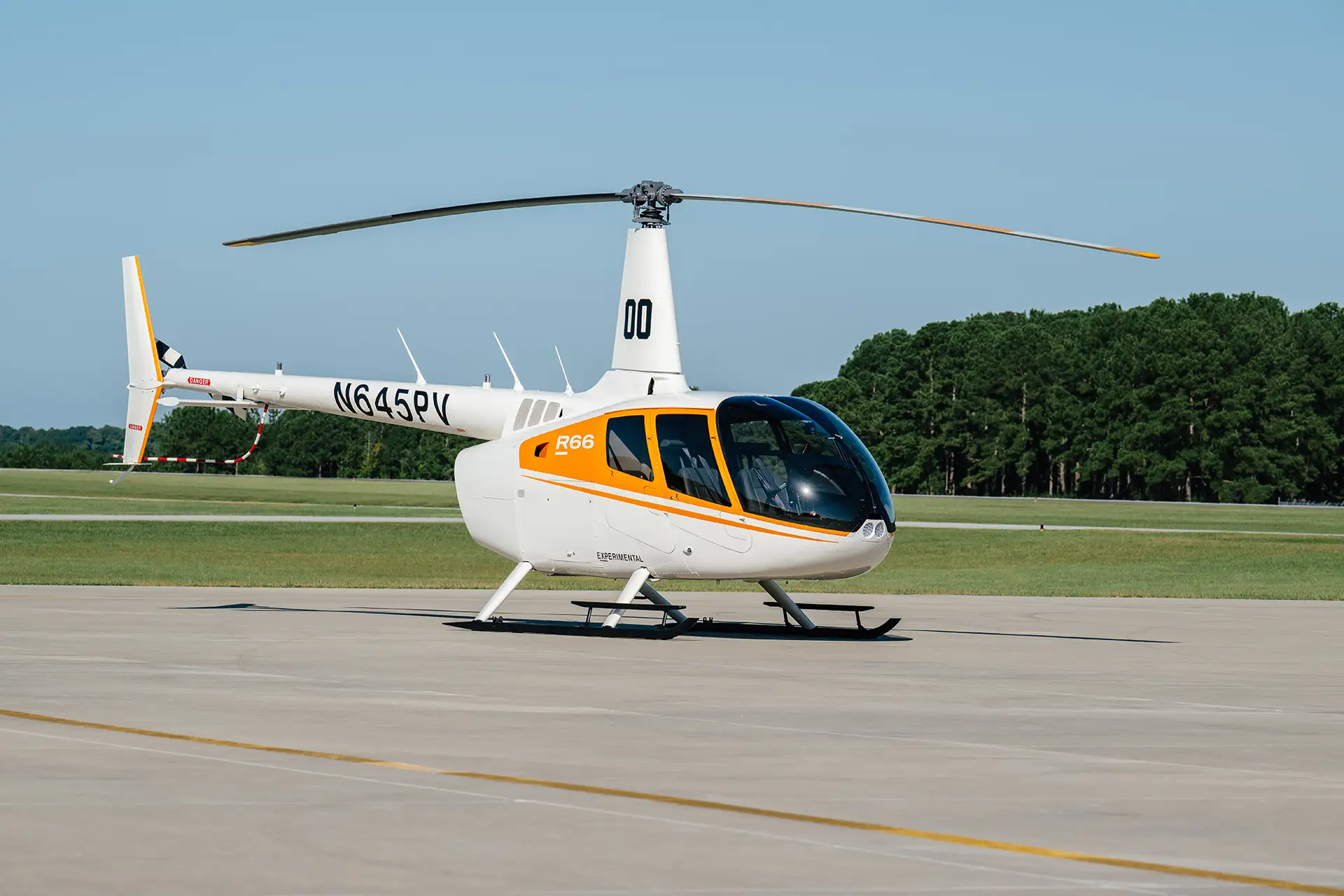
Therefore, the second step in RHC's journey out of its traditional markets is its prominent role in one of the consortia bidding for the Army's new training contract. Unveiled formally at the recent Quad A symposium and exhibition, RHC is providing the aircraft component (the R66) in a consortium that, to the casual observer at least, appears to consist of several 'best athletes'. Under the banner of 'Flight School First', RHC is partnering with services provider M1 (Mission First) and training organisation Helicopter Institute to deliver the package, with the enterprise underwritten by New York City based Cerberus Capital Management. Helicopter Institute are an obvious choice as the training partner as they are the provider of the current TH-66 Sage initiative, so the Army is able to assess real world performance rather than promises, while M1 are the incumbent maintenance, logistics and training support provider at Fort Novosel for the Lakota, offering the Army a relatively seamless transition from the current training system to the new one. Importantly for an Army seemingly in a hurry, much of the proposal is 'oven ready' and appears inherently low risk.
Speaking to RHC's CEO, David Smith, at both Verticon and the Vertical Flight Society's (VFS') recent annual forum in Virgina Beach, he was both ambitious and realistic about RHC's role and future opportunities. Ambitious in terms that if the 'Flight School First' bid was successful, there would be a demand for perhaps as many as 250-300 military modified TH-66's to be delivered to Fort Novosel (with the promise of follow on orders from other militaries seeking to leverage the US Army's investment). He was also, however, realistic that, unlike some of the larger helicopter OEMs, such as Bell, Airbus and Leonardo, RHC as of yet do not have the Commercial or DoD experience to Prime such a large contract. Within the 'Flight School First' team, M1 are very much the 'front of house' for commercial dealings with DoD, with extensive experience in securing multi-year contracts worth hundreds of millions of dollars. With Helicopter Institute reprising their role and Cerberus providing the capital leverage required, Flight School First looks a strong team - and, for a US Army customer desperate for some 'good news' and not wanting to court another high profile mistake, there is a high level of reassurance afforded by retaining many of its existing partners.
RHC are, however, also looking to expand their portfolio outside helicopters via the tried and tested commercial process of Mergers and Acquisition (M&A) and Partnering. In my mind this is an important 'third step' in RHC outgrowing its civilian roots, and becoming increasingly viewed as a viable military provider.
Last year, RHC wholly acquired Ascent Aerosystems. Ascent, established a decade ago, have developed a family of coaxial Uncrewed Air Systems (UAS). Ever since the Russian invasion of Ukraine in 2022, UAS have been a 'hot button' for many of the world's militaries and Law Enforcement agencies. The problem for the likes of David Smith and RHC was, probably, sorting the wheat from the chaff in finding a UAS company with a solid foundation, excellent technical prowess and a compelling offer that separated them from the rest of the UAS 'pack'.
Most UAS on the market are configured either as multi-rotor designs (the 'classic' quadcopter having become an industry staple) or fixed wing. Each have their drawbacks and advantages. Multi-Copters can take off and land vertically but can be adversely impacted by strong winds and power unit failures (causing control issues). As shown by the recent Ukrainian SBU attacks on Russian bombers, they also take up a reasonable amount of lateral space - although they can stack vertically if clever packaging is used. Fixed wing (FW) UAS are often significantly faster, with longer range and higher payload faction when compared to a multi-copter design as the wing, rather than the rotor system, is doing most of the 'heavy lifting'. Although FW UAS are also often cheaper, they invariably come with launch and recovery considerations. Smaller FW UAS can be hand launched and landed on soft surfaces - but at the risk of damaging any sensitive sensor payloads. Larger FW UAS either require a significant take off run to get airborne (which needs to be broadly flat and firm) or, more inconveniently, a ramp and launcher assembly. The latter can take time to unload and set up - and time is increasingly a precious commodity on the modern, 'transparent', battlefield.
Ascent Aerosystems portfolio of small and micro UAS use a different design philosophy, exploiting a coaxial configuration rather than
the more traditional multicopter or FW layout. The coaxial baseline brings with it a number of advantages. For example, they
can be hand launched (including from air platforms such as helicopters), ground launched or ejected/dropped from a tube. They can
also be stored in configurations already familiar to several military applications, such as sonobuoy launchers and ammunition containers
for mortars, anti-tank weapons and small artillery rounds. They can be densely packed to enable more UAS to be stored in a smaller
space as the rotors are stowed alongside the vehicle until powered up.
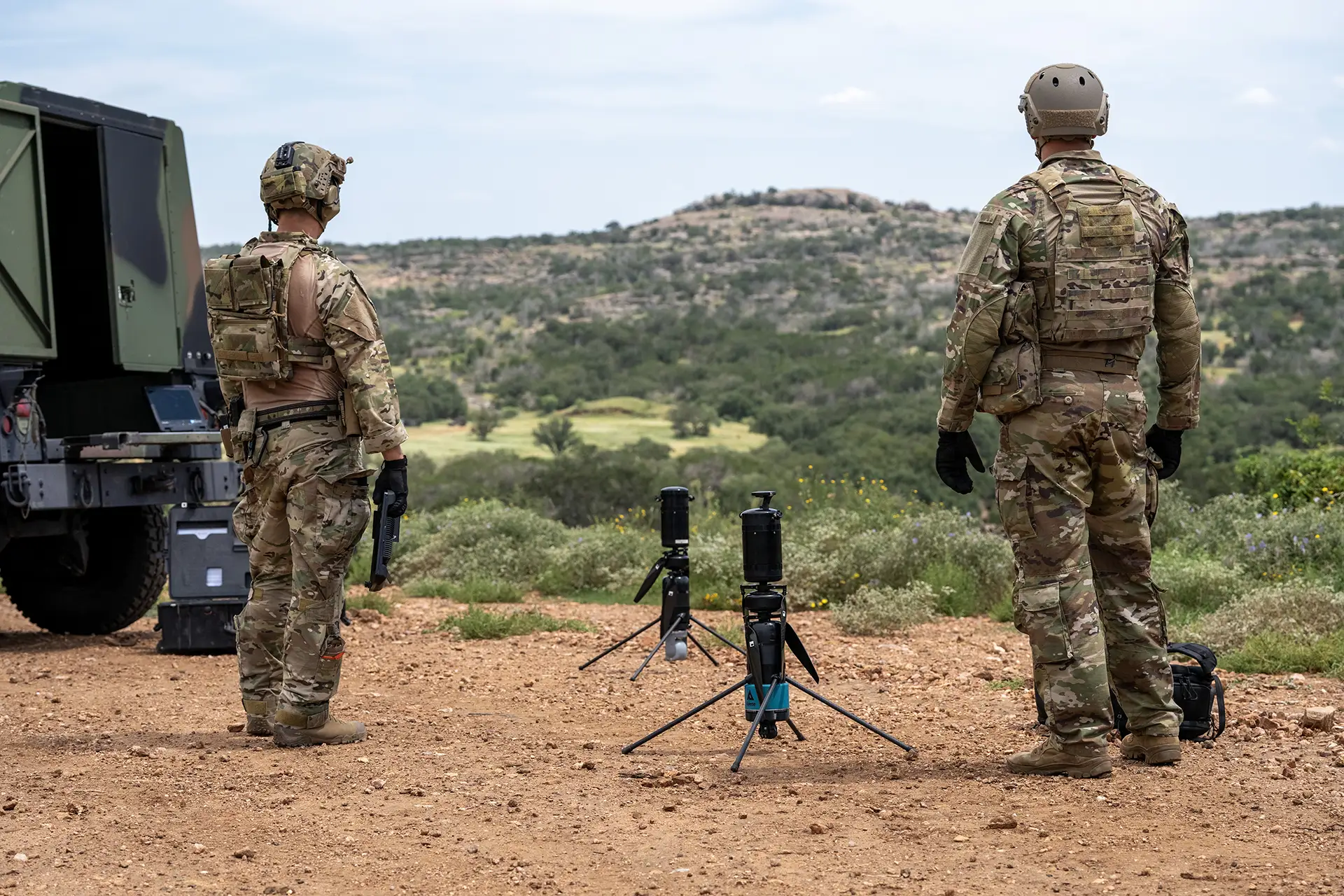
We will take a deeper dive into the Ascent Aerosystems and their UAS portfolio in a future edition of Antares, but suffice to say, it's a serious line of products, with serious potential - and not just as a 'stand-alone drone' but as a complimentary capability to rotorcraft in a Crewed/Uncrewed Teaming (CUC-T) environment.
The fourth and final 'plank' is the recent launch of the R88.
The R88 significantly boost RHC's market reach - offering twin-engined levels of performance with the acquisition and operating costs of a single. The R88's large cabin offers seating for '2+8', which is actually more than offered by the Airbus Helicopters H135 and the launch figures released by RHC claims a payload of 1800lbs with full fuel. Coupled with a 275 cubic feet of baggage stowage in the pick-up truck style load bay and a 3000lb rated external cargo hook, it becomes clear that RHC is not just building a 'trainer with some utility' but a genuine utility machine. Priced competitively at just over $3m, it compares favourably with the H125/H130 (which it comprehensively outperforms) and looks great value compared to a H135/H140 at nearly the twice the up-front cost (before the operating and maintenance costs of that second engine and more complex MRGB are considered).
The R88 offers a compelling blend of performance against cost. This is where, I think, it will start to gather attention from military and government users. For a start, with the exception of the Safran Arriel 2W engine, it is 'American made' - and that matters at the moment. It's low cost point and good payload faction put it firmly in the marketplace for the both the 'Light Utility' and 'Unmanned Logistic Connector' roles. The R88 is designed for Single Pilot IFR (SPIFR) operation, with a 4-axis Auto Pilot and dual channel hydraulic flight control system as a baseline, so offers a strong starting point for an Optionally Manned Rotorcraft (OMR) variant. The high rotor system and tail boom, along with the large sliding cabin doors, would make loading / unloading in the field rapid and safe, while the wide track and robust looking skidded undercarriage should be able to cope with routine austere landing site use.
For me, the R88 has three distinct possibilities for the DoD.
Firstly, as an unmanned or OMR logistics machine, it would be cheap, rugged and capable - certainly more so than a twin-engined equivalent. RHC have proven they can build their machines at both scale and pace, and with the current febrile world situation, such capabilities may prove crucial - especially with largely vertical supply and assembly chains, reducing sub-supplier and global trade risks.
The second is slightly more of a stretch, but I think it needs to be at least considered. The 'numbers' the R88 is promising is a fair way into H145 territory, and therefore, by extension, the LUH-72 Lakota. We've noted earlier that RHC, as part of the 'Flight School First' consortium, is already pitching the R66 to replace the Lakota as the Army's primary trainer, but could the R88 do the same as the CONUS-only LUH? It would offer dramatic savings to the US Army and National Guard budgets for a relatively small loss in payload - albeit with some erosion of operational flexibility over built up areas. Backfilling the Lakota with a 'UH-88A' would release the LUH-72 to other duties - as noted in my recent article about the Lakota, this could include becoming the USMC's Unmanned Logistic Connector or, even, being re-roled (via the fitment of the Airbus H-Force package) into a cheap and capable armed scout - the very role that the Army has singularly failed to recapitalise for two decades.
Finally, the R88's large cabin, skidded gear and 'baked in' provision for autonomy make it appear, at least to my eyes, as a near equivalent of the Leonardo PROTEUS program in the UK. PROTEUS is a RW UAS demonstrator program for the Royal Navy as part of the Anti-Submarine Warfare (ASW) Spearhead concept, which is looking to demonstrate the benefits of RW UAS as part of the broader ASW 'fight'. Currently delivered solely by expensive manned RW, PROTEUS offers a glimpse at an uncrewed future where the 'donkey work' is delivered by UAS, with the manned helicopter only launching if necessary. The R88's large fuselage could accommodate a dipping sonar and a large compliment of sonar buoys - the airframe could also likely deliver lightweight air dropped torpedoes. The major issue with trying to put an R88 derivative on the back of a warship as I see it is the 2-blade teetering head design - but David Smiith insists that they have a team of talented engineers at RHC, and have already studied what a more conventional 4-blade rotor system might look like - and that might also prove attractive to other users of both manned and unmanned variants (eg aerial firefighting...).
RHC are expanding their ambition and horizons, moving on and up from their humble beginnings, and taking strides firmly into the military and unmanned domains. It will be fascinating to watch their progress over the next 18-24 months.