 HOME
HOME




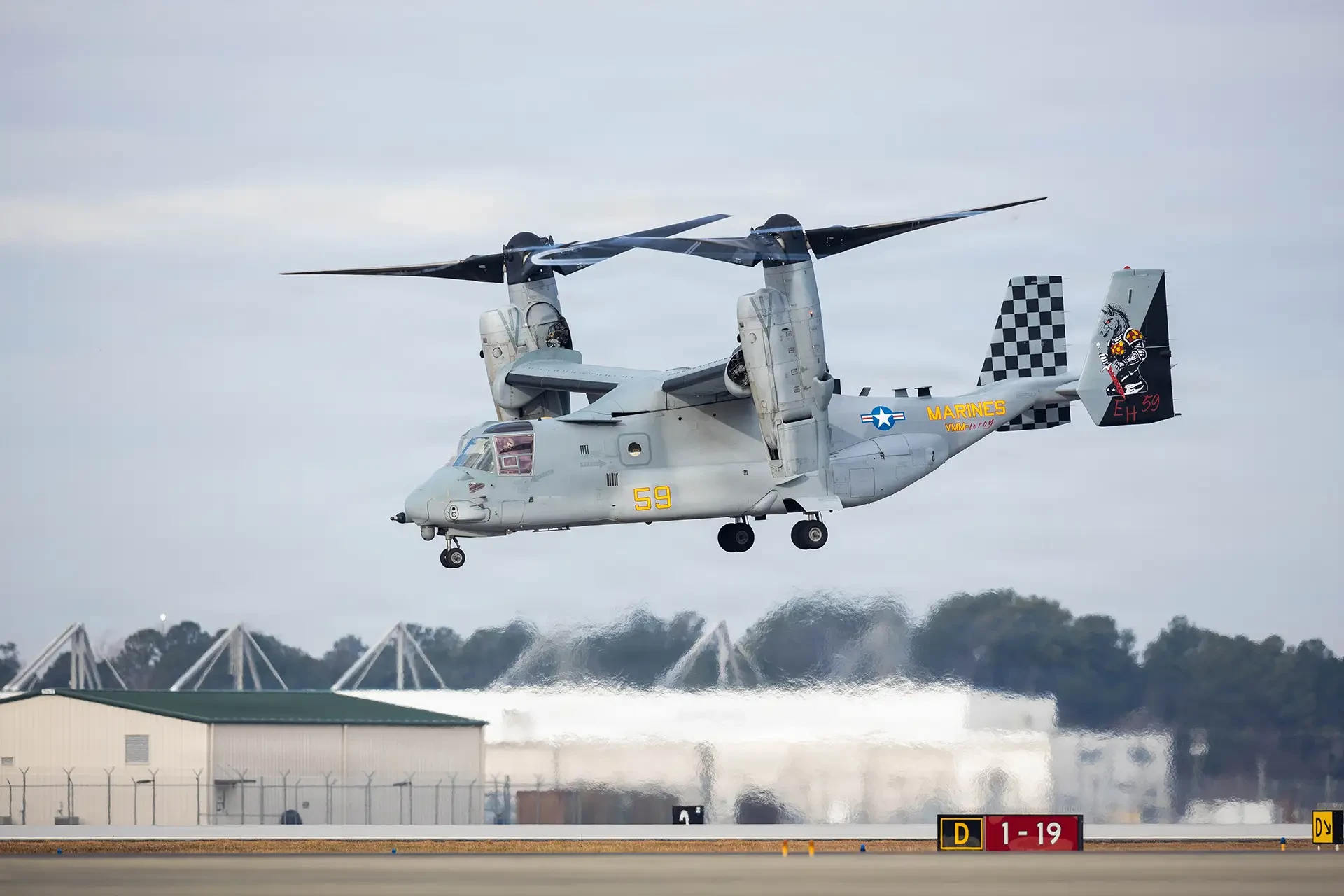
After two decades of production support, Defense Contract Management Agency approved the final MV-22 Osprey aircraft fuselage Oct. 8, 2025.
DCMA’s V-22 program support traces back to the ‘80s and ‘90s with the DCMA Vertical Lift Philadelphia contract management office in Ridley Park, Pennsylvania, and DCMA Vertical Lift Texas in Fort Worth, Texas.
The final finished fuselage for the Marine Corps’ MV-22 variant of the Osprey moves from the facility in Pennsylvania to a facility in Texas for final assembly and acceptance, projected later in 2026.
DCMA played significant roles in supporting the V-22 Osprey program across multiple functions, said Joseph Cervo, V-22 program integrator with DCMA Vertical Lift Philadelphia.
“Quality assurance personnel ensured adherence to quality standards and specifications during manufacturing, helping to prevent substandard parts and improving reliability. DCMA engineers provided technical oversight and verified compliance with engineering requirements, contract specialist’s ensured compliance with terms, program manager’s monitored performance, and industrial specialists ensured high standards in manufacturing processes supported with a robust supply chain.” said Cervo.
Achieving the milestone of accepting the final V-22 serves as validation of the hard work, dedication and expertise that the DCMA program support team poured into the program, Cervo said.
“It demonstrates that their efforts contributed to a tangible and positive outcome,” he said. “It reinforces the importance of their work in supporting the warfighter and ensuring the success of critical defense programs.”
Nearly 500 aircraft have been accepted to date with the majority being the Marine variant with the remainder being the Air Force and Navy variants. DCMA will continue to oversee the fabrication of the fuselage of the remainder of the CMV-22 Navy variant and the CV-22 variant managed by the Air Force in the Ridley Park facility.
The assigned government program management office is the V-22 Joint Program Office within the Navy’s Naval Air Systems Command, and the Marines, Air Force, and Navy procure the aircraft, said Terry Taylor, program integrator at DCMA Vertical Lift Texas.
“The program office plans to keep these aircraft flying into the 2050’s and has initiated aircraft modernization activities, current and future initiatives include a cockpit technology refresh, a modernization program and a rotating structure improvement upgrade These initiatives will give new contracting opportunities for DCMA to administer. Additionally, sustainment parts are being procured under Defense Logistics Agency and Naval Supply Systems Command to keep these aircraft flying.” Said Taylor.
“The V-22 is a mature platform, and its continued operational effectiveness heavily relies on ongoing sustainment activities.” said Walter Crowe, aerospace engineer at DCMA Vertical Lift Philadelphia.
“As the V-22 continues to evolve, DCMA will play a key role in managing modifications and upgrades, ensuring that these changes are implemented safely and effectively and that they meet the evolving needs of the warfighter. DCMA oversight of V-22 maintenance activities ensures that maintenance procedures are followed correctly and that maintenance personnel are properly trained and qualified, which helps prevent maintenance errors and ensures long-term airworthiness. DCMA's contributions to sustainment are crucial and multifaceted,” Crowe said.
“We play a critical role in overseeing the V-22's supply chain, ensuring that spare parts and components are available when and where they're needed to keep the aircraft flying. This involves monitoring contractor performance, tracking inventory levels and resolving supply chain disruptions. This contributes to operational readiness rates.”