 HOME
HOME




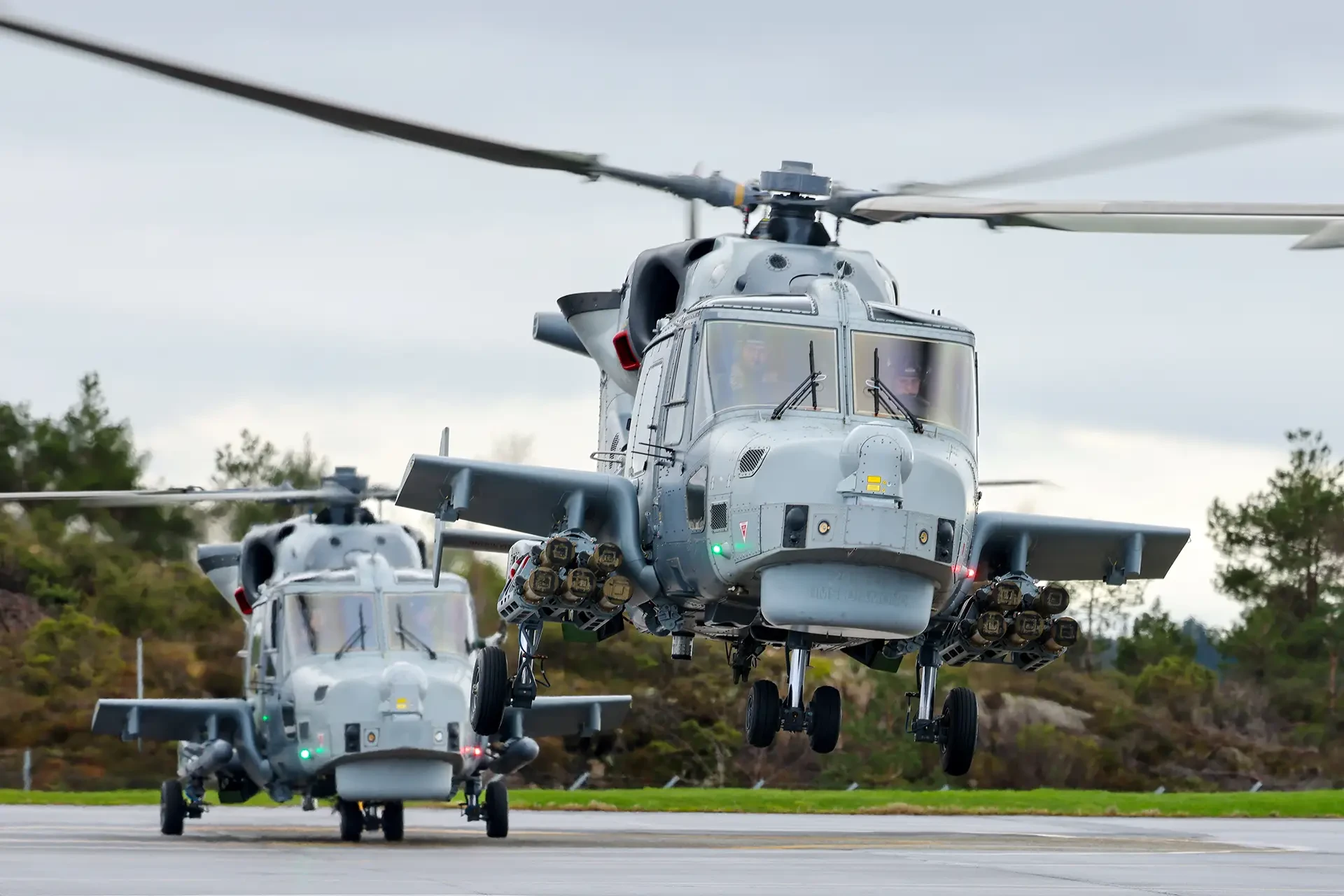
Three action-packed weeks in the fjords saw the British and Norwegian navies enhance missile, fast-boat and drone tactics.
Drones were launched, torpedoes dropped and flares cascaded over the waters around Bergen, as Royal Navy Wildcat helicopters grappled with fast attack boats, exploited uncrewed technology and thwarted missile attacks.
Known as Tamber Shield, the exercise has been run for several years under the banner of the Joint Expeditionary Force, the UK-led coalition
of northern Europe nations committed to regional security.
The aim of the exercise has remained constant: developing the tactics of Royal and Royal Norwegian Navies to deal with fast, agile threats
in narrow waters, with new systems, additional vessels and different scenarios introduced each year.
In 2026, the fresh ingredients were the Royal Navy’s drone squadron 700X and RAF electronic warfare experts from Spadeadam in Cumbria.
The RAF specialists used their equipment to simulate infrared and radar-based missile threats, giving the helicopters extremely valuable
practice of evasion tactics, pumping out live chaff (small metallic strips) and flares to throw the ‘missiles’ respectively off the scent.
The involvement of 700X’s Puma drones also helped aircrews increase their ‘kills’ and survivability.
The small aircraft scouted ahead of the helicopters, seeking both potential targets and threats, with the information fed directly into the
Wildcat cockpits.
Armed with Martlet missiles, the helicopters from 815 Naval Air Squadron – operating from both the home of the Norwegian Navy at Haakonsvern
and the flight deck of HMS Duncan, escorting HMS Prince of Wales – are vital to protecting the fleet against small, fast,
highly-maneuverable targets: fast-attack craft on the water, drones in the air.