 HOME
HOME




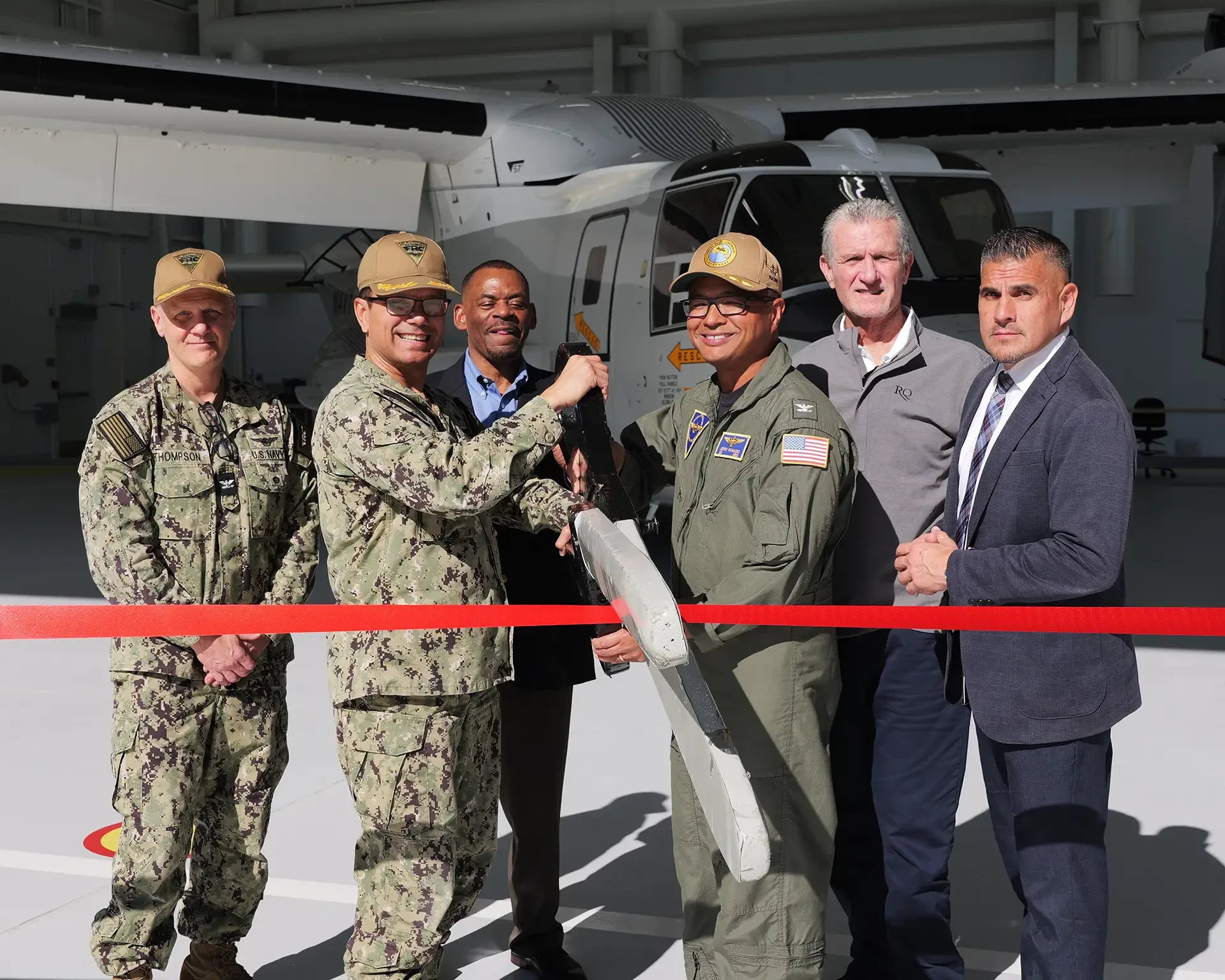
Fleet Readiness Center Southwest is poised to transform V-22 sustainment for generations to come with the opening of a brand-new, purpose-built V-22 repair facility on Naval Air Station North Island (NASNI) in San Diego, CA. The facility, building 418, is a 65,000-square-foot modern hangar complex designed to enhance capacity, reduce turnaround time, increase safety, and ensure that Navy aircrews receive the mission-ready aircraft they rely on.
The facility represents one of the most significant infrastructure investments in FRCSW’s history, an investment expected to support naval aviation for the next 75–100 years.
“This facility positions FRCSW as the premier V-22 repair depot on the West Coast, exactly what the Navy needs as these aircraft are increasingly vital to operations. Our artisans helped design this building, and it shows. Everything in here is about efficiency, safety, and readiness.” said John Goolsby, FRCSW V-22 Program Manager.
At 65,000 square feet, with 40,000 square feet dedicated to the main hangar and 25,000 square feet of shops, storage, and administrative spaces, the hangar was designed from the ground up for V-22 maintenance, modifications, and in-service repairs. The facility accommodates four V-22 aircraft at once, a 25% increase in bay capacity. This increase enables FRCSW to maintain its program of four Planned Maintenance Interval (PMI) events per year while adding capacity for critical modifications, special inspections, and unplanned repairs.
The new building marks a major shift away from the limitations of the previous facility that was a converted, decades-old space with no internal shops and a single overhead crane that only serviced one aircraft position. In contrast, Building 418 features: Two Full-Length 5-ton Overhead Bridge Cranes, Dedicated Composite Shops, Sheet Metal and Machine Shop, Specialized Tool/IMRL Storage, 8,294 sq. ft. Kitting and Storage Complex, On-site HAZMAT issue center and HAZWASTE Collection Site, Underground Fuel Cell Venting System, Integrated Fall-Protection System and a fully Equipped Training Room
More than 80 FRCSW personnel will work inside the new facility every day, artisans, engineers, production controllers, and logisticians, supported by advanced environmental, energy-efficiency, and safety systems.
Perhaps the most transformative advantage of the new facility is the elimination of the “jockeying” that defined maintenance in the previous hangar. In the old facility, aircraft, stands, tooling, and personnel had to be constantly rearranged. Even a standard weight-and-balance check required towing the aircraft outside into the parking lot, disrupting other work and creating avoidable delays. In the new facility, every process that once required repositioning can now be performed entirely in the aircraft bay itself with cranes, equipment, shops, storage, and HAZMAT support located exactly where artisans need them. The integrated kitting area ensures every part, component, and consumable is labeled, tracked, and accessible. Leadership can now assess work progress at a glance, reducing administrative functions and ensuring smooth material flow.
“When you take away the need to constantly move aircraft, people, & equipment, you get back efficiency. That translates into faster return-to-fleet times.” said Deputy Program Manager Joe Weides.
FRCSW artisans were heavily involved in the layout and workflow design of the facility. Program Manager Goolsby, along with deputies Mike Dixon and Joe Weides, solicited input from the teams who perform the work every day. Their recommendations shaped everything from shop placement to crane coverage to workstation design.
“That kind of collaboration is rare, but it’s why this building will work well for the artisans,” said Weides. “This isn’t just a hangar. It’s a tool, and the people who will use it helped craft it.”
The result is a facility that supports safe, efficient, high-quality maintenance while giving artisans a workplace worthy of their expertise. The excitement among FRCSW employees is palpable.
“Our team has supported the V-22 since the program’s inception. Working in a new, state-of-the-art facility brings a new sense of pride and momentum.” Goolsby said.
The V-22 program is entering a period of significant growth. As the CMV-22B replaces the aging C-2A Greyhound for Carrier Onboard Delivery (COD) missions, demand for depot-level support is only increasing. COD aircraft are the lifeblood of the carrier air wing, transporting critical personnel, mail, and supplies. FRCSW’s ability to sustain the Navy variant on the West Coast is essential.
The new facility cost $56 million to complete, down from an early estimate of $67 million, an impressive achievement considering unexpected underground utilities issues, network challenges, design changes, and the scale of construction over a 25-month period.
“This is a 100-year building. For the cost of a single aircraft, the Navy has secured a century of V-22 sustainment capability.” said Goolsby.
Partners in this endeavor included Naval Facilities Engineering Systems Command (NAVFAC), RQ Construction, Jacobs (design firm), PMA-275 (The V22 Program Office), Commander Fleet Readiness Centers (COMFRC), and the FRCSW Facilities and Integrated Product Teams. Despite the challenges, the project was delivered on schedule, under budget, and built to last.
FRCSW artisans are the best in naval aviation and now they have a facility that matches their talent. As the first CMV-22B aircraft are towed across the flightline into their new home, one thing is clear, the future of V-22 sustainment is here, and it begins at FRCSW.