 HOME
HOME




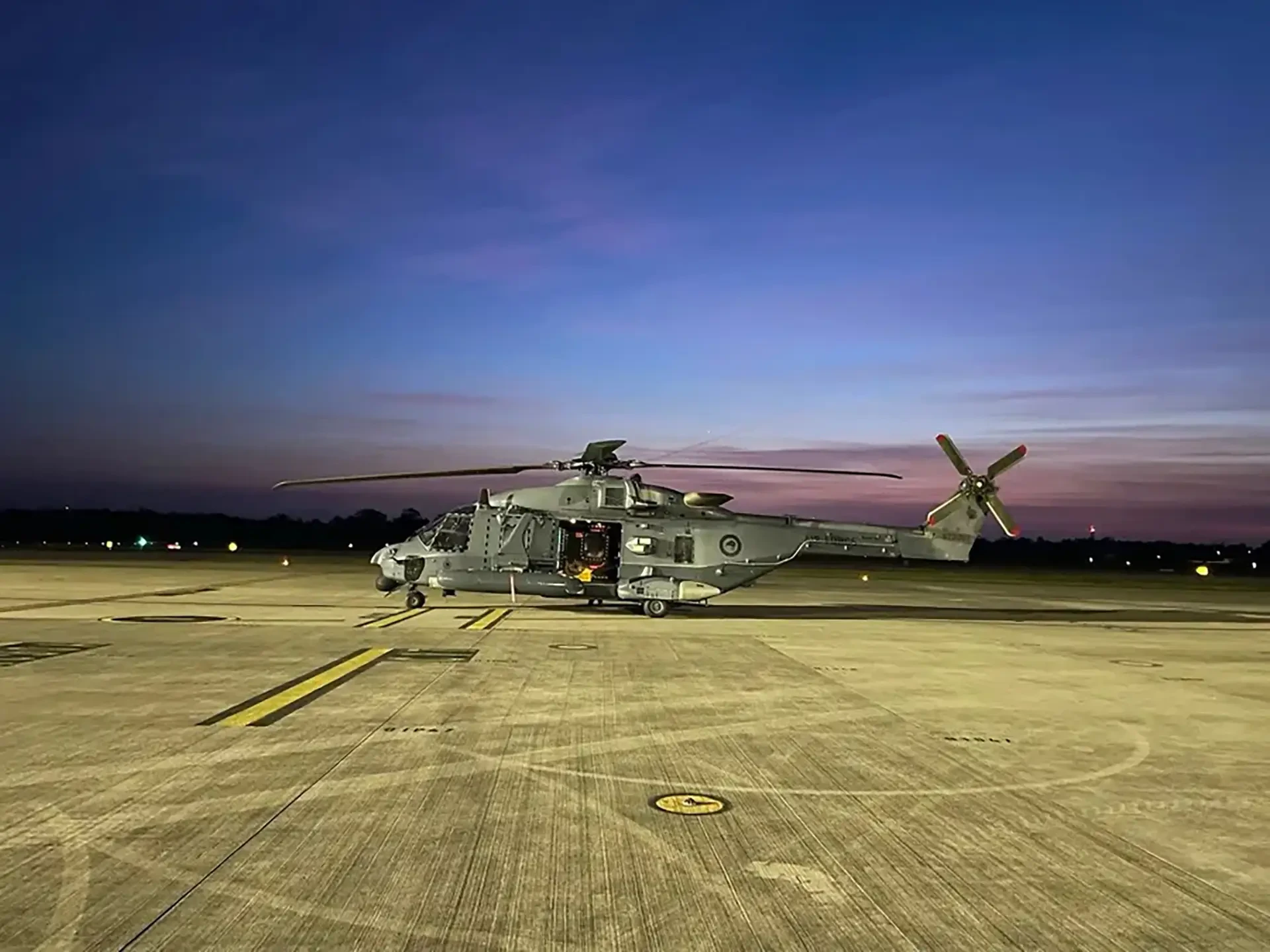
The Royal New Zealand Air Force’s NH90s have successfully completed a record-long ferry flight from Papua New Guinea. The flight covered 1,062 kilometer (660 mile) flight, including 889 kilometers (480 nautical miles) over open water.
The RNZAF’s jurisdiction is vast, covering a huge area including New Zealand, the Cook Islands and Vanuatu. The logistics to get assets to where they are needed is a key part of any military’s planning. “Until now, HMNZS CANTERBURY is our primary means to get around the islands,” explains Squadron Leader Lachie Johnston, 3 Squadron NH90 Flight Commander. “Or when other partner nations have the capacity or the need arises, we have also been fortunate enough to have their support and the C-17s to get us around.”
To become less reliant on partners and minimize the impact of the loss of the Canterbury when it is being serviced, RNZAF Squadron 3 seized on the opportunity to perform a particularly long ferry flight from Papua New Guinea back to New Zealand. “That was our first opportunity to exercise what we term the ‘extended overwater operations’ component. For us, that’s flight beyond 50 nautical miles.”
The mission necessitated long legs flown over water and the NH90’s features and automation meant the crew were always confident of the mission’s success. Two additional external 1,100 pound fuel tanks were added and the mission was performed under instrument flight rules and Johnston emphasizes that the NH90’s automation was crucial for flying such long legs – especially over water. “The fuel management system supported us incredibly well in terms of both managing and monitoring fuel consumption. We took significant confidence out of its fuel performance and its cruise speed and its capabilities with respect to anti-ice and de-icing, as well as the aircraft navigation system which has increased importance in the overwater environment. Having a weather radar that has a sea-mapping and ground-mapping mode was also essential.”
Johnston also notes that while it is not uncommon for helicopter to fly long distances over
water, a detailed risk assessment was completed prior to releasing the capability. Fortunately, thanks to the technology and safety features of the NH90 and the comprehensive training undertaken by NH90 crews, the risk analysis determined these types of activities can be conducted safely, with very little additional risk. Furthermore, the RNZAF was recently able to complete its Software Release 2 program prior to the flights in question, improving communication – crucial over long leg flying: “It was helpful that some of the upgrades that came with either our secure comms program or the Software Release 2 itself actually help support this operation.”
For Johnston, the record-breaking aspect of the mission is less important as the opportunity to increase operational agility and employment of the NH90 system: “This capability ultimately gives us a bit more autonomy and allows us in the future to respond quickly and get to the islands within a matter of days.”