 HOME
HOME




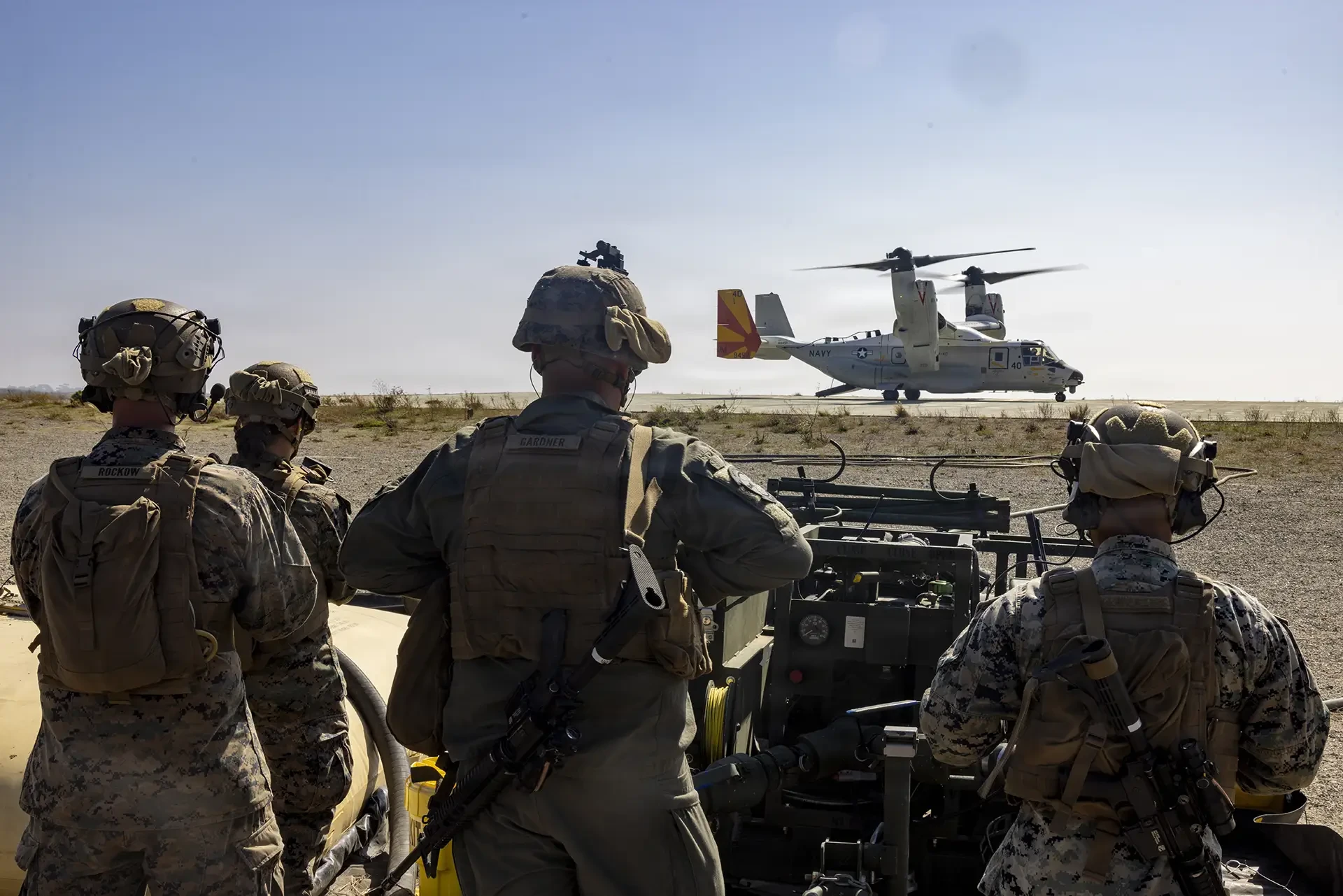
U.S. Marines with Marine Wing Support Squadron 372 (MWSS-372), Marine Air Control Group 38, 3rd Marine Aircraft Wing and U.S. Sailors with the Naval Aviation Warfighting Development Center joined forces across multiple training sites at Marine Corps Base Camp Pendleton.
The five day exercise. NAWDC 25.3, highlighted how combined naval and marine aviation capabilities enhance the joint force’s ability to project power, sustain sorties, and expand operational reach in contested environments.
The exercise also featured participation from the USAF and Coast Guard, underscoring the broader joint force collaboration.
“This exercise wasn’t just great for the carrier air wing and the naval aviation enterprise. It was great for the joint force,” said U.S. Navy Lt. Anthony Romagnoli, an Airwing Fallon coordinator with Naval Aviation Warfighting Development Center and SEAWOLF MH-60S Weapons and Tactics Instructor.
The exercise included a range of aviation operations, such as aerial transportation, aerial refueling, anti-submarine warfare, contested logistics, combat search and rescue, and aerial-delivered ground refueling. These operations strengthened the joint team’s ability to execute Forward Arming and Refueling Point (FARP) operations, refine disaggregated command and control and enhance rapid deployment and sustainment of aviation operations in expeditionary environments.
“The purpose of a FARP is to provide ordnance and fuel support forward of any other aviation ground support system, airport, or aircraft carrier,” said 1st Lt. Matthew Mullins, the executive officer of airfield operations company, MWSS-372. “It allows us to shorten the distance and time it takes for aircraft to refuel and return to the fight.”
Throughout the event, MWSS-372 provided essential ground logistics while Navy personnel from the Naval Expeditionary Logistics Support Group and Aviation Operations Support Group observed and trained alongside them.
“Without the ground support of the Marines, we simply cannot conduct Expeditionary Advanced Base Operations,” said Lt. Cmdr. Michael Massel, a contested logistics subject matter expert with NAWDC. “That’s why we have Sailors here learning from the Marines so the Navy can build that capability and expand our reach.”
"Without the ground support of the Marines, we simply cannot conduct Expeditionary Advanced Base Operations. That’s why we have Sailors here learning from the Marines so the Navy can build that capability and expand our reach. "Lt. Cmdr. Michael Massel, a contested logistics subject matter expert with NAWDC
The exercise underscored the necessity of Navy-Marine Corps aviation integration long before the next real-world contingency, ensuring that both services are prepared to integrate seamlessly in high-stakes environments.
“This exercise proved what the blue-green team is capable of when we train and operate as one,” Mullins said. “Every gallon of fuel we pump and every aircraft we keep flying extends the reach of our naval and joint force across the battlespace.”